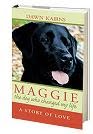
MAGGIE: the dog who changed my life

MAGGIE: the dog who changed my life
Click photo to visit dawnkairns.com

Monday, January 16, 2012

Owning a Pet is a Privilege and More Says American Veterinary Medical Association

Thanks to Nancy Kay, DVM, Author of Speaking for Spot and her newsletter, I just became aware that the Executive Board of the American Veterinary Medical Association (AVMA) recently approved the following guidelines for responsible pet ownership, approved this past November, 2011. I love hearing words like "privilege" and "commitment for life" associated with pet ownership/guardianship!

Does this qualify for proper exercise?

Guidelines for Responsible Pet Ownership
Owning a pet is a privilege and should result in a mutually beneficial relationship. However, the benefits of pet ownership come with obligations. Responsible pet ownership includes:
  •  Committing to the relationship for the life of the pet(s). 
  • Avoiding impulsive decisions about obtaining pet(s), and carefully selecting pet(s) suited to your home and lifestyle.
  •  Recognizing that ownership of pet(s) requires an investment of time and money.
  •  Keeping only the type and number of pets for which an appropriate and safe environment can be provided, including appropriate food, water, shelter, health care and companionship.
  • Ensuring pets are properly identified (i.e., tags, microchips, or tattoos) and that registration information in associated databases is kept up-to-date
  • Adherence to local ordinances, including licensing and leash requirements.
  • Controlling pet(s)' reproduction through managed breeding, containment, or spay/neuter thereby helping to address animal control and overpopulation problems.
  • Establishing and maintaining a veterinarian-client-patient relationship.
  • Providing preventive (e.g., vaccinations, parasite control) and therapeutic health care for the life of pet(s) in consultation with, and as recommended by, its veterinarian.
  • Socialization and appropriate training for pet(s), which facilitates their well-being and the well-being of other animals and people.
  • Preventing pet(s) from negatively impacting other people, animals and the environment, including proper waste disposal, noise control, and not allowing pet(s) to stray or become feral.
  • Providing exercise and mental stimulation appropriate to the pet(s)' age, breed, and health status.
  • Advance preparation to ensure the pet(s)' well-being in the case of an emergency or disaster, including assembling an evacuation kit.
  • Making alternative arrangements if caring for the pet is no longer possible.
  • Recognizing declines in the pet(s)' quality of life and making decisions in consultation with a veterinarian regarding appropriate end-of-life care (e.g., palliative care, hospice, euthanasia).
Would that all pet guardians provide mental stimulation, socialization, training, exercise, proper health care, spay and neuter and more for their beloved treasures, the animals they are entrusted with... Thanks, AVMA!

Posted By Dawn Kairns, Author of MAGGIE: the dog who changed my life

Monday, January 9, 2012

Can You Help 11 Year Old Sweetheart of a Cat Find Her Forever Home?


ZOE

"Zoe is a beautiful cream & blue dilute tortoiseshell with striking features and howl-like eyes. She`s reserved, independent and shy at first but will warm up to pets and affection - she just needs time to adjust to her new surroundings. Because she might grumble when she no longer wishes to be petted, we recommend a home without young children. Zoe wants nothing more than to find her new, loving guardian. Can that person be you?"

She is available at the Humane Society of Boulder Valley (HSBV). Learn more here: http://www.boulderhumane.org/animals/adoption/14280635  She has been with HSBV since October.


About Zoe

Domestic Longhair/Purebred
Age: 11 years 3 month
Gender: Female
Price: $10.00
Color: Blue/Cream
Weight (lbs): 12.00
Here Since: 2011-10-13 13:12:00
ID: 14280635

Posted By Dawn Kairns, Author of MAGGIE: the dog who changed my life

Thursday, January 5, 2012

Black Labrador, Maddie in Slow Motion Play (VDO)

Posted By Dawn Kairns, Author of MAGGIE: the dog who changed my life


You may remember Maddie, our adopted 10 month old black lab/lab mix who you may have met at the end of my book, MAGGIE the dog who changed my life. Maddie is now 6 1/2 years old and continues to be vibrant, happy, and healthy. She lights up our lives. This is a slow motion video of her that my husband captured of her yesterday at the dog park playing. I place it here to share with you the joy and the grace of her movement. I love the slow motion that captures every slight move!

Friday, December 16, 2011

Keep Pets Safe from Holiday Food Hazards

Guest Post (guest poster later requested link removal)

Tis’ the season for holiday treats! While our families are busy enjoying all of the wonderful foods that come with this time of year, it’s important to make sure pets don’t get their paws on potentially dangerous human foods. Below are a few ingredients that may be a part of your holiday festivities that could mean serious digestive upset or an emergency trip to the vet if ingested by your pets. 

Onions, Garlic and Chives: You might use these ingredients to flavor that big holiday dinner, but take caution to ensure your pets don’t ingest large quantities of these foods. These ingredients might make our food tastier, but can cause gastrointestinal discomfort and potential red cell damage for our pets. 

•Fatty Foods: Too many fatty table scraps can lead to pancreatitis in dogs and cats, which is a potentially fatal condition. Symptoms of pancreatitis include diarrhea, vomiting, lethargy, abdominal pain and depression. Just one instance of eating too much food that is high in fat can trigger pancreatitis in pets, so watch your dinner guests to make sure treats aren’t being given under the table. 

•Alcohol: When enjoying your glass of champagne or holiday cocktail, don’t let your sweet pup or kitty sneak any sips. Alcohol can cause pets to experience vomiting, diarrhea, a decrease in coordination, difficulty breathing, tremors, coma and even death. Don’t take any chances with your pet’s wellbeing by keeping alcoholic beverages far from reach. You might also consider keeping your pet in a separate room during holiday parties. 

•Macadamia Nuts: While these nuts can make a tasty addition to holiday cookies, they contain an unknown toxic element that can trigger vomiting, lethargy and even temporary hind end paralysis in dogs and cats. 

•Grapes and Raisins: Whether you’re serving a healthy snack to party guests or adding raisins to those holiday cookies, make sure your pets don’t’ sneak a bite of these foods. Both grapes and raisins are toxic for our canine and feline companions and can cause kidney damage, kidney failure and even death.  

Milk: When setting out milk and cookies for Santa, make sure Fido doesn’t help himself instead. Dairy products cause diarrhea and digestive upset for pets -so keep Santa’s snack out of reach from four-legged family members to avoid a holiday mess. 

Chocolate and Coffee: When you cozy up with that yummy dessert and cappuccino this holiday season, don’t leave your treat unattended. Chocolate and caffeine can cause vomiting, diarrhea, hyperactivity, an abnormal heart rhythm, seizures or even death. Protect your furry family members by keeping foods that contain these dangers out of reach. 

•Xylitol: When popping that after-dinner mint or piece of gum, be aware that many sugar free varieties contain a sweetener called xylitol, which can be deadly for dogs. Xylitol can cause a dog’s blood sugar level to drop to a dangerous low, causing weakness, confusion, seizures and sometimes even death. 

•Avocados: Avocados may not be a traditional holiday food but they’re a year-round favorite for many families. Although delicious and healthy for human consumption, avocados are a danger to pets for multiple reasons. The large pit can cause gastrointestinal obstruction if swallowed and the rest of the fruit contains persin, which can cause vomiting and diarrhea in pets. 

To keep the holidays safe and happy for your pet, stick to healthy canine or feline treats or pet-safe human foods (i.e. an apple slice for your dog). If you ever have any concerns about foods your pet has ingested, immediately contact a veterinarian.

Sunday, December 11, 2011

THANK YOU, Israel: Cat Declawing is Made Illegal -- Brings Jail and Hefty Fine

Re-Posted By Dawn Kairns, Author of MAGGIE: the dog who changed my life 

 Israel Makes Cat Declawing Illegal


"Cat declawing is now officially — and legally — off limits in Israel.

On November 28th, the Israeli legislature voted unanimously to make cat declawing illegal. Imagine the collective meow of relief that was heard across the country!  If someone is caught declawing a cat they can expect up to one year in jail and a hefty $20,000 fine.  Israel joins the U.K., Brazil, most of Europe, and Australia for taking a strong stand on this cruel practice. In the United States, declawing unfortunately remains legal except in a handful of cities.

Onychectomy (the medical term for declawing) is a procedure where the claw and part of the bone of a cat’s toes are removed, usually to keep the feline from ruining furniture, catching birds or scratching children. Cat claws however are rooted deep in the bone, so partial bone removal is necessary in an onychectomy. To put this in perspective, the bone removed on each digit is akin to removing up to the third knuckle on each human finger. OUCH!

In addition to being painful, declawing leaves a cat virtually defenseless.  For an indoor cat, this may not be much of an issue, but for a cat that spends time outdoors and meets an unfriendly dog, being declawed can be fatal. Cats also need their claws for stretching their tendons, climbing, balance and marking their territory. Oh, and shredding your favorite reading chair.

Many people who consider having their cats declawed think the procedure is simple and relatively painless — and that it is a quick fix for razor sharp claws on their otherwise sweet and cuddly kitty. Clearly, having a significant section of bone removed on each toe is not a simple painless operation. Please consider passing on the word to new cat owners or submitting an editorial to your local newspaper that this is not the case!

A humane alternative to declawing is the monthly trimming of claws with nail clippers. Although, that sounds like a potentially hazardous endeavor for any human to undertake, it can be safely done! I trim my cats’ claws, especially in the winter when the snowy weather keeps them house bound and they get less natural wear and tear.  I just use human nail clippers and only do it when they are sleepy. I am very careful not to clip beyond the clear claw area. If you clip into the pink sensitive area (called the “quick”), your cat will definitely let you know about it!  The goal is to blunt the end of each claw. For a more detailed explanation on how to cut kitty’s claws without drawing your own blood, visit the website: Cats Scratching.

So, again three cheers to Israel for having the gumption to just say no to cat declawing."

Wednesday, December 7, 2011

Online Puppy Broker "Purebred Breeders" Exposed as Puppy Mill

Posted By Dawn Kairns, Author of MAGGIE: the dog who changed my life


 Below is a partial transcript and video from the MSNBC Today Show reporting on the online puppy broker, Purebred Breeders.


"...The company is called Purebred Breeders...operates nearly 800 websites...
It's a marketing deception...we found Purebred Breeders are not breeders at all, but puppy brokers...
The Humane Society sent investigators...found large scale operations with dog after do stacked in wire cages, often in dirty conditions. Classic signs, they say, of puppy mills..."


Read more here on MSNBC: Did Onlilne Puppy Site Sell Sick Pets?

Residents bark about animal shelter woes - Post-Tribune

Residents bark about animal shelter woes - Post-Tribune