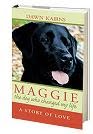
MAGGIE: the dog who changed my life

MAGGIE: the dog who changed my life
Click photo to visit dawnkairns.com
Showing posts with label cats. Show all posts

Monday, December 2, 2013

Longmont Humane Society Now and Forever Campaign Reaches Phase 1 Goal

Volunteer Camie Kirkevold works with a cat named Kiki on Wednesday at the Longmont Humane Society. (Matthew Jonas/Times-Call)
According to The Longmont Humane Society they have reached their Phase 1 goal of their "Now and Forever" Campaign.  They avoided foreclosure! They were able to make their November payment of  $772,227.68 "because of the generous support of our friends and donors in Longmont." 

They did it "after cashing in its investments," director Liz Smokowski told the Longmont Times Call. The investments netted $363,118, which combined with $526,932 in donations exceeded the amount needed for this year's payment.


The shelter's Board members have worked diligently to "improve and augment" their operating finances which the Longmont Humane Society has been concerned about for several years. Over the past two years, Longmont Humane Society changed leadership in order to take a new direction and respond to the urgency of their financial situation. As a result, they have raised animal adoption prices, reduced staffing costs and marketing expenditures, increased the number of volunteer positions, and boosted their fundraising efforts. "Longmont Humane Society has achieved a combined positive cash flow from operating and investing activities over the past two years." They say their cash drain "is related to financing of the construction project and the related bond offering that was taken."Without their principal and interest payments, Longmont Humane Society would be wholly sustainable.  

The Longmont Humane Society will still need to raise the final $2.4 million even after this payment. Liz Smokowski, hired in 2011 by the Longmont Humane Society, told the Times Call the shelter is "still seeking donations to cover the payment because cashing in the investments drained all of the its savings." Their operating expenses are now compromised and they have no reserves.

The fundraising campaign is titled, "The Longmont Humane Society: Serving the Community Now and Forever." Focused on the November payment until now, they now seek "to raise $3.1 million to pay off the remaining loan amount by the fall of 2014." Next year's loan payment is also $772,000, so they are far from out of the woods. Phase 2 of their campaign is to raise $2.4 million by the end of 2014.


Monday, November 18, 2013

You and I Together Can Keep Longmont Humane Society From Foreclosing

Longmont Humane Society is still working avoid foreclosure. I wrote about them in a previous post on 8/7/13. They are still looking for donations. And still hopeful.


I so want to help. Do you? Longmont Humane Society is just a few miles up the road from where I live. They help so many animals. Probably like you, what I can contribute alone is limited. With your help, here is what I will do. My new book, FINAL YEARS Stories of Parent Care, Loss and Lives Changed  is on Kindle. Between now and November 29, for each of you who purchases a Kindle copy of FINAL YEARS , I will contribute the full amount of $6.99 per book to Longmont Humane Society. Simply email your receipt from Amazon to me at dawnkairns@yahoo.com. It doesn't sound like much, but it can add up if you choose to participate.

To learn more about the plight of Longmont Humane Society, see the 10/31/13 article in the Times Call newspaper for the full story and for how you can donate directly to the shelter. With only 12 days left, more than $200,000 still needs to be raised. They have raised over $500,000 in the past several months. Please take a moment to watch the 11/17/13video above from 9NEWS.

If you have any quick fundraising ideas for Longmont Humane Society, please share them with me in your comments. Thank you for your help!

Click title below if you want to order my book(s):

Monday, January 9, 2012

Can You Help 11 Year Old Sweetheart of a Cat Find Her Forever Home?


ZOE

"Zoe is a beautiful cream & blue dilute tortoiseshell with striking features and howl-like eyes. She`s reserved, independent and shy at first but will warm up to pets and affection - she just needs time to adjust to her new surroundings. Because she might grumble when she no longer wishes to be petted, we recommend a home without young children. Zoe wants nothing more than to find her new, loving guardian. Can that person be you?"

She is available at the Humane Society of Boulder Valley (HSBV). Learn more here: http://www.boulderhumane.org/animals/adoption/14280635  She has been with HSBV since October.


About Zoe

Domestic Longhair/Purebred
Age: 11 years 3 month
Gender: Female
Price: $10.00
Color: Blue/Cream
Weight (lbs): 12.00
Here Since: 2011-10-13 13:12:00
ID: 14280635

Posted By Dawn Kairns, Author of MAGGIE: the dog who changed my life

Sunday, December 11, 2011

THANK YOU, Israel: Cat Declawing is Made Illegal -- Brings Jail and Hefty Fine

Re-Posted By Dawn Kairns, Author of MAGGIE: the dog who changed my life 

 Israel Makes Cat Declawing Illegal


"Cat declawing is now officially — and legally — off limits in Israel.

On November 28th, the Israeli legislature voted unanimously to make cat declawing illegal. Imagine the collective meow of relief that was heard across the country!  If someone is caught declawing a cat they can expect up to one year in jail and a hefty $20,000 fine.  Israel joins the U.K., Brazil, most of Europe, and Australia for taking a strong stand on this cruel practice. In the United States, declawing unfortunately remains legal except in a handful of cities.

Onychectomy (the medical term for declawing) is a procedure where the claw and part of the bone of a cat’s toes are removed, usually to keep the feline from ruining furniture, catching birds or scratching children. Cat claws however are rooted deep in the bone, so partial bone removal is necessary in an onychectomy. To put this in perspective, the bone removed on each digit is akin to removing up to the third knuckle on each human finger. OUCH!

In addition to being painful, declawing leaves a cat virtually defenseless.  For an indoor cat, this may not be much of an issue, but for a cat that spends time outdoors and meets an unfriendly dog, being declawed can be fatal. Cats also need their claws for stretching their tendons, climbing, balance and marking their territory. Oh, and shredding your favorite reading chair.

Many people who consider having their cats declawed think the procedure is simple and relatively painless — and that it is a quick fix for razor sharp claws on their otherwise sweet and cuddly kitty. Clearly, having a significant section of bone removed on each toe is not a simple painless operation. Please consider passing on the word to new cat owners or submitting an editorial to your local newspaper that this is not the case!

A humane alternative to declawing is the monthly trimming of claws with nail clippers. Although, that sounds like a potentially hazardous endeavor for any human to undertake, it can be safely done! I trim my cats’ claws, especially in the winter when the snowy weather keeps them house bound and they get less natural wear and tear.  I just use human nail clippers and only do it when they are sleepy. I am very careful not to clip beyond the clear claw area. If you clip into the pink sensitive area (called the “quick”), your cat will definitely let you know about it!  The goal is to blunt the end of each claw. For a more detailed explanation on how to cut kitty’s claws without drawing your own blood, visit the website: Cats Scratching.

So, again three cheers to Israel for having the gumption to just say no to cat declawing."

Thursday, August 4, 2011

Heart to Heart: Nonverbal Communication with Your Animals

Posted By Dawn Kairns, Author of MAGGIE: the dog who changed my life

I was first awakened to animal communication through my relationship with my black lab, Maggie. After her death I had my first introduction to an animal communicator, and was simply amazed at her intuitive/psychic abilities in regards to my relationship with Maggie. I write about my awakening to intuition, animal communication and animal energy in my book, MAGGIE: the dog who changed my life. (If you want to learn more visit www.dawnkairns.com). Since then, my other animals have had the benefit of seeing them through an entirely different filter ... that of looking for their nonverbal communication in a way I didn't know to before. Today I read this article about animal nonverbal communication on the Care 2 Blog and want to share it with you.

Maddie, our 6 year old "black lab," rescued at 10 months

Nonverbal Communication with Our Dogs and Cats

Nonverbal communication is a gift that all living beings share, one you’ll need to reawaken to better interact with and care for your animal companions. Most dog and cat lovers already understand canine and feline body language, which is one non-verbal technique. But you can use your other, natural, nonverbal communication skills, and actually begin to see things through your dog or cat’s eyes, and become his/her voice.

You can learn animal communication by taking a class or reading some of the great books available today on the subject. But many of the basics are so simple that we can easily begin nonverbally communicating right away. Remember, long before humans had spoken language, we were able to communicate among ourselves and with the animals; it is a kind of heart to heart communication skill that we all possess.

Did you ever know a set of twins who said they each knew what the other was thinking, or you heard your mother say she had “woman’s intuition” or “just knew something was wrong.” Have you ever had an image of a friend come to mind and then received a phone call from that very person saying,“I was just thinking about you and wanted to say hello”? These are all examples of nonverbal communication.

Those of us fortunate enough to have been raised with animal companions probably “talked” to them all the time—and they “talked” back—without words. You didn’t have to be Dr. Doolittle to do it, either. You may have chalked up your own memories of such experiences to an overly active imagination. But it’s far more likely that, as a child, you were still unencumbered by belief systems that would tell you otherwise.

You can try it anytime with your own dog or cat, simply by listening to your heart, instead of to your head with its endless, meaningless chatter. Just let those thoughts pass by you, and relax and breathe deeply. You’re going to visualize your furry companion coming over to you. Close your eyes so that you focus on every detail: the feeling of your dog or cats lovely coat, those deep, trusting eyes staring up at you, and imagine him walking toward you. Often, even the first time you try it, your cat or dog will be by your side before you know it, so happy that you’ve communicated with him at long last, in his own way.

Please don’t worry about whether you’re “doing it right.” Not every person (or animal) is visually oriented. Visualization is just like imagining or remembering. It may come as actual pictures, like a movie, or as sounds, or a voice, or as feelings, or just a sense of “knowing.” Any way you receive the information is valid.

It is very important to always communicate in positive terms— “see” what you want your dog or cat to do, rather than focusing on unwanted behaviors. Dogs and cats live fully in the moment, so picture them as you want them to be. For instance, don’t ask them if they want to go to the vet or the groomer or for a ride in the car. Why? Because, they don’t know how they’ll feel until they get there to that exact moment in time. Unlike us, dogs and cats live in the moment. What lessons we can learn about being here—right now! So visualize them peacefully riding in the car, or calmly allowing the vet to examine them.

Practice visualizing positive, loving pictures rather than negative, worrying ones. Have you noticed that the things you worry about often seem to happen? Practice positivity, and positive visualization, and you’ll find it spilling over into every aspect of your life.

This is so crucial when communicating with your animal companions. If you say, for example (either out loud or nonverbally), “Don’t jump on the couch,” your dog or cat sees an image in your mind’s eye of him jumping on the couch. He won’t get the “don’t” part of it. He’ll think oh, she wants me to jump on the couch. Your yelling at him to not jump on the couch is then a mixed signal. Instead, say and visualize what you DO want him to do. In this case, you would say, in an even but stern tone, “Go to your bed!” Then gently carry or lead him to his bed to reinforce the positive behavior.

It’s impossible to hide your feelings from dogs and cats. They always know—and they may “get it” even before we know ourselves. They can even take on your stresses, fears, and frustrations. Over time, these may manifest as illness. So it’s a good idea to even refrain from arguing in front of your animal companions; it’s extremely stressful for them. It’s not fair to treat them as if they’re not in the room when we lose control of our emotions. Their sensibilities should be respected.

To give you an idea how sensitive dogs are, Rupert Sheldrake, a British biologist and the author of Dogs That Know When Their Owners are Coming Home, did an experiment in which he placed video cameras with time codes in the house, aimed to catch the action of the homebound dog. At a random time, unbeknownst to the human or dog, the human would get a phone call on a cell phone many miles away, saying to return home. At that very instant, cameras showed that the homebound dog would become excited and run to the door to wait for their human. This experiment was repeated hundreds of times, and were all confirmed by the videos. The moral of this story: don’t feel silly practicing nonverbal communication, EVER!

You can also practice this pure heart-to-heart communication skill with a new pet, or with animals at dog or cat shows or shelters, or even at your vets office. First, learn the cat or dog’s name, if possible. Try saying the name in a sweet, soft, “feminine” (high-pitched) voice. We pretty much all do that with animals and babies, right? It seems, in the animal world the female voice is the most nonthreatening. If you’re a man, or a woman with a deep voice, raise your pitch and speak softly.

Of course, always ask the guardian if it’s okay to work with and touch the animal; and then ask the animal’s permission.

To start, if you can, get down a bit lower than normal (ideally, at the animal’s eye level) and imagine the dog or cat sitting on the floor of your own home. You may get a response as a picture of what his own home looks like from his point of view. Perhaps you can distinguish the outlines of a bed or the legs of a coffee table from underneath: what the dog sees from that perspective. Your image may look like a black-and-white negative, reverse image, rather than a normal photo type memory.

If you don’t get a picture, it doesn’t mean you’re not doing it right. The dog may just be telling you he’s not allowed in that room. Trust yourself and the feelings that come up and continue to listen with your heart. Accept the images or feelings you do get, and go on. He may tell you something about what he likes or dislikes. Or he may be content exactly where he is right now. Keep going anyway, and just let him talk through his own senses.

What are you getting? Is he showing you what his floors look or feel like? Do cold, slippery floors make him nervous because he skids on them? Now visualize the cat or dog’s feeding area. What kind of food does he eat? Do you taste or feel any textures in your mouth? What about water? Is it fresh and clean? What has he smelled recently? He may change the picture you send to reflect his truth, and he may present it to all of your senses or just some of them.

As you continue, do see other animals where he lives? Send him a picture of one of your animal companions. What does he say to that? What does he like to play with? Cats may have little balls and catnip toys, and dogs may have chew toys, tennis balls, or maybe even a Frisbee. Give him these images and see what you get back. If his human companion is there, ask questions to help you assess your images. After you present an image to him, remember to leave a space for him to answer.

As you read the impressions your animal friend is sending. You may receive feelings of space and expansion if he has room to play and places to rest in—or feelings of contraction if he’s been caged or otherwise too restricted.

Perhaps you may feel he’s trying to tell you about an aggressive person. This person may not necessarily be a man; it could be a woman or child with a strong personality—dogs and cats sense human beings as personalities, not as men and women. Ask the dog or cat non verbally how he likes this person. He may wish the person would leave him alone, or he may enjoy playing with the person but can’t understand why he gets scolded for playing too roughly.
  
You can use your nonverbal skills to assess the animal’s well-being through a mental body scan. Just look at the animal, starting with the head and working down the back to the tip of the tail. How do you feel compared with how you felt before scanning? If you feel anything unusual as you continue your scan, you may be on to something. Ask the dog or cat, using his name, how he feels as you move along his body with your eyes.

If you don’t have permission to touch the animal, you can pet the cat or dog’s aura. This is more subtle, but just as effective. Think how you’d feel if a perfect stranger just started stroking you without your consent. Then when you use this indirect way of laying on hands by petting the space around the body (which is referred to as the etheric double), you can often feel the animal’s energy and determine whether he is receptive to your touch, which after all will leave your scent on this dog or cat. By using the etheric double area you will find that this in itself is a valuable avenue of communication and diagnosis, and through it you can offer much healing, especially when you use love as the catalyst.

As you practice, your skills will improve. When doing a mental body scan, you may feel discomfort in certain parts of your own body. While this is important information, you do not need to hold it in your body. Simply release the feeling and say to yourself,“This animal’s feelings are his own. I release them.” In your mind’s eye, wrap the dog or cat in healing white light, or say a prayer or blessing. Then “turn off” the discomfort, much as you would the TV when it transmits images you don’t like. As simply as you would change the channel; just change the subject. It is never necessary to be the recipient of any other being’s pain.

Nonverbal communication seems to come most easily with other people’s animals. It’s sometimes difficult to practice with our own furry friends because we are so emotionally involved with them. Gradually you’ll develop a proficiency that you can then apply at home. Most folks do their best communicating with their own animal companions through play. Through play we express and hear verbal, non-verbal, body language, and other communications.

Be sure to talk to your animal companions about their day. Sometimes if you have more than one then they compete to communicate with us all at once. Just give them the time and the space to get it all off their chests. Remember, they knew you were coming home long before you got there as Sheldrake proved, and have been happily waiting to talk to you!

Nonverbal communication can greatly expand your relationship with animals, but some dogs and cats are reserved, just like certain people are. They simply don’t want to converse. Don’t be discouraged. And some people never get pictures, only feelings; and that’s fine. Trust yourself, and proceed with openness, imagination and confidence. You’re on your way to being a nonverbal communications expert and experience for yourself that the intelligence and spirit in all life!

Thursday, March 10, 2011

Toxic Tick and Flea Products Affect Pets and Humans

Posted By Dawn Kairns, Author of  MAGGIE the dog who changed my life A Story of Love
original post by Delia Quigley on the Care 2 Blog on Mar 9, 2011

I thought this post by Delia Quigley was worth a re-post for you, your Dogs and Cats!

The snow has not completely melted and the ticks are already making a play for Maya and Seamus. Looking back a year ago, as a new dog owner, I was instructed to buy a certain chemical product to apply to my pups, which would literally have the ticks and fleas falling dead to the floor. This, I thought to myself, is too good to be true; but because I was ignorant and advised by those I considered more knowledgeable, I bought a rather expensive 3-months supply of Frontline with the anticipation of a tick-free summer ahead. As I read the package instructions I was shocked to find that the chemical ingredients were so toxic they must be applied with latex gloves so as not to, as in never, touch my skin.

Yes, but what of my pups skin? If it is toxic to me, what must it be to their small bodies? You might think that I tossed the whole thing in the garbage on that realization, but no, I am ashamed to say that I did not. For two months I applied the toxic chemicals until one day I did my own research. What I found is shocking, perverted, untenable, and horrifying, but we Americans keep on poisoning our pets, along with ourselves and chemical companies continue to provide the loaded gun.

The active ingredient in Frontline is fipronil, an insecticide and member of the phenylpyrazole family of chemicals. Its purpose is to disrupt an insect’s nervous system functions. Well, hold on there doggie, according to the Journal of Pesticide Reform, “In tests with laboratory animals, fipronil caused aggressive behavior, damaged kidneys, and ‘drastic alterations in thyroid function.’ The fipronil-containing product Frontline caused changes in the levels of sex hormones.”

The other two toxic bad boys in Frontline are Methoprene, a neurotoxin that can cause liver enlargements, headaches, throat irritation and nausea and Ethanol, which can cause fatigue, lethargy, dizziness and nervous system disruption.

In her excellent 2008 Care2 article, The Surprising Poisons in Our Pets, Melissa Breyer reports that according to the Texas A&M Veterinary Medical Center, “dogs have much higher rates of cancer than people do, including 35 times more skin cancer, four times more breast tumors, eight times more bone cancer, and twice the incidence of leukemia.”

And here’s the kicker, the Environmental Protection Agency has classified fibronil as a carcinogen, because exposure to fipronil caused benign and malignant thyroid tumors in laboratory animals. All of which means it can cause cancer in both animals and humans.

You can be exposed to fibronil by petting an animal that has been treated with Frontline. The treatment persists for at least 56 days on pets. The good news is that the National Resources Defense Council (NRDC) has checked over a hundred tick and flea products finding that most of them contain chemicals toxic enough to cause harm to both pets and humans.  You should refer to their list before buying a product that may potentially harm your pet and contaminate yourself and your children. Fortunately, there are plenty of natural ways to control ticks and fleas in your environment. Care2 has a number of articles to help you out. Click HERE for a list of natural flea and tick control remedies.

Monday, October 18, 2010

Do Our Animals Who Pass Visit Us from The Other Side?

My wonderful feline girl, Cinnamon, did not have some of the usual fears and aversions you'd expect from cats. For example, when it snowed, she couldn't wait to go outside and tromp through it, or sit under a chair outside and look around for where she wanted to trudge next. As opposed to my previous kitty, Shanna, who merely had to see snow through the window inside to begin shaking her foot as though it was already wet!

Gone from this physical world, but STILL a presence ...
In Cinnamon's later years, when I stood in front of the mirror in the bathroom ready to dry my hair, Cinnamon came in and lay against the back of my legs. I cherished the feel of her soft fur against me. I got my hair dryer out and explained to her I was about to turn it on and she probably wouldn't like it. Then I held it down to her so she could sniff it and know what I was about to do. She was not phased. I would shrug in a bit of disbelief, and turn it on. Maybe Cinnamon would get up and saunter a couple feet away to sit in the doorway and watch me. And maybe she'd stay put right there, against my legs, letting me continue to relish her closeness, her softness; not in the least bit rattled. I came to love these moments with her. Maddie, our black lab, lay a safe distance away in our bedroom, resting or sleeping, with no hint of coming into the bathroom.

So it was no surprise how much I missed it when she Cinnamon got sick, began her decline, and stopped our special bathroom moments. When she passed on August 26, 2010, I knew these treasured times were gone forever.

"Black dogs will ALWAYS be my favorite!"

A couple of weeks later, I pulled out my hair dryer after my shower and stood as always in front of the bathroom mirror to dry my hair. In walked Maddie. Now you have to understand that Maddie steers clear of the bathroom during and after my shower (as opposed to Maggie, who I also had magical connecting moments with in the bathroom prior to my shower). I think it's too warm for her. So imagine my surprise when Maddie walked in, with a bit of a peculiar look on her face, and took small steps to curl into a ball against the back of my legs, EXACTLY as Cinnamon had done!! I was in utter amazement, and my tears began to flow. I could feel my Cinnamon speaking to me through Maddie. Maddie never did this before, and has not done it since (although she did walk in with a bit of a sheepish look the other night, brush against me, and walk out as I dried my hair).

What do you think? Have you had experiences like this with your animals? Do you brush it off or shrug it off to coincidence? Or do you look for those communications with your loved ones from the other side and validate them?

Posted by: 

Dawn Kairns
Author of
MAGGIE the dog who changed my life A Story of Love

https://blogger.googleusercontent.com/img/b/R29vZ2xl/AVvXsEhkMvEcr1rSrSWb96YsGoOOPvq98JXC1i6obm7q74N_t16VtUgTPPNCk6WgYqrLprxsGyWxMgsVqHTYN6L3nLVMZaKt-kc9mZIrqAgVkWUzfQ4US29wHMgZ2-OewnzTexhG9dj9-BfGg3I/s640/smaller+tilted+bookcover+from+paint.jpg
Website: www.dawnkairns.com
"They stay in our lives for a while, leave footprints on our hearts, and we are never, ever the same." -- Author Unknown
Become a fan on Facebook of MAGGIE: the dog who changed my life

2009 Indie Book Awards Finalist
DWAA 2008 Merial Human-Animal Bond Award Finalist 

Saturday, July 31, 2010

Cinnamon Rocks: Perhaps Cats Really Do Have 9 Lives

2nd Opinions Can Save Your Animal’s Life

As many of you know, Cinnamon, our 17 year old cat, was doing so poorly a couple of weeks ago we feared we’d have to euthanize her. We are travelling in our camper with her, so we weren’t able to see her regular veterinarian. After a blood test, the Montrose vet diagnosed her with early kidney failure, a very significant anemia, and probable leukemia or lymphoma. It took me a couple of days to get out of my shock and emotions enough to consult with our vet in Boulder. With his voice of calm, Craig said  Cinnamon’s kidney disease was not that bad, and the he sure wouldn’t be able to say from looking at her white cells that she had a blood cancer without confirmation from a pathologist. 

“We need to know if her anemia is regenerative or not,” he said. “That will tell us if her kidneys are causing it (this is a non-regenerative anemia) or if there is another cause such as bleeding somewhere, a blood-borne infection that is destroying her red blood cells, her own immune system destroying red cells, or possibly a cancer.” 

He said he often gave older anemic kitties B12 injections each week. He and another vet in his office both suggested trying a course of antibiotics in case there was an infection from a tick or other blood borne pathogen causing her anemia, increased white count, and poor health. Soon after our conversation, Cinnamon’s appetite took a turn for the worse. I spoke with the Montrose vet re: Craig’s suggestions and one of my own.

“What about steroids?” I asked. “Wouldn’t that help if it were cancer?” I knew of a dog with a stomach cancer that lived another quality year on steroids after he initially stopped eating and was diagnosed with cancer. When I took Cinnamon on Tuesday, July 20 for a second blood test (this one to go to pathology), the Montrose vet suggested we give her a steroid injection that would last 8 weeks rather than giving her pills each day.

“It will help with any inflammation her body is dealing with, whether from an infection or cancer,” she said. I was desperate at this point, as Cinnamon had lost most interest in eating and was rapidly losing weight. I knew the steroid could help her appetite and her sense of well being. At 17 years old, I wasn’t very concerned about the long term affects of steroids – just giving Cinnamon quality now.

The blood and pathology report came back the next day. There was NO report of increased or suspiciously shaped lymphocytes (one part of the white cell count). Her neutrophils, part of the white cells that fight infection, were “slightly toxic looking.” Cinnamon’s anemia IS regenerative, which means it is not being caused by her kidneys. The Montrose vet still stuck to her cancer suspicion, though. Why, I’m not sure – perhaps her own instincts, perhaps not being able to admit she was wrong about what she saw on the first slide a week earlier. The truth is we still don’t know what is causing Cinnamon’s anemia. But the vet did prescribe the antibiotic, and a vet tech very kindly came out to our truck at my request to give Cinnamon the steroid injection so she didn’t have to go inside the vet’s office.

The steroid injection was a Godsend. Cinnamon’s appetite began to improve within the first 24 hours. Her mood improved and she began to seem like the cat we knew again. The wonderful thing is that cats don’t have the adverse affects from steroids that humans and dogs do. I planned to wait a few days before beginning her antibiotic. I wanted Cinnamon to have a chance to gain some of her lost weight back and enjoy eating again. Plus, I was afraid to rock the boat – I had my cat back. What if the antibiotic made her sick? The Montrose vet told me esophageal stricture in cats was a possible side effect of Doxycycline if it got stuck in her esophagus and that I needed to follow the pill with 6 cc of water. I knew I wasn’t going to get into a forceful match with Cinnamon at this stage in her life, which is another reason I waited to give the antibiotic. We’ve always had such a rapport and understanding –I wanted this to be the same. I knew what we were enjoying was the masked symptom effect of the steroid injection, and that Cinnamon’s anemia was still raging. The antibiotic may be a shot in the dark, but it may also be her only hope at cure. 

Finally, we started the antibiotic last Monday. I give it in 2 small pieces in pill pockets which she takes like treats, followed by several of her favorite treats, and then I place her water dish in front of her and she drinks of her own accord (one blessing of her increased drinking).  We’re 6 days into it and 8 to go – no side effect thus far.

I won’t know until we repeat Cinnamon’s blood test after we get home in August if this course makes a difference in her anemia. We don’t have a firm diagnosis. Perhaps she does have cancer, I don’t know. I will not be doing invasive tests to find out. For now, we have our purring cat back, and her purr lulls me to sleep at night while her soft fur caresses my arm. I will savor every quality moment with my Cinnamon until the journey’s end, grateful for this extra time.

Photos: All taken on 7-28-10 in our camper except bottom photo of Cinnamon relaxing on back taken this morning.

Posted By:

Dawn Kairns  

Twitter: themaggiebook


Monday, July 19, 2010

Cinnamon, My Kitty's Story/Update

Thanks so much to all of you who have expressed your care and compassion about Cinnamon, my cat, (some of you already know her from my book as Maggie’s buddy)with her recent illness and diagnoses. I’ll share the story here for those of you who want to know.

A year ago, I changed Cinnamon to a grain-free diet to see if a decrease in carbohydrate content would help her lose weight; I decreased the amount of her dry food to ½ cup per day and increased her wet food servings at the recommendation of our vet (I had noticed some bad breath and was concerned re: her teeth. They were fine, but our vet suggested the dry food could contribute to her bad breath). 
Cinnamon lost 3 lbs. over the course of this past year on this diet with the decrease of carbohydrate, which I was absolutely delighted over since she was overweight at 14 lbs. for years. She began moving more nimbly, and showing interest in going outside with me again at home. Her bad breath disappeared. I was very happy with the results. My preference would be to feed her a whole food diet, but I tried this with her when I changed Maggie, our dog, years ago. She refused it then and continues to. I had hoped to blog about the wonders of a grain-free diet and how naturally Cinnamon lost weight with it. I still think grain-free food is the way to go with our cats if they won’t eat raw or whole food. But instead, I am writing about a fairly sudden health decline in my beloved feline girl.

In the last couple of months Cinnamon’s water consumption has increased. On the one hand, she was less energetic, which I expected at age 17. On the other, she still had occasional bursts of running spells up and down the hall. She continued to love hanging out on the floor with us as we did our yoga stretches, rubbing against us and purring. She still taunted me by biting my head when I was lying down stretching, inevitably being in the way of me doing my complete stretch. I knew with her age and the increased drinking that kidney disease may become a concern.

We are currently on our yearly mountain camping trip with our animals. This is the 6th year that Cinnamon, our cat, has gone with us--it’s a time we are all closer than we are at home in our small camper quarters, both physically and emotionally, without the many distractions of daily life at home. She has always seemed to thrive when going with us. On the first leg of our trip, Cinnamon seemed herself for the most part, but the amount of food she was eating declined. The increased drinking continued. I decided it was time to take her to obtain blood lab tests when we arrived in Montrose, CO. 

The news came back over the phone an hour later as a shock. Her blood work showed an increased number of white blood cells, and a very low red cell count. This means Cinnamon is very anemic. According to the Montrose vet, there was no sign of infection in Cinnamon’s urinalysis, no fever. She believes from looking at the white cells on a slide that Cinnamon has leukemia or lymphoma. Needless to say, this is not what I expected to hear. In addition, she does have early kidney disease. The Montrose veterinarian said we could send the slide to pathology for a definitive cancer diagnosis, but she felt pretty certain looking at the slide that Cinnamon had cancer. She also indicated it was just a matter of what killed Cinnamon first. Ridiculously, in my shock and emotional state, I said she didn’t need to send the slide. I liked the vet when I saw her, but I was struck on the phone by the matter-of-fact way she delivered her information, devoid of compassion.

I asked her about changing Cinnamon to a kidney diet and she indicated it might be just as well to leave her on her current diet given the probable leukemia/lymphoma, and difficulty of changing her. 
“Is there something we can do to treat her anemia?” I asked.
“Nothing without significant side effects,” said the veterinarian.
I felt hopeless. “What about subcutaneous fluids? Wouldn’t that help her kidneys?”
“You can try that and see if it makes a difference at all,” she said. “You can bring her back in right now and we’ll give them if you like. 
The lack of hope offered, the reluctance to treat, her nonverbal communication all left me with the feeling that Cinnamon days were truly numbered and possibly few. But we jumped in the truck immediately to try the fluids. But rather than the improvement you’d expect from re-hydration in kidney failure, we saw the opposite over the next 36 hours: increased lethargy, withdrawal, no interest in eating (except the moment we returned from the vet), her purring ceased, and Cinnamon just wanted to be left alone. It felt like the life was draining out of her. I was devastated. I even contacted a vet in Ouray, where we are now, to see if he’d come to our camper to euthanize her if it came to that. I didn’t want her to be stressed by going to a vet again in her last moments.

I began wondering if the fluid had done more harm than good given how significant her anemia was. Could even subcutaneous fluids dilute her blood further, in essence temporarily decreasing her red blood count further? I consulted with Cinnamon’s veterinarian in Boulder whose opinion I value greatly (we had the blood work sent to him). When he told me that we really had to be careful with giving her fluids given her anemia, it validated what I felt about the fluids (although the Ouray vet disagrees). He offered me hope, although not false hope with his uncertainty about Cinnamon’s leukemia/lymphoma diagnosis, saying that he would expect to see a higher white count than she was exhibiting. He also assured me that her renal failure was early and not likely the cause of her anemia (the kidneys make erythropoiten, the precursor to red blood cells. In more advanced kidney disease this hormone ceases to be made by the kidneys). He said they often gave vitamin B12 injections to older cats since they can develop in an anemia from lack of this vitamin, just as older humans can. He also suggested giving her ¼ tablet of Pepcid daily because kidney dysfunction can also decrease the stomach hormone gastrin, causing an increase in stomach acid leading to decreased desire for food.

Hope! A direction! After asking the Montrose vet to prescribe B 12 injections, my husband, Tom, drove back to Montrose to get the B 12 so I could give it to Cinnamon in the camper without moving her. Cinnamon gradually improved over the next few days (which I attribute to being further away from receiving fluids and perhaps to the Pepcid—the B 12 can take a week or so, I understand). I also found a chewable multi-vitamin with iron that may also help her anemia. 
My heart leapt with joy when Cinnamon jumped down from the camper bed and walked over to Maddie’s bed to cuddle with her, licking Maddie’s head with a fury, the way she’s always done. She became more interactive with us again, and her purr returned. Her appetite seemed to return somewhat, but is variable. Yet her overall energy has changed, diminished from only a couple weeks ago. I know our time together is numbered, and for now I’m grateful we do not have to say our final good-bye yet. At times she seems so frail – at other moments she’s more herself. At night in our camper she lies next to my head and purrs.
“Your purr is music to my ears, my little Buddha,” I tell her. I pray I can hear her song for some years yet, knowing it may only be a matter of weeks or days, unless we can get her anemia turned around. 
Photos: Top left, Cinnamon in South Padre Island, 2-8-2010 
                                 2nd from top on right, outside camper door in Lake City, 7-10-2010 
                  3rd from top on left, in camper on sleeping bag, 7-8-2010
                Bottom center, in camper on my sleeping bag, 7-8-2010


Thank you all for your suggestions, offers of information, for caring.

Posted By:

Dawn Kairns  
Twitter: themaggiebook

Wednesday, April 14, 2010

In Honor of My Precious Cat, Cinnamon: Happy 17th Birthday

Those of you who read my book, MAGGIE the dog who changed my life, have already met my Cinnamon and know her as the new, spicey little kitty that came into Maggie's and our lives after Maggie lost her pal, Shanna, our previous cat. Well, time marches on, and I share this picture post with you today to honor my feline soul mate, the one you don't hear too much about because I talk so much about canines! Ms. Cinnamon turns 17 this month. Happy Birthday, my precious little Buddha (that's her other name she earned because of her little Buddha belly!)

Cinnamon, like most cats, was a home body. After losing Maggie, and as Cinnamon got older, I didn't want to leave her behind on our trips anymore. I wondered how she'd do in our camper, and at age 12 we decided to find out. Well, she did beautifully, and it just gets better. The more she trusts us to keep her safe and stable when we travel by car, the more comfortable she becomes. Even going into motel rooms for 2 nights on our long drive to and from Texas is just no big deal for her anymore. She knows the routine.

Recovering from surgery in 2004

Sharing back seat with buddie Maddie on drive to Padre Island.

Enjoying her ocean view from condo deck in Padre Island.

"I love watching the ocean..."

Kicks Golden Chloe out of bed. "Hmm. Don't know where Chloe went. Nice bed, though ..."

Cinnamon finally gets another black dog (Maddie) who will actually sleep with her!

"I LOVE black dogs!"

Relaxing on bed in the camper enjoying the sunny view.

Loving camper life.
"Maggie taught me to cross my paws like this ..."

Last week in yard: "Meowwwww!! I can still prowl at 17 -- as long as I can see Mom!"

"Ah, deer turds here!"


Cinnamon gets brave in Wyoming, July, 2009 & looks out truck window at a stop. She usually hides in her litter box when we stop. (She is secured w/leash & harness).

"What was Maddie looking at?? I can do it if she can ..."

And more ...

Thank you, my angel, for being another "rock" in my life for so many years; for grounding me, for holding the space of peace, centeredness, and calm in our home -- for being my little Buddha. Happy 17th Birthday, my spicey little girl. I love you, Cinnie.

(For those of you who tried to read my 2 previous picture posts on Cinnamon and found the links dead, I apologize. It's my lack of skill in placing pictures in my blog in aligned fashion. I can only hope this one works when I push publish this!)

Posted By:

Dawn Kairns
Author of
MAGGIE the dog who changed my life A Story of Love

Website: www.dawnkairns.com

2009 Indie Book Awards Finalist
DWAA 2008 Merial Human-Animal Bond Award Finalist

Saturday, November 14, 2009

Book Review: Buckley's Story Lessons from a Feline Master Teacher

My blog often goes to the dogs, but today's post is devoted to their feline buddies -- one special feline in particular named Buckley. This is my review of Buckley's Story Lessons from a Feline Master Teacher by author Ingrid King.

Buckley's Story Lessons from a Feline Master Teacher is a moving love story between a woman and her joyful, affectionate cat that will touch the hearts of animal lovers. Buckley enriched and impacted Ingrid King's life in unexpected ways when she made that decision to make her home Buckley's forever home. With her self-appointed job as official greeter, Buckley brought joy to whoever walked through King's doorway. The author reminds us of the unconditional love our animals offer us and the spiritual beings that they are. She also reminds us to listen to our pets and learn the lessons they have to teach us.

Sadly, Buckley is diagnosed with heart disease after only two years of living with the author and her other cat, Amber. The second half of the book addresses the heartbreaking illness, diagnosis, treatment and final letting go of Buckley that so many pet lovers will relate to. The author also shares good medical information on the symptoms and treatment of this form of heart disease.

Ingrid King shows us both her struggle with and her ability to live in the present and enjoy the short time she has left with Buckley rather than focus on her inevitable loss and death. She also teaches us the importance of following our intuition with our pets even when it disagrees with veterinarian expertise.

I love King's observation that cats create a sense of peace in the home. I had never thought about it before in this way, but I realize how true it is with my own cat, Cinnamon, with the calm presence she emanates. Cat lovers, Ingrid King's passionate love for cats shines through beautifully in Buckley's Story Lessons from a Feline Master Teacher.

Posted By:

Dawn Kairns
Author of MAGGIE: the dog who changed my life
www.dawnkairns.com
www.maggiethedogwhochangedmylife.blogspot.com
twitter.com/themaggiebook