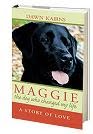
MAGGIE: the dog who changed my life

MAGGIE: the dog who changed my life
Click photo to visit dawnkairns.com
Showing posts with label pet health. Show all posts

Friday, December 16, 2011

Keep Pets Safe from Holiday Food Hazards

Guest Post (guest poster later requested link removal)

Tis’ the season for holiday treats! While our families are busy enjoying all of the wonderful foods that come with this time of year, it’s important to make sure pets don’t get their paws on potentially dangerous human foods. Below are a few ingredients that may be a part of your holiday festivities that could mean serious digestive upset or an emergency trip to the vet if ingested by your pets. 

•Onions, Garlic and Chives: You might use these ingredients to flavor that big holiday dinner, but take caution to ensure your pets don’t ingest large quantities of these foods. These ingredients might make our food tastier, but can cause gastrointestinal discomfort and potential red cell damage for our pets. 

•Fatty Foods: Too many fatty table scraps can lead to pancreatitis in dogs and cats, which is a potentially fatal condition. Symptoms of pancreatitis include diarrhea, vomiting, lethargy, abdominal pain and depression. Just one instance of eating too much food that is high in fat can trigger pancreatitis in pets, so watch your dinner guests to make sure treats aren’t being given under the table. 

•Alcohol: When enjoying your glass of champagne or holiday cocktail, don’t let your sweet pup or kitty sneak any sips. Alcohol can cause pets to experience vomiting, diarrhea, a decrease in coordination, difficulty breathing, tremors, coma and even death. Don’t take any chances with your pet’s wellbeing by keeping alcoholic beverages far from reach. You might also consider keeping your pet in a separate room during holiday parties. 

•Macadamia Nuts: While these nuts can make a tasty addition to holiday cookies, they contain an unknown toxic element that can trigger vomiting, lethargy and even temporary hind end paralysis in dogs and cats. 

•Grapes and Raisins: Whether you’re serving a healthy snack to party guests or adding raisins to those holiday cookies, make sure your pets don’t’ sneak a bite of these foods. Both grapes and raisins are toxic for our canine and feline companions and can cause kidney damage, kidney failure and even death.  

•Milk: When setting out milk and cookies for Santa, make sure Fido doesn’t help himself instead. Dairy products cause diarrhea and digestive upset for pets -so keep Santa’s snack out of reach from four-legged family members to avoid a holiday mess. 

•Chocolate and Coffee: When you cozy up with that yummy dessert and cappuccino this holiday season, don’t leave your treat unattended. Chocolate and caffeine can cause vomiting, diarrhea, hyperactivity, an abnormal heart rhythm, seizures or even death. Protect your furry family members by keeping foods that contain these dangers out of reach. 

•Xylitol: When popping that after-dinner mint or piece of gum, be aware that many sugar free varieties contain a sweetener called xylitol, which can be deadly for dogs. Xylitol can cause a dog’s blood sugar level to drop to a dangerous low, causing weakness, confusion, seizures and sometimes even death. 

•Avocados: Avocados may not be a traditional holiday food but they’re a year-round favorite for many families. Although delicious and healthy for human consumption, avocados are a danger to pets for multiple reasons. The large pit can cause gastrointestinal obstruction if swallowed and the rest of the fruit contains persin, which can cause vomiting and diarrhea in pets. 

To keep the holidays safe and happy for your pet, stick to healthy canine or feline treats or pet-safe human foods (i.e. an apple slice for your dog). If you ever have any concerns about foods your pet has ingested, immediately contact a veterinarian.

Thursday, August 4, 2011

Heart to Heart: Nonverbal Communication with Your Animals

Posted By Dawn Kairns, Author of MAGGIE: the dog who changed my life

I was first awakened to animal communication through my relationship with my black lab, Maggie. After her death I had my first introduction to an animal communicator, and was simply amazed at her intuitive/psychic abilities in regards to my relationship with Maggie. I write about my awakening to intuition, animal communication and animal energy in my book, MAGGIE: the dog who changed my life. (If you want to learn more visit www.dawnkairns.com). Since then, my other animals have had the benefit of seeing them through an entirely different filter ... that of looking for their nonverbal communication in a way I didn't know to before. Today I read this article about animal nonverbal communication on the Care 2 Blog and want to share it with you.

Maddie, our 6 year old "black lab," rescued at 10 months

Nonverbal Communication with Our Dogs and Cats

Nonverbal communication is a gift that all living beings share, one you’ll need to reawaken to better interact with and care for your animal companions. Most dog and cat lovers already understand canine and feline body language, which is one non-verbal technique. But you can use your other, natural, nonverbal communication skills, and actually begin to see things through your dog or cat’s eyes, and become his/her voice.

You can learn animal communication by taking a class or reading some of the great books available today on the subject. But many of the basics are so simple that we can easily begin nonverbally communicating right away. Remember, long before humans had spoken language, we were able to communicate among ourselves and with the animals; it is a kind of heart to heart communication skill that we all possess.

Did you ever know a set of twins who said they each knew what the other was thinking, or you heard your mother say she had “woman’s intuition” or “just knew something was wrong.” Have you ever had an image of a friend come to mind and then received a phone call from that very person saying,“I was just thinking about you and wanted to say hello”? These are all examples of nonverbal communication.

Those of us fortunate enough to have been raised with animal companions probably “talked” to them all the time—and they “talked” back—without words. You didn’t have to be Dr. Doolittle to do it, either. You may have chalked up your own memories of such experiences to an overly active imagination. But it’s far more likely that, as a child, you were still unencumbered by belief systems that would tell you otherwise.

You can try it anytime with your own dog or cat, simply by listening to your heart, instead of to your head with its endless, meaningless chatter. Just let those thoughts pass by you, and relax and breathe deeply. You’re going to visualize your furry companion coming over to you. Close your eyes so that you focus on every detail: the feeling of your dog or cats lovely coat, those deep, trusting eyes staring up at you, and imagine him walking toward you. Often, even the first time you try it, your cat or dog will be by your side before you know it, so happy that you’ve communicated with him at long last, in his own way.

Please don’t worry about whether you’re “doing it right.” Not every person (or animal) is visually oriented. Visualization is just like imagining or remembering. It may come as actual pictures, like a movie, or as sounds, or a voice, or as feelings, or just a sense of “knowing.” Any way you receive the information is valid.

It is very important to always communicate in positive terms— “see” what you want your dog or cat to do, rather than focusing on unwanted behaviors. Dogs and cats live fully in the moment, so picture them as you want them to be. For instance, don’t ask them if they want to go to the vet or the groomer or for a ride in the car. Why? Because, they don’t know how they’ll feel until they get there to that exact moment in time. Unlike us, dogs and cats live in the moment. What lessons we can learn about being here—right now! So visualize them peacefully riding in the car, or calmly allowing the vet to examine them.

Practice visualizing positive, loving pictures rather than negative, worrying ones. Have you noticed that the things you worry about often seem to happen? Practice positivity, and positive visualization, and you’ll find it spilling over into every aspect of your life.

This is so crucial when communicating with your animal companions. If you say, for example (either out loud or nonverbally), “Don’t jump on the couch,” your dog or cat sees an image in your mind’s eye of him jumping on the couch. He won’t get the “don’t” part of it. He’ll think oh, she wants me to jump on the couch. Your yelling at him to not jump on the couch is then a mixed signal. Instead, say and visualize what you DO want him to do. In this case, you would say, in an even but stern tone, “Go to your bed!” Then gently carry or lead him to his bed to reinforce the positive behavior.

It’s impossible to hide your feelings from dogs and cats. They always know—and they may “get it” even before we know ourselves. They can even take on your stresses, fears, and frustrations. Over time, these may manifest as illness. So it’s a good idea to even refrain from arguing in front of your animal companions; it’s extremely stressful for them. It’s not fair to treat them as if they’re not in the room when we lose control of our emotions. Their sensibilities should be respected.

To give you an idea how sensitive dogs are, Rupert Sheldrake, a British biologist and the author of Dogs That Know When Their Owners are Coming Home, did an experiment in which he placed video cameras with time codes in the house, aimed to catch the action of the homebound dog. At a random time, unbeknownst to the human or dog, the human would get a phone call on a cell phone many miles away, saying to return home. At that very instant, cameras showed that the homebound dog would become excited and run to the door to wait for their human. This experiment was repeated hundreds of times, and were all confirmed by the videos. The moral of this story: don’t feel silly practicing nonverbal communication, EVER!

You can also practice this pure heart-to-heart communication skill with a new pet, or with animals at dog or cat shows or shelters, or even at your vets office. First, learn the cat or dog’s name, if possible. Try saying the name in a sweet, soft, “feminine” (high-pitched) voice. We pretty much all do that with animals and babies, right? It seems, in the animal world the female voice is the most nonthreatening. If you’re a man, or a woman with a deep voice, raise your pitch and speak softly.

Of course, always ask the guardian if it’s okay to work with and touch the animal; and then ask the animal’s permission.

To start, if you can, get down a bit lower than normal (ideally, at the animal’s eye level) and imagine the dog or cat sitting on the floor of your own home. You may get a response as a picture of what his own home looks like from his point of view. Perhaps you can distinguish the outlines of a bed or the legs of a coffee table from underneath: what the dog sees from that perspective. Your image may look like a black-and-white negative, reverse image, rather than a normal photo type memory.

If you don’t get a picture, it doesn’t mean you’re not doing it right. The dog may just be telling you he’s not allowed in that room. Trust yourself and the feelings that come up and continue to listen with your heart. Accept the images or feelings you do get, and go on. He may tell you something about what he likes or dislikes. Or he may be content exactly where he is right now. Keep going anyway, and just let him talk through his own senses.

What are you getting? Is he showing you what his floors look or feel like? Do cold, slippery floors make him nervous because he skids on them? Now visualize the cat or dog’s feeding area. What kind of food does he eat? Do you taste or feel any textures in your mouth? What about water? Is it fresh and clean? What has he smelled recently? He may change the picture you send to reflect his truth, and he may present it to all of your senses or just some of them.

As you continue, do see other animals where he lives? Send him a picture of one of your animal companions. What does he say to that? What does he like to play with? Cats may have little balls and catnip toys, and dogs may have chew toys, tennis balls, or maybe even a Frisbee. Give him these images and see what you get back. If his human companion is there, ask questions to help you assess your images. After you present an image to him, remember to leave a space for him to answer.

As you read the impressions your animal friend is sending. You may receive feelings of space and expansion if he has room to play and places to rest in—or feelings of contraction if he’s been caged or otherwise too restricted.

Perhaps you may feel he’s trying to tell you about an aggressive person. This person may not necessarily be a man; it could be a woman or child with a strong personality—dogs and cats sense human beings as personalities, not as men and women. Ask the dog or cat non verbally how he likes this person. He may wish the person would leave him alone, or he may enjoy playing with the person but can’t understand why he gets scolded for playing too roughly.
  
You can use your nonverbal skills to assess the animal’s well-being through a mental body scan. Just look at the animal, starting with the head and working down the back to the tip of the tail. How do you feel compared with how you felt before scanning? If you feel anything unusual as you continue your scan, you may be on to something. Ask the dog or cat, using his name, how he feels as you move along his body with your eyes.

If you don’t have permission to touch the animal, you can pet the cat or dog’s aura. This is more subtle, but just as effective. Think how you’d feel if a perfect stranger just started stroking you without your consent. Then when you use this indirect way of laying on hands by petting the space around the body (which is referred to as the etheric double), you can often feel the animal’s energy and determine whether he is receptive to your touch, which after all will leave your scent on this dog or cat. By using the etheric double area you will find that this in itself is a valuable avenue of communication and diagnosis, and through it you can offer much healing, especially when you use love as the catalyst.

As you practice, your skills will improve. When doing a mental body scan, you may feel discomfort in certain parts of your own body. While this is important information, you do not need to hold it in your body. Simply release the feeling and say to yourself,“This animal’s feelings are his own. I release them.” In your mind’s eye, wrap the dog or cat in healing white light, or say a prayer or blessing. Then “turn off” the discomfort, much as you would the TV when it transmits images you don’t like. As simply as you would change the channel; just change the subject. It is never necessary to be the recipient of any other being’s pain.

Nonverbal communication seems to come most easily with other people’s animals. It’s sometimes difficult to practice with our own furry friends because we are so emotionally involved with them. Gradually you’ll develop a proficiency that you can then apply at home. Most folks do their best communicating with their own animal companions through play. Through play we express and hear verbal, non-verbal, body language, and other communications.

Be sure to talk to your animal companions about their day. Sometimes if you have more than one then they compete to communicate with us all at once. Just give them the time and the space to get it all off their chests. Remember, they knew you were coming home long before you got there as Sheldrake proved, and have been happily waiting to talk to you!

Nonverbal communication can greatly expand your relationship with animals, but some dogs and cats are reserved, just like certain people are. They simply don’t want to converse. Don’t be discouraged. And some people never get pictures, only feelings; and that’s fine. Trust yourself, and proceed with openness, imagination and confidence. You’re on your way to being a nonverbal communications expert and experience for yourself that the intelligence and spirit in all life!

Monday, May 16, 2011

How to Control Fleas Without Chemicals


This is the time of year many pet guardians have to think about protecting their dogs and cats from fleas and ticks. Because they are recommended by veterinarians and common place to use, many folks don't realize that many flea and tick products are toxic to both their pets and to humans. This excellent article by author Ingrid King (see her full bio below) addresses the use of safer natural alternatives for you and your pets.


  How to Control Fleas Without Chemicals 
Many of the flea and tick treatments available today contain toxic chemicals that can be hazardous to pets and to people.  Even when these products are used according to the manufacturer's directions, these chemicals are not safe for pets or humans.  The Environmental Protection Agency, in coordination with the Food and Drug Administrations Center for Veterinary Medicine, is pursuing a series of actions to increase the safety of spot-on products for pets.  These actions are designed to help consumers use these pesticides safely.  However, many pet owners prefer to not use these products at all and are looking for safer, more natural alternatives instead.

There are safer, natural ways to control fleas.  They may require a bit more effort on your part, but isn't that effort worth it if it's safer for you and your pet?

Combing
Use a good flea comb with tightly spaced teeth.  Comb your pet daily during flea season and drop any fleas you find into a bowl of soapy water to kill them.

Bathing
Bathe your pet with a gentle shampoo such as oatmeal.  You don't need to use harsh flea shampoos - most of them have chemicals in them, which is what you're trying to avoid by not using the pesticide spot-ons in the first place.    Fleas tend to accummulate in bedding, so wash your pet's bedding as well.

    
Vacuuming
Vacuum thoroughly, including on and under furniture and in crevices and near baseboards.  Discard the vacuum bag immediately after vacuuming to prevent fleas and eggs from reinfesting your home.  Severe infestations may require professional steam cleaning.

Diet 
Feeding a high quality, varied diet can help prevent fleas.  A stronger diet leads to a stronger immune system, and it is believed that this can contribute to your pet being more resistant to fleas.  Pet owners who feed raw or homemade diets have reported that their pets no longer have flea problems.  

Maintain Outdoor Areas
Keep your grass mowed and keep shrubbery trimmed short in areas where your pet spends time.  This will increase sunlight and dryness, which will help reduce the flea problem.  Sprinkle diatomaceous earth in your yard to cut down on the flea population.  Diatomaceous earth also makes a great natural pantry bug killer, it works for all insects.  It's reported to be safe around pets, but don't sprinkle it directly on your pet!  

Natural Flea Control Products
There are numerous natural flea control products on the market, but not all of them are safe for pets.   In particular, avoid using products containing essential oils such as Pennyroyal, Tea Tree or Citrus oils.  None of these are safe to use around pets, especially around cats.  The Lavender Cat is an excellent website devoted to scientific research about cats and essential oil safety.  The site is currently being revised, but it has some good basic information about why essential oils are not safe to use around cats.  Some manufacturers of essential oils claim that their oils are pure and safe to use around cats, but quite frankly, I wouldn't take any chances on statements of that nature unless they're backed up by research by an independent toxicologist.

The National Resource Defense Concil's Green Paws website has a comprehensive directory of flea and tick products, including natural products, and lists ingredients and toxicity warnings. 
If you're using natural products to control fleas for your pets, please share with us what has worked for you in a comment.

(c) Ingrid King 2011 
Re-printed with permission of the author

Ingrid King is the award winning author of Buckley’s Story – Lessons from a Feline Master Teacher.  She is a former veterinary hospital manager turned writer. Her online magazine News for You and Your Pet goes out to subscribers around the world. Her blog, The Conscious Cat, has been called “educational cat nip for the cat lover” and is a comprehensive resource for conscious living, health and happiness for cats and their humans.  For more information about Ingrid and Buckley’s Story, please visit www.ingridking.com.

Photo: Public Domain Pictures

Tuesday, November 4, 2008

Why I Wrote "Maggie: The Dog Who Changed My Life"

Maggie was a very special being I was blessed to share my life with. The depth of our love for each other, of our human-canine bond, was deeper and beyond anything I imagined a bond with a dog could be.

Maggie's way of being so present in the moment brought me more into the present moment. She reached out to people and brought them into our circle. Maggie's genuine, loving way brought people into their hearts, and so my communication with others became more genuine and from the heart. Through her I learned the power of now, of living in the present, and that the most important things in life are love, connection, and following our hearts.

My journey with Maggie helped me make important personal and professional decisions about who I wanted to be and how I wanted to live; to honor my wants and question my shoulds. She taught me the importance of being over doing and to follow my intuition.

Maggie showed me that she read my thoughts somehow and understood me more than I thought possible in a dog. Call it telepathy. Call it a sixth sense. I wrote MAGGIE: the dog who changed my life in the hopes that you the reader will tune more into your own dogs and see them through the eyes of beings who understand you, their human, and read your thoughts and energy more than we realize; and in the hopes that you will look at animals as different beings, not lesser beings. Tuning into your dogs at this level deepens the experience of being a dog whisperer with your own dog.

I also wrote Maggie: the dog who changed my life to encourage you, the readers, to listen to yourselves, to your intuition, and to question veterinarians when your gut feelings disagree with a vet's diagnosis. I also encourage you to evaluate the information available about pet food and vaccination frequency and ask yourselves as I did in Chapter Nine in Maggie: the dog who changed my life, "What's Really Best for Our Pets?"

Finally, my hope is to help you know that the deep grief you feel when you lose your precious pet is normal; to help you feel supported and understood, and most important, to not feel isolated in your grief.

Now you know a few things about why I wrote Maggie: the dog who changed my life. To learn more about my book, visit www.dawnkairns.com. Do you have a special dog story you want to share, past or present? Your own special once-in-a-lifetime dog? Let us hear from you. Go to sharedogstories.ning.com and tell us about your special pet or share your comments on this post.