At Tucson Greyhound Park, "greyhounds are kept confined in small cages which are barely large enough for them to stand up or turn around," according to Christine A. Dorchak, Esq., President, GREY2K USA.
And greyhounds face the risk of serious injury when racing. GREY2K USA has been instrumental in getting petitions signed in an attempt to get Skechers shoes to pull their Greyhound racing commercial from the Superbowl last Sunday, and in lobbying for gryehound protection.
Dorchak says state records show nearly 1000 greyhound injuries between January 2007 and November 2009 at Arizona racetrack. Common injuries include broken legs and other fractures, dislocations, muscle tears, broken backs, heat stroke,cracked skulls and even paralysis according to. Formed in March of 2001, GREY2K USA is a national non-profit organization dedicated to passing stronger greyhound protection laws and ending the cruelty of dog racing.
Yesterday, the Arizona Committee on Natural Resources and Transportation voted unanimously in favor of phasing out dog racing in Arizona!
Thank you, GREY2USA and thank you Arizona -- this is a great victory for greyhounds and for animal rights.
.
I am the author of "MAGGIE the Dog Who Changed My Life" and "FINAL YEARS Stories of Parent Care, Loss and Lives Changed." My hope is to increase awareness of animal intelligence, emotions, & the special relationship between humans & animals. Covers pet loss, puppy mill awareness, pet health, animal rescue, the spiritual bond between animals & humans, & their sixth sense way of reading us. Born out of my special bond with my black lab, Maggie.
Showing posts with label animal cruelty. Show all posts
Tuesday, February 7, 2012
Sunday, December 11, 2011
THANK YOU, Israel: Cat Declawing is Made Illegal -- Brings Jail and Hefty Fine
Re-Posted By Dawn Kairns, Author of MAGGIE: the dog who changed my life
Israel Makes Cat Declawing Illegal
"Cat declawing is now officially — and legally — off limits in Israel.
On November 28th, the Israeli legislature voted unanimously to make cat declawing illegal. Imagine the collective meow of relief that was heard across the country! If someone is caught declawing a cat they can expect up to one year in jail and a hefty $20,000 fine. Israel joins the U.K., Brazil, most of Europe, and Australia for taking a strong stand on this cruel practice. In the United States, declawing unfortunately remains legal except in a handful of cities.
Onychectomy (the medical term for declawing) is a procedure where the claw and part of the bone of a cat’s toes are removed, usually to keep the feline from ruining furniture, catching birds or scratching children. Cat claws however are rooted deep in the bone, so partial bone removal is necessary in an onychectomy. To put this in perspective, the bone removed on each digit is akin to removing up to the third knuckle on each human finger. OUCH!
In addition to being painful, declawing leaves a cat virtually defenseless. For an indoor cat, this may not be much of an issue, but for a cat that spends time outdoors and meets an unfriendly dog, being declawed can be fatal. Cats also need their claws for stretching their tendons, climbing, balance and marking their territory. Oh, and shredding your favorite reading chair.
Many people who consider having their cats declawed think the procedure is simple and relatively painless — and that it is a quick fix for razor sharp claws on their otherwise sweet and cuddly kitty. Clearly, having a significant section of bone removed on each toe is not a simple painless operation. Please consider passing on the word to new cat owners or submitting an editorial to your local newspaper that this is not the case!
A humane alternative to declawing is the monthly trimming of claws with nail clippers. Although, that sounds like a potentially hazardous endeavor for any human to undertake, it can be safely done! I trim my cats’ claws, especially in the winter when the snowy weather keeps them house bound and they get less natural wear and tear. I just use human nail clippers and only do it when they are sleepy. I am very careful not to clip beyond the clear claw area. If you clip into the pink sensitive area (called the “quick”), your cat will definitely let you know about it! The goal is to blunt the end of each claw. For a more detailed explanation on how to cut kitty’s claws without drawing your own blood, visit the website: Cats Scratching.

So, again three cheers to Israel for having the gumption to just say no to cat declawing."
Monday, May 2, 2011
It Was "Just" a Pitbull ...
Can We As a Therapy Dog Team Change That Perception?
Last week when Maddie, my therapy dog and I made our weekly visit to the juvenile center, I had intended to talk to the kids about animal cruelty. However, when we arrived and there was only 1 teen there, I thought about saving this talk for a larger group. But for some reason I decided to go ahead and talk about what constitutes animal cruelty, what an individual can do about it, and the link between animal and human abuse.
"Yes," came the surprising answer back. Surprising because of his rapid forthrightness with his response. "I've seen a relative hit his pit bull. But it was just a pit bull. I've hit a pit bull, too. But I would never hit a dog like that one," he said, motioning to Maddie.
"But it's a pitbull," he said. "They're different." He made some reference to himself doing something wrong, and said if punishment wasn't OK then he shouldn't be in the juvenile center. Then I talked about the importance of drawing boundaries and having consequences for both humans and dogs -- as opposed to striking any being. I could see he was still dubious, and likely brainwashed by his relative or others with a mind set that pit bulls are fighting dogs or mean and need to be "put in their place."
"You're not buying this, are you?" I asked him.
"I'm listening," he said.
"Did you know animal cruelty is against the law in Colorado?"
"I don't pay much attention to the laws," he quipped.
"Hmm. Do you suppose that's why you're in here?" I was amazed at his response!
He smiled and shrugged. As he began playing with Maddie, I talked about the stereotype so many people have re: pit bulls; how it was humans who bred fighting genes into the breed and try to make them mean; and how at the turn of the century they were the family dog.
Last week when Maddie, my therapy dog and I made our weekly visit to the juvenile center, I had intended to talk to the kids about animal cruelty. However, when we arrived and there was only 1 teen there, I thought about saving this talk for a larger group. But for some reason I decided to go ahead and talk about what constitutes animal cruelty, what an individual can do about it, and the link between animal and human abuse.
I asked a question I'd never asked before. "Have you ever witnessed animal cruelty? At home? On TV? By a friend?"
| Dustin, a caseworker, with Maddie |
"Yes," came the surprising answer back. Surprising because of his rapid forthrightness with his response. "I've seen a relative hit his pit bull. But it was just a pit bull. I've hit a pit bull, too. But I would never hit a dog like that one," he said, motioning to Maddie.
| Maddie and me: We talk first and then the kids play with her |
First, I had to keep my mouth from dropping in order to respond and not blow all rapport with this young man.
"What do you mean, just a pit bull? Hitting an animal to punish him/her is not OK," I said.
| Ms. Maddie paying attention to "Mom" |
"You're not buying this, are you?" I asked him.
"I'm listening," he said.
| Maddie and Nick, another caseworker (he really loves her!) |
"Did you know animal cruelty is against the law in Colorado?"
"I don't pay much attention to the laws," he quipped.
"Hmm. Do you suppose that's why you're in here?" I was amazed at his response!
He smiled and shrugged. As he began playing with Maddie, I talked about the stereotype so many people have re: pit bulls; how it was humans who bred fighting genes into the breed and try to make them mean; and how at the turn of the century they were the family dog.
| Barb, juvenile center supervisor, with Maddie |
I do find it interesting that while some part of this young man believed that pit bulls somehow deserved to be hit to control them, where other breeds do not, he did clearly recognize it as cruelty given his immediate response to my first question. Did Maddie and I make a difference in this teen's thinking about animal cruelty and pit bulls? I'll probably never know. I can only hope we planted a seed.
Thursday, December 30, 2010
Shocking Animal Cruelty in Other Countries - Can We Change It?
Imagine you are out walking your dog, and an official grabs your dog's leash and beats him to death as you watch, horrified and helpless. According to the Shanghai Daily Newspaper, it happened in Mouding county in Yunnan province in southwestern China in 2006. 50,000 dogs were slaughtered over five days in a government-ordered crackdown! Their reason for the bludgeoning deaths? Three people died of rabies. Only 3 percent of dogs are vaccinated against rabies and each year more than 2,000 people die from rabies. How about vaccinating dogs rather than clubbing them to death? Where are your hearts, China? Your compassion?
China is a country where dog meat is eaten; dogs have never had an easy time there. The county police chief led killing teams that entered villages at night in this massacre. They made noise to get dogs barking, then beat them to death. Owners were offered 63 cents per animal to kill their own dogs before the teams were sent in. Can you even imagine?
Ironically, Mouding is famed for its Buddhist shrines -- what's wrong with this picture? Not my take on Buddhism by any stretch. Couldn't the government have prevented this cold-blooded, violent, brutality by creating a program to vaccinate dogs against rabies? Read full story at MSNBC.msn.com. My understanding is the slaughter of innocent dogs has not stopped with this one city. PETA recommended a boycott of Chinese products. I'd say that's the least we can do.
Similarly, imagine living in a public housing complex and having animal control workers show up at your door, seize your dog or cat, drive away with her and throw her off a 50-ft. bridge to her death. In a brutal incident last October, 2007 in Barceloneta, Puerto Rico, this is exactly what happened to dozens of dogs and cats. This incident in Puerto Rico received a lot of international attention and outrage, but perhaps not enough. Keep in mind that Puerto Rico is a territory of the United States. So they ARE under our animal cruelty laws. But obviously they are not enforced by anyone, including our government. This outrageous incident prompted a visit to Puerto Rico from Kim Intino of the Humane Society of the United States in December, 2007 to meet with tourism officials to determine how to address the island’s abundance of unwanted animals. My understanding is that the HSUS is supporting several spay/neuter initiatives on the island. This is where it starts -- to prevent overpopulation, but the existing animals need more! Children are raised thinking this heinous treatment of animals is fine. We have to change that! People in Puerto Rico need to be re-educated regarding humane treatment of animals since abuse is so common. Read more about this incident in USA Today here.
Clearly, many cultures do not respect animals or share our love for pets. Most countries in the Third World don't have laws against animal cruelty. Mexico is one of them. Muslims regard dogs as unclean and owners may have their pets confiscated while on a walk. In parts of Asia, cats and dogs are skinned alive and boiled. Sadly because children are indoctrinated in these forms of violence to animals in many countries like Puerto Rico, they find animal cruelty to be a 'normal' aspect of life. It is so important to teach them, through humane education, that there is NOTHING normal about animal cruelty -- to teach them to love and respect precious animals instead!
Canadian born Steve McGarva has first-hand experience with animal cruelty in Puerto Rico while living there for two years. Stay tuned for my next blog post that tells his story, including video footage, of his shocking discoveries about animal cruelty while living on the "Island of Enchantment," and what he did and continues to do about it.
What can you do? Pressure the tourism industry and government to continue developing humane programs. For example, if you visit Puerto Rico (or any other tourist destination) and are disturbed by the sight of homeless dogs, it can be effective to let the tourism agencies know that. Suggest the solutions of spay/neuter, legislation, and humane education, NOT eradication. Support local groups that are focusing on spay/neuter, such as PAWS in Isabela, Puerto Rico. Find groups that are offering spay/neuter and humane education trips to these countries such as the group McGarva started, the Achates Legacy Rescue Foundation, and join them.
Animal cruelty in our own country with puppy mills, dog fighting, and so much more is bad enough. What do you think? Can we change animal cruelty in other countries?
Posted By:
Dawn Kairns
Author of MAGGIE the dog who changed my life A Story of Love
Website: www.dawnkairns.com
China is a country where dog meat is eaten; dogs have never had an easy time there. The county police chief led killing teams that entered villages at night in this massacre. They made noise to get dogs barking, then beat them to death. Owners were offered 63 cents per animal to kill their own dogs before the teams were sent in. Can you even imagine?
Ironically, Mouding is famed for its Buddhist shrines -- what's wrong with this picture? Not my take on Buddhism by any stretch. Couldn't the government have prevented this cold-blooded, violent, brutality by creating a program to vaccinate dogs against rabies? Read full story at MSNBC.msn.com. My understanding is the slaughter of innocent dogs has not stopped with this one city. PETA recommended a boycott of Chinese products. I'd say that's the least we can do.
![]() |
| Rescued from Puerto Rico and adopted |
Clearly, many cultures do not respect animals or share our love for pets. Most countries in the Third World don't have laws against animal cruelty. Mexico is one of them. Muslims regard dogs as unclean and owners may have their pets confiscated while on a walk. In parts of Asia, cats and dogs are skinned alive and boiled. Sadly because children are indoctrinated in these forms of violence to animals in many countries like Puerto Rico, they find animal cruelty to be a 'normal' aspect of life. It is so important to teach them, through humane education, that there is NOTHING normal about animal cruelty -- to teach them to love and respect precious animals instead!
What can you do? Pressure the tourism industry and government to continue developing humane programs. For example, if you visit Puerto Rico (or any other tourist destination) and are disturbed by the sight of homeless dogs, it can be effective to let the tourism agencies know that. Suggest the solutions of spay/neuter, legislation, and humane education, NOT eradication. Support local groups that are focusing on spay/neuter, such as PAWS in Isabela, Puerto Rico. Find groups that are offering spay/neuter and humane education trips to these countries such as the group McGarva started, the Achates Legacy Rescue Foundation, and join them.
Animal cruelty in our own country with puppy mills, dog fighting, and so much more is bad enough. What do you think? Can we change animal cruelty in other countries?
Posted By:
Dawn Kairns
Author of MAGGIE the dog who changed my life A Story of Love

"They stay in our lives for a while, leave footprints on our hearts, and we are never, ever the same." -- Author Unknown
Labels:
animal cruelty
,
animal cruelty laws
,
China
,
humane education
,
Humane Society of the United States
,
Mexico
,
Puerto Rico
,
rabies
,
spay and neuter
,
Steve McGarva
,
tourism
Thursday, November 25, 2010
Missouri Wants to Keep Puppy Mills in Business, Despite Passing Prop B
This post was written on the Care 2 Blog by alicia graef. This is such an important issue, so crucial to the welfare of dogs, that I want to share it with you on my blog, too:
On November 2, Missourians cast their votes and passed Prop B, the Puppy Mill Cruelty Prevention Act, a citizen initiative brought to voters to stand up for dogs languishing in puppy mills in their state. Unfortunately, legislators are already working to kill this new law.
Missourians for the Protection of Dogs, a coalition formed by animal protection organizations, businesses, veterinarians, and citizens, hit the streets educating people about the atrocities inherent to puppy mills, such as cramped conditions, dogs being trapped in their own filth and sick and injured dogs being left with no veterinary care to name a few.
Over 190,000 signatures were delivered to the Secretary of State in Missouri to get Prop B on November’s ballot in the country’s worst state for puppy mills. With an estimated 3000 puppy mills licensed by the USDA and the Missouri Department of Agriculture, it’s been called the puppy mill capital of America.
Weak laws regulating commercial kennels have made it the perfect place for unscrupulous breeders to call home. According to the ASPCA, Missouri supplies over 40 percent of the puppies you can find in pet stores across the country.
Prop B, which will take effect in 2011, isn’t anything outlandish. The bill calls for an increase in standard care, including providing food and water, vet care, protection from the elements, exercise, “constant and unfettered access” to the outdoors, room to move around and stretch and rest between breeding cycles. It would apply to breeders with more than 10 dogs and limit the number of breeding dogs to 50 per facility. Violations would result in up to 15 days in jail and a fine of $300.
Prop B calls for nothing more than adequate care for an animal we fondly, and commonly, refer to as man’s best friend. Missourians spoke. They don’t like puppy mills. Prop B passed with 51.6 percent of the votes. Unless they do math differently in Missouri than they do everywhere else, that’s the majority. End of story, right?
Unfortunately, no. It took less than a week for opponents to start coming out of the woodwork trying to get Prop B watered down or repealed.
Breeders of course heard a resounding ca-ching as the new law would significantly raise the cost of running a commercial breeding facility, while others in agribusiness are worried that regulations will expand to livestock. The Tea Party was, of course, also upset.
Worse, legislators are listening and will be discussing possible actions in the new session starting January 5.
“We will start working on that issue probably immediately,” said Senator-elect Mike Parson, a Bolivar Republican. Incidentally, there are 150 licensed breeders in his district.
Rep. Tom Loehner, a Koeltztown Republican who is chairman of the House Agriculture Policy Committee said that the whining heard about the issue in rural areas could “represent a mandate for change,” as most of the votes came from urban areas.
Not to be a smarty pants, but those votes all count the same whether or not the came from rural or urban areas.
Additional concerns were raised over job loss and the potential for Prop B to put legitimate breeders out of business. However, Barbara Schmitz, spokeswoman for Missourians for the Protection of Dogs, brilliantly pointed out that Prop B would be economically beneficial by providing an increased demand for veterinary care, while simultaneously reducing the financial burdens of rescues and other funding allocated to the mistreatment of animals.
As for putting legitimate breeders out of business, what legitimate breeder needs more than 50 breeding dogs? That’s 50 litters of puppies per breeding cycle, yet we destroy millions of innocent dogs every year simply because there aren’t enough homes and Missouri wants to let their state continue to contribute to this horrendous industry churning out puppies like inanimate objects?
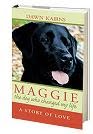
Dawn Kairns
Author of MAGGIE the dog who changed my life A Story of Love

"They stay in our lives for a while, leave footprints on our hearts, and we are never, ever the same." -- Author Unknown
Become a fan on Facebook of MAGGIE: the dog who changed my life
Sunday, November 21, 2010
Puppy Mill Insider Speaks Out (Video)
Posted By:
Dawn Kairns
Author of MAGGIE the dog who changed my life A Story of Love

"They stay in our lives for a while, leave footprints on our hearts, and we are never, ever the same." -- Author Unknown
Become a fan on Facebook of MAGGIE: the dog who changed my life
Thursday, October 28, 2010
Chamberlin's Abusers Deserve Maximum Sentence (videos)
Chamberlin, a sweet lab-mix, was abandoned and found tied to a tree in the yard of an abandoned home, where it's thought he endured two long months without food and shelter; and he had minimal water. He was too weak to stand. Nelli Brock and Wilbert Morrison, Jr., are charged with 2 counts of felony animal cruelty. They will appear in court on Friday, October 29, 2010. Please contact the district attorney asking for the harshest penalty. See the Sample Letter to the DA here as a guide.
Thank you to Laura Lassiter and Our Compass blog for making me aware of this letter to the DA (click link at end of post to see on "Our Compass") so we can all help Chamberlin and be sure his abusers receive the maximum sentence for animal cruelty.
Chamberlin's Abuser's being arrested (video) -- the case:
http://www.myfox8.com/videobeta/b99342ba-3edc-48f8-a29b-63d95b207c56/News/2-Arrested-in-Animal-Abuse-Case
Please click link below for a sample letter to the district attorney that you can use to help Chamberlin's abusers receive the maximum sentence for animal cruelty for what they did to Chamberlin:
http://ourcompass.wordpress.com/2010/10/26/chamberlin-needs-your-help-his-abusers-are-going-to-court-this-friday-102910/
Posted by:
Dawn Kairns
Author of MAGGIE the dog who changed my life A Story of Love
Website: www.dawnkairns.com
Become a fan on Facebook of MAGGIE: the dog who changed my life
Thank you to Laura Lassiter and Our Compass blog for making me aware of this letter to the DA (click link at end of post to see on "Our Compass") so we can all help Chamberlin and be sure his abusers receive the maximum sentence for animal cruelty.
Chamberlin's Story
Chamberlin's Physical Rehab
Chamberlin's Abuser's being arrested (video) -- the case:
http://www.myfox8.com/videobeta/b99342ba-3edc-48f8-a29b-63d95b207c56/News/2-Arrested-in-Animal-Abuse-Case
Please click link below for a sample letter to the district attorney that you can use to help Chamberlin's abusers receive the maximum sentence for animal cruelty for what they did to Chamberlin:
http://ourcompass.wordpress.com/2010/10/26/chamberlin-needs-your-help-his-abusers-are-going-to-court-this-friday-102910/
Posted by:
Dawn Kairns
Author of MAGGIE the dog who changed my life A Story of Love

"They stay in our lives for a while, leave footprints on our hearts, and we are never, ever the same." -- Author Unknown
Become a fan on Facebook of MAGGIE: the dog who changed my life
Thursday, June 24, 2010
Dogs Are Not Mere Possessions: Tethering Dogs Becomes Illegal in More Communities
Many of us would never consider chaining our precious dogs for hours, or worse, for days or months. But too many people don't give it a second thought, forcing their dogs to endure even extreme weather conditions without exercise or companionship. Tethered dogs tend to be more aggressive and anxious, not to mention being horribly lonely. Kudos to Alexandria who just passed a law against this miserable practice. They have limited tethering a dog to 3 hours maximum. Read the full story here on the Care 2 Blog.
With dog deaths and injuries up during the summer months due to the heat, chaining dogs may also soon be illegal in Guilford County, North Carolina. May many communities soon follow your wonderful examples and make dogs a part of the family, ending their suffering and isolation at the end of short chains.Read the full story here.
Posted By:
With dog deaths and injuries up during the summer months due to the heat, chaining dogs may also soon be illegal in Guilford County, North Carolina. May many communities soon follow your wonderful examples and make dogs a part of the family, ending their suffering and isolation at the end of short chains.Read the full story here.
Posted By:
Dawn Kairns
Author of MAGGIE the dog who changed my life
Twitter: themaggiebook
Monday, May 17, 2010
New Bill to Prohibit Animal Cruelty "Crush" Videos
From the ASPCA Blog
The day after the Supreme Court’s ruling, Representative Gallegly (R-CA) introduced H.R. 5092, a new bill designed to overcome the Court’s decision to strike down the Crush Act. The bill amends the Crush Act to give it a much narrower focus, but would still prohibit selling or offering to sell any depictions of animals being crushed, drowned, impaled, or burned where such acts are illegal. Passage of H.R. 5092 will help ensure that the crush video industry is not revitalized in the absence of an enforceable federal law.
Since its introduction, H.R. 5092 has gained tremendous support in the House of Representatives. Out of the House’s 435 voting members, 199 have signed on as cosponsors. H.R. 5092 is currently awaiting action in the House Committee on the Judiciary.
If you would like to help fight animal suffering and exploitation, please visit aspca.org/HR5092 to quickly send an email to your U.S. representative asking him or her to support the revised Crush Act. We also encourage animal lovers to become members of the ASPCA Advocacy Brigade to receive important, timely news about pending animal-related legislation in your state and in Congress.
Posted By:
Dawn Kairns
Author of MAGGIE the dog who changed my life
Website: www.dawnkairns.com
2009 Indie Book Awards Finalist
DWAA 2008 Merial Human-Animal Bond Award Finalist
New, Improved Crush Act Introduced—Contact Your U.S. Rep!
Signed into federal law in 1999, the Crush Act banned the creation, sale and possession of materials depicting genuine acts of animal cruelty where such acts are illegal. The law had effectively dried up U.S. commerce in “crush” fetish videos (also called “squish” videos), which generally depict a woman’s feet crushing to death small animals such as rodents and kittens. Unfortunately, three weeks ago the U.S. Supreme Court declared the Crush Act unconstitutional and therefore unenforceable. The Court’s main concern was the broadness of the law’s language, which could make the law applicable in many circumstances not intended by its authors.The day after the Supreme Court’s ruling, Representative Gallegly (R-CA) introduced H.R. 5092, a new bill designed to overcome the Court’s decision to strike down the Crush Act. The bill amends the Crush Act to give it a much narrower focus, but would still prohibit selling or offering to sell any depictions of animals being crushed, drowned, impaled, or burned where such acts are illegal. Passage of H.R. 5092 will help ensure that the crush video industry is not revitalized in the absence of an enforceable federal law.
Since its introduction, H.R. 5092 has gained tremendous support in the House of Representatives. Out of the House’s 435 voting members, 199 have signed on as cosponsors. H.R. 5092 is currently awaiting action in the House Committee on the Judiciary.
If you would like to help fight animal suffering and exploitation, please visit aspca.org/HR5092 to quickly send an email to your U.S. representative asking him or her to support the revised Crush Act. We also encourage animal lovers to become members of the ASPCA Advocacy Brigade to receive important, timely news about pending animal-related legislation in your state and in Congress.
Posted By:
Dawn Kairns
Author of MAGGIE the dog who changed my life
Website: www.dawnkairns.com
2009 Indie Book Awards Finalist
DWAA 2008 Merial Human-Animal Bond Award Finalist
Sunday, May 2, 2010
Be Kind to Animals Week®: May 2-8, 2010
Taken from the American Humane Website:
http://www.americanhumane.org/protecting-animals/special-events/be-kind-to-animals-week/
"Join the event that’s been celebrated every year since 1915 -- American Humane’s Be Kind to Animals Week. In this annual tradition, we commemorate the role animals play in our lives, promote ways to continue to treat them humanely, and encourage others, especially children, to do the same.
Be Kind to Animals Week is celebrated with shelter information and resources, special American Humane merchandise, and the annual Be Kind to Animals™ Kid Contest that recognizes children who go above and beyond to create a better world for animals.
And while Be Kind to Animals Week is celebrated only once a year, there are ways people can be kind to animals every day. Here’s how:
Speak out for animals
Get informed about policies and legislation that can impact the animals in your community and throughout the country. Also, register to receive Action Alerts from American Humane -- you’ll be able to speak out for animals with just the click of a mouse. Advocacy for animals can make a huge difference in their safety and well-being.
Report animal abuse
Animal cruelty and abuse is not only tragic for animals, but also an indicator that other forms of abuse such as domestic violence could be happening. If you see something that looks suspicious -- a dog chained in your neighbor’s yard that looks underfed, a child putting a cat in a box and kicking it around the yard -- don’t hesitate. Let someone know.
Appreciate wildlife
All animals deserve to be treated humanly -- family pets and animals in the wild. Create an inviting space in your yard and garden for butterflies, hummingbirds and other creatures. If wildlife comes too close to home, look for ways to coexist with animals or to protect your property humanely.
Adopt a pet from a shelter or rescue
Every year, an estimated 3.7 million animals must be euthanized at our nation’s shelters because they could not be adopted into loving homes. Help animals find a second chance at happiness by adopting your next pet from your local shelter or rescue group. American Humane has tips to find the animal companion that’s right for you and develop a bond that will last a lifetime.
Take care of your pet
Pets are like children who never grow up. They need you to help keep them healthy and safe throughout their lives. Keep your animal’s vaccinations up-to-date. Make sure he’s wearing proper identification. Take your pet to the veterinarian regularly. Know what it takes to be a responsible pet owner."
To learn more about the many wonderful programs at American Humane visit: http://www.americanhumane.org/
Posted By:
Dawn Kairns
Author of MAGGIE the dog who changed my life
Website: www.dawnkairns.com
2009 Indie Book Awards Finalist
DWAA 2008 Merial Human-Animal Bond Award Finalist
http://www.americanhumane.org/protecting-animals/special-events/be-kind-to-animals-week/
"Join the event that’s been celebrated every year since 1915 -- American Humane’s Be Kind to Animals Week. In this annual tradition, we commemorate the role animals play in our lives, promote ways to continue to treat them humanely, and encourage others, especially children, to do the same.
Be Kind to Animals Week is celebrated with shelter information and resources, special American Humane merchandise, and the annual Be Kind to Animals™ Kid Contest that recognizes children who go above and beyond to create a better world for animals.
And while Be Kind to Animals Week is celebrated only once a year, there are ways people can be kind to animals every day. Here’s how:
Speak out for animals
Get informed about policies and legislation that can impact the animals in your community and throughout the country. Also, register to receive Action Alerts from American Humane -- you’ll be able to speak out for animals with just the click of a mouse. Advocacy for animals can make a huge difference in their safety and well-being.
Report animal abuse
Animal cruelty and abuse is not only tragic for animals, but also an indicator that other forms of abuse such as domestic violence could be happening. If you see something that looks suspicious -- a dog chained in your neighbor’s yard that looks underfed, a child putting a cat in a box and kicking it around the yard -- don’t hesitate. Let someone know.
Appreciate wildlife
All animals deserve to be treated humanly -- family pets and animals in the wild. Create an inviting space in your yard and garden for butterflies, hummingbirds and other creatures. If wildlife comes too close to home, look for ways to coexist with animals or to protect your property humanely.
Adopt a pet from a shelter or rescue
Every year, an estimated 3.7 million animals must be euthanized at our nation’s shelters because they could not be adopted into loving homes. Help animals find a second chance at happiness by adopting your next pet from your local shelter or rescue group. American Humane has tips to find the animal companion that’s right for you and develop a bond that will last a lifetime.
Take care of your pet
Pets are like children who never grow up. They need you to help keep them healthy and safe throughout their lives. Keep your animal’s vaccinations up-to-date. Make sure he’s wearing proper identification. Take your pet to the veterinarian regularly. Know what it takes to be a responsible pet owner."
To learn more about the many wonderful programs at American Humane visit: http://www.americanhumane.org/
Posted By:
Dawn Kairns
Author of MAGGIE the dog who changed my life
Website: www.dawnkairns.com
2009 Indie Book Awards Finalist
DWAA 2008 Merial Human-Animal Bond Award Finalist
Wednesday, March 31, 2010
Therapy Dog Visit to Juveniles Allows Discussion of Animal Abuse and Domestic Violence
"How is animal abuse related to domestic violence?" I asked them. (While I speak, Maddie is lying at my feet watching me with total focus, like I'm talking about the most interesting thing in the world ... but of course it's the treat bag around my waist that is captivating her!)
I got a few blank stares and a response about abuse in puppy mills. Although I was very happy to see how much a couple of the kids knew about the terrible conditions in puppy mills, I could see they didn't really know or weren't sharing what they knew about the connection between animal cruelty and domestic violence. One young woman noticeably slumped her shoulders, which made me wonder if I struck a chord for her with this subject. I was concerned for her.
I shared with the teens some of the information that I learned from the ASPCA website. A New Jersey study found that in 88% of families who experienced physical abuse of children they had also experienced animal abuse.
"Why do abusers abuse animals?" I asked.
"Because they feel insecure," offered one young man.
"Very true," I said. "And sadly the abuser often gains a sense of power and control over the family with his/her abusive acts with animals or people. An abusive person can use animal cruelty to perpetuate fear in family members or to enforce submission. It can also be a way to prevent the victim or victims from leaving the abusive situation; or a way to punish them for a behavior such as independence that the abuser does not like."
We discussed the signs they may see in an animal as a result of animal cruelty/abuse. According to the ASPCA these include but are not limited to:
- wounds on the body
- flea or tick infestation
- missing hair
- a very thin, starving animal
- limping
- animals who cower when approached by their owners
- dogs who have been hit by a cars and not treated
- dogs repeatedly left alone without water or food or chained in a yard
- dogs left outdoors in extreme weather without shelter
- actually seeing and owners strike or abuse an animal
"You can also contact your local humane society or animal control organization to report animal cruelty in or outside of your family.
You will not only be helping the animals, but you may also keep the abuse from escalating into human abuse."
We lightened up this difficult topic by ending with a 15 minute play period with Maddie, which brought smiles to all of their faces -- not to mention Maddie's!
Posted By:
Dawn Kairns
Author of MAGGIE the dog who changed my life A Story of Love
Website: www.dawnkairns.com
2009 Indie Book Awards Finalist
DWAA 2008 Merial Human-Animal Bond Award Finalist
Subscribe to:
Posts
(
Atom
)
