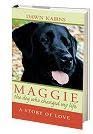
MAGGIE: the dog who changed my life

MAGGIE: the dog who changed my life
Click photo to visit dawnkairns.com
Showing posts with label therapy dogs. Show all posts

Friday, March 13, 2015

The Simpsons Co-Creator Was an Angel to the Animals

A CARE (Colorado Animal Rescue Express) rescue dog
Did you know that Sam Simon, the co-creator of "The Simpsons" spent millions of dollars each year to save the lives of dogs through his establishment of the Sam Simon Foundation? His non-profit organization for dogs was also created to enrich people's lives.

Simon passed away on March 8, 2015 after a battle with colon cancer that was diagnosed in 2012. After learning of his prognosis of only several months to live, Simon decided give his millions to animal charities and the hungry. Not that he wasn't already spending millions to help animals even before his late stage cancer diagnosis. On  a wonderful piece of real estate in Malibu, his Foundation gave stray and abandoned dogs a new chance at life. In 2007, 60 Minutes called the Sam Simon Foundation “the grandest dog shelter in the country."

Some of the ways Simon has used his millions to help animals and the animal rights cause include:

  • a mobile veterinary clinic that travels throughout Los Angeles to assist low-income folks and their pets.
  • a hearing dog program where the Foundation rescues dogs from shelters and humane societies and trains them to become Certified Hearing Dogs.
  • service dogs for veterans where the foundation trains shelter dogs to assist veterans with PTSD, or trained to help veterans with hearing loss, traumatic brain injury or moderate physical limitations.
  • visitation at assisted living facilities where dogs regularly visit and brighten the days of residents of Los Angeles assisted living facilities.
  • adoption program for shelter and rescue dogs where those rescued dogs who don't quite have what it takes to be service dogs can still make amazing companions. 
Markie, rescued in Texas by my husband and me
Simon has also made large donations to PETA (People for the Ethical Treatment of Animals) and the Sea Shepherd Conservation Society. The latter was able to add a fourth ship to its fleet (since Simon bought it for them), and this ship is now defending whales from Japanese whaling activities in the Southern Ocean Whale Sanctuary.

Simon also created the Feeding Families program in 2011 to respond to families and individuals in economic crisis who are unable to provide food for their children and pets, feeding about 200 families per day. As though all of this is not enough of an amazing legacy, Simon, along with Ingrid Newkirk and PETA began buying zoos and circuses in order to send the animals, those he referred to as "the most abused animals in the country," to a sanctuary.

Thank you, Mr. Simon, for your legacy of love to the animals. And thanks to the Care 2 Causes Blog for the full story on Sam Simon and his wonderful animal philanthropy.

Posted by Dawn Kairns
Author of Maggie the Dog Who Changed My Life

Sunday, May 5, 2013

Reading Program Therapy Dogs Help Child Overcome Black Dog Fear

Maddie has been a therapy dog reading dog at Columbine Elementary in Boulder, CO for over 2 years.  She's part of a team of five Reading Therapy dogs who come to the school every Thursday for children from first to fifth grade to read to. It's a fun, joyous time. 

During that entire two years we have all watched Jackie, a young child terrified of dogs due to a bite, slowly warm up to the dogs one by one--except for Maddie. Why?  We learned that she was bit by a black dog, and my Maddie is black.

"Do you have her?" Jackie would ask me anxiously. She always made a wide circle when she passed Maddie and kept her eyes on my hand on the leash. But Jackie also watched Maddie with interest from a distance when she was reading with the other dogs. Maddie licked the faces of the other children, rolled over on her back to be rubbed, lay her head in the their laps,and never stopped wagging her tail. Jackie's face told me that she longed to be part of that, part of the joy that Maddie had to give.

I often ask Jackie if she wanted to come read to Maddie very briefly.  The answer was always "no."  Then a couple of weeks ago I noticed Jackie watching.  Again I asked her if she wanted to read to Maddie, and to my surprise she replied, "will you hold her leash really tight?"  Of course I told her I would and she walked over tentatively with her friend in tow for support. After reading a couple of lines she delighted and surprised all of us once again by asking, "will you hold her head?"

"Yes," I told her.  Jackie reached over and patted Maddie on the head.  We all broke into applause-- teacher and volunteers alike. It was a great day, a great milestone, and a great moment not only for Jackie, but for black dogs everywhere. It is well-known that "black dog syndrome"exists, where some people tend to fear black dogs for no reason and that black dogs are passed over in the shelter over other colors, again for no good reason.

Congratulations Jackie!

Wednesday, March 31, 2010

Therapy Dog Visit to Juveniles Allows Discussion of Animal Abuse and Domestic Violence

Since we returned to Colorado, Maddie and I have resumed our therapy dog visits to the juvenile center. I love combining the therapeutic effect of Maddie's interaction with the kids with valuable humane education topics. Yesterday I talked to the kids about the connection between domestic violence and animal cruelty after Maddie greeted and interacted with each of them individually.

"How is animal abuse related to domestic violence?" I asked them. (While I speak, Maddie is lying at my feet watching me with total focus, like I'm talking about the most interesting thing in the world ... but of course it's the treat bag around my waist that is captivating her!)

I got a few blank stares and a response about abuse in puppy mills. Although I was very happy to see how much a couple of the kids knew about the terrible conditions in puppy mills, I could see they didn't really know or weren't sharing what they knew about the connection between animal cruelty and domestic violence. One young woman noticeably slumped her shoulders, which made me wonder if I struck a chord for her with this subject. I was concerned for her.

I shared with the teens some of the information that I learned from the ASPCA website. A New Jersey study found that in 88% of families who experienced physical abuse of children they had also experienced animal abuse.

"Why do abusers abuse animals?" I asked.

"Because they feel insecure," offered one young man.

"Very true," I said. "And sadly the abuser often gains a sense of power and control over the family with his/her abusive acts with animals or people. An abusive person can use animal cruelty to perpetuate fear in family members or to enforce submission. It can also be a way to prevent the victim or victims from leaving the abusive situation; or a way to punish them for a behavior such as independence that the abuser does not like."

We discussed the signs they may see in an animal as a result of animal cruelty/abuse. According to the ASPCA these include but are not limited to:
  • wounds on the body
  • flea or tick infestation
  • missing hair
  • a very thin, starving animal
  • limping
  • animals who cower when approached by their owners
  • dogs who have been hit by a cars and not treated
  • dogs repeatedly left alone without water or food or chained in a yard
  • dogs left outdoors in extreme weather without shelter
  • actually seeing and owners strike or abuse an animal
My goal in sharing this information with these kids was to empower them to know where to turn if this was happening in their own family or in a friend's family. We talked about who to report animal cruelty to. I told them it could be different in different states but that the police department was always a place to turn to report animal cruelty.

"You can also contact your local humane society or animal control organization to report animal cruelty in or outside of your family.

You will not only be helping the animals, but you may also keep the abuse from escalating into human abuse."

We lightened up this difficult topic by ending with a 15 minute play period with Maddie, which brought smiles to all of their faces -- not to mention Maddie's!

Posted By:

Dawn Kairns
Author of
MAGGIE the dog who changed my life A Story of Love

Website: www.dawnkairns.com
2009 Indie Book Awards Finalist
DWAA 2008 Merial Human-Animal Bond Award Finalist

Wednesday, December 30, 2009

Adventures in the Life of A Therapy Dog

During my years with Maggie, I didn't know about therapy dogs and all the places they could visit to make a difference in people's lives. Service dogs, yes, but not therapy dogs. I wish I had, because in retrospect, Maggie would have been an amazing therapy dog. She was a natural with the people she met, and brightened their days, but had I known, I'd have her visiting people as Chloe (our 11 year old Golden retriever we adopted a year after Maggie passed) did at Sunrise Assisted Living, and the way Maddie is now doing at the Juvenile Center.

On my visit this past Wednesday at the Juvenile Center with Maddie, I talked about canine intelligence. "How many words can dogs understand?" I asked the kids.

"200 words," offered one boy.

"Pretty good! Plus or minus," I said. "Some dogs can understand 250 words, and some people think perhaps even more."

Yet when I asked, "How many of you think dogs are intelligent?" this same boy shook his head.

"Why not?" I inquired.

"They're just animals," he said.

Just animals. Wow. So we talked about different kinds of intelligence; the left brain intelligence humans typically live in compared with the more instinctual intelligence of animals that many humans have lost touch with.

"I hope by the time we finish today you might change your mind about dog intelligence and capabilities." I informed them about seizure and diabetic alert dogs, and how some dogs have alerted mothers to an infant that stopped breathing, saving the baby's life.

"I didn't know dogs did that," the boy said with a bit of wonder and a smile. Watching his openness to the new information he was hearing warmed me.

Then I mentioned how humans respond according to what's expected of them, children and adults alike. If people are seen through a filter of not being very smart, that's often how they respond. Yet if teachers and parents look at a child through eyes that say "you can...you are capable...you are smart--that's often the performance they get from the child.

"Perhaps dogs respond similarly to what we expect of them," I suggested. I know that's how it was with Maggie. I spoke to her as though she'd understand what I wanted, and most often she did. Through her I learned to see dogs as capable of so much more than I'd been taught, because like this boy I,too, was raised to believe that "they're just animals." Thankfully, my 2 dogs since Maggie have benefited from what she taught me.

I taught them about positive reinforcement dog training, and how dogs learned so well when it was fun and they were rewarded for what they did right rather than only receiving corrections to what they did wrong. I asked how they felt if they only heard about the things they did "wrong" vs. praise for what they did well. I think they got it.

Maddie took turns retrieving her toy with each most of the teens there -- one boy didn't wish to participate, appearing to be lost in his internal world. Difficult, no doubt. The holidays approaching and here he was ... I taught the kids some of the commands Maddie knew so they could use them with her while playing: (come -- drop -- give it -- wait -- watch me -- and OK). I had her shake with them.

Our time was up quickly. Today was a court day for them. I wished them all luck.

"I learned something today," said the boy who previously thought dogs to be unintelligent.

Nothing could have made my day more at that point. Maddie and I left, feeling we made a difference in at least one high risk teen's life today, and hopefully for the dogs and animals that cross his path in the future. We walked out through the secured doors, hoping for a brighter future for all of them.

Top Photo: Maggie (age 3 1/2 years) & me
Lower Photo: Maddie on a hike with Tom and me


Posted By:

Dawn Kairns
Author of
MAGGIE the dog who changed my life A Story of Love

Website: www.dawnkairns.com Blog: Dawn Kairns and Maggie the Dog Twitter: www.twitter.com/themaggiebook

Become a fan on Facebook of MAGGIE: the dog who changed my life

Tuesday, September 8, 2009

Dogs and Kids Learning Together in Teacher's Pet Program


Last week Amy Johnson who started Teacher's Pet: Dogs and Kids Learning Together in Michigan, commented on my blog post, "American Humane Association Launchers Innovative 'Therapy Animals Supporting Kids' Program." Amy has created this type of unique program that pairs abused or difficult-to-adopt shelter dogs with at-risk youth for 10 weeks. The kids in the program have had issues with mental and behavioral problems, substance abuse or even violent felonies.

(Information Based On Teacher's Pet: Dogs and Kids Learning Together Website and the Macomb Daily, August 31, 2009 article by Chad Selweski):

After learning the basics of animal handling, identifying stress in dogs, & why it's important to be able to step into the dog's paws and see the world through their eyes, the kids, who often feel worthless or like criminals, become student trainers. They work with the dogs on basic commands such as "sit, stay, down, leave it, drop it, how to walk on a leash, not jumping on people, improving focus and socialization and more."

The kids split their time between the classroom where they learn about proper care for animals, and engaging in hands-on communication with the dogs. Both human and canine benefit from learning to read body language and "how to deal with emotions, stress, anger and stubbornness."

The tremendous growth and behavioral improvements that occur in the dogs as a result of the human-animal bond dramatically improves their adoptability. Through this transformation in the shelter dogs, which increases their chances of finding "forever homes," student trainers are able to experience making a powerful difference in the lives of these animals. After all, these are dogs that likely would have been euthanized without this program intervention. The kids' self esteem and confidence grows as a result. On August 31, 2009, Chad Selweski, staff writer for the Macomb Daily reports that "the youths learn commitment, responsibility, socialization and communication skills. Chuck Seidelman, a veteran juvenile justice administrator, was skeptical of the program at first, but states they have seen "a major improvement to these kids' lives. It's been very, very positive."

The canine graduates are available for adoption at the end of the 10-week program. If you are interested in adopting one of these dogs, visit Amy Johnson's website, Teacher's Pet: Dogs and Kids Learning Together. URL is http://www.teacherspetmichigan.org/

According to the Macomb Daily, the program is run by a non-profit organization that Johnson formed in 2003 and is funded by grants and donors. It is primarily conducted by volunteers. As such, it presents no cost to Macomb County.

There is a larger movement across the nation (that Teacher's Pet is based on) that relies upon animals to improve treatment and care at "nursing homes, counseling centers, physical therapy clinics, hospices and hospitals."

It's a beautiful win-win. The at-risk kids save the lives of the dogs, and in turn, the dogs seem to be doing the same for them by helping them find their hearts again.

For more information about the program, visit teacherspetmichigan.org.


Posted By:

Dawn Kairns
Author of MAGGIE: the dog who changed my life
www.dawnkairns.com
www.maggiethedogwhochangedmylife.blogspot.com
www.twitter.com/themaggiebook