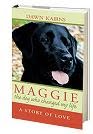
MAGGIE: the dog who changed my life

MAGGIE: the dog who changed my life
Click photo to visit dawnkairns.com
Showing posts with label animal welfare. Show all posts

Wednesday, March 16, 2011

L.A. Passes Puppy Mill Law

Posted By Dawn Kairns, Author of  MAGGIE the dog who changed my life A Story of Love 

(Original Post on Care 2 blog, "Breaking News: L.A. Passes Puppy Mill Law" by Sharon Seltzer)

It looks like Los Angeles County didn’t want to wait for a national or statewide puppy mill law to go into effect.  On Tuesday the Board of Supervisors passed an ordinance to protect animals raised by breeders or kept in pet stores.

According to Daily News Wire Services, the law was introduced by Supervisor Michael Antonovich, “an animal lover who presents a dog or cat for adoption at virtually every board meeting he attends.”

The ordinance is an amendment to Title 10 – the code relating to the licensing of animals and animal facilities, and the care and breeding of animals.

The new ordinance will require breeders to:
  • Only breed dogs that are at least 12 months old.
  • Keep puppies in their possession until they are at least 8 weeks old.
  • Place pregnant dogs in separate living quarters at least three days before they give birth.
  • Provide nesting boxes for mother dogs and their puppies.
The new rules also make sure all puppies are microchipped or tattooed when they turn four months old.  

And pet shops will be required to inform potential pet owners where the puppies in their store come from.

The Board of Supervisors apparently had some disagreements about limiting the number of dogs a breeder could own, so they came up with this compromise.

Breeders will be limited to housing 50 unspayed or unneutered dogs unless they can prove to county officials they can properly care for more.

Those breeders will be mandated to keep stricter medical records, have staff at the facility 18 hours a day and be subject to more frequent inspections, at their own cost.

Title 10 currently requires breeders to provide “structurally sound” housing that is clean and sanitary, enclosures with solid bottoms, wholesome food, accessible clean water and proper grooming for the dogs. 

It also states no animal shall be left unattended for more than 12 consecutive hours, requires veterinary care, humane treatment and exercise.

Even with the amendments L.A.’s Title 10 is far from perfect. However it covers most of the same regulations as Missouri’s Proposition B that was passed by the voters last November. 

That law is being hacked apart by legislators and breeder associations’ who complain how its restrictions will inhibit their livelihood.

Thursday, November 25, 2010

Missouri Wants to Keep Puppy Mills in Business, Despite Passing Prop B


This post was written on the Care 2 Blog by alicia graef. This is such an important issue, so crucial to the welfare of dogs, that I want to share it with you on my blog, too:

On November 2, Missourians cast their votes and passed Prop B, the Puppy Mill Cruelty Prevention Act, a citizen initiative brought to voters to stand up for dogs languishing in puppy mills in their state. Unfortunately, legislators are already working to kill this new law.

Missourians for the Protection of Dogs, a coalition formed by animal protection organizations, businesses, veterinarians, and citizens, hit the streets educating people about the atrocities inherent to puppy mills, such as cramped conditions, dogs being trapped in their own filth and sick and injured dogs being left with no veterinary care to name a few. 

Over 190,000 signatures were delivered to the Secretary of State in Missouri to get Prop B on November’s ballot in the country’s worst state for puppy mills. With an estimated 3000 puppy mills licensed by the USDA and the Missouri Department of Agriculture, it’s been called the puppy mill capital of America.

Weak laws regulating commercial kennels have made it the perfect place for unscrupulous breeders to call home. According to the ASPCA, Missouri supplies over 40 percent of the puppies you can find in pet stores across the country. 

Prop B, which will take effect in 2011, isn’t anything outlandish. The bill calls for an increase in standard care, including providing food and water, vet care, protection from the elements, exercise, “constant and unfettered access” to the outdoors, room to move around and stretch and rest between breeding cycles. It would apply to breeders with more than 10 dogs and limit the number of breeding dogs to 50 per facility. Violations would result in up to 15 days in jail and a fine of $300.

Prop B calls for nothing more than adequate care for an animal we fondly, and commonly, refer to as man’s best friend. Missourians spoke. They don’t like puppy mills. Prop B passed with 51.6 percent of the votes. Unless they do math differently in Missouri than they do everywhere else, that’s the majority. End of story, right?

Unfortunately, no. It took less than a week for opponents to start coming out of the woodwork trying to get Prop B watered down or repealed.

Breeders of course heard a resounding ca-ching as the new law would significantly raise the cost of running a commercial breeding facility, while others in agribusiness are worried that regulations will expand to livestock. The Tea Party was, of course, also upset.

Worse, legislators are listening and will be discussing possible actions in the new session starting January 5.
“We will start working on that issue probably immediately,” said Senator-elect Mike Parson, a Bolivar Republican. Incidentally, there are 150 licensed breeders in his district.

Rep. Tom Loehner, a Koeltztown Republican who is chairman of the House Agriculture Policy Committee said that the whining heard about the issue in rural areas could “represent a mandate for change,” as most of the votes came from urban areas.

Not to be a smarty pants, but those votes all count the same whether or not the came from rural or urban areas.

Additional concerns were raised over job loss and the potential for Prop B to put legitimate breeders out of business. However, Barbara Schmitz, spokeswoman for Missourians for the Protection of Dogs, brilliantly pointed out that Prop B would be economically beneficial by providing an increased demand for veterinary care, while simultaneously reducing the financial burdens of rescues and other funding allocated to the mistreatment of animals. 

As for putting legitimate breeders out of business, what legitimate breeder needs more than 50 breeding dogs? That’s 50 litters of puppies per breeding cycle, yet we destroy millions of innocent dogs every year simply because there aren’t enough homes and Missouri wants to let their state continue to contribute to this horrendous industry churning out puppies like inanimate objects?


Dawn Kairns 
Author of MAGGIE the dog who changed my life A Story of Love

https://blogger.googleusercontent.com/img/b/R29vZ2xl/AVvXsEhkMvEcr1rSrSWb96YsGoOOPvq98JXC1i6obm7q74N_t16VtUgTPPNCk6WgYqrLprxsGyWxMgsVqHTYN6L3nLVMZaKt-kc9mZIrqAgVkWUzfQ4US29wHMgZ2-OewnzTexhG9dj9-BfGg3I/s640/smaller+tilted+bookcover+from+paint.jpg
Website: www.dawnkairns.com
"They stay in our lives for a while, leave footprints on our hearts, and we are never, ever the same." -- Author Unknown
 
Become a fan on Facebook of MAGGIE: the dog who changed my life

Thursday, October 7, 2010

An Animal is Abused Every 10 Seconds in America

The sad reality is that an animal is abused every 10 seconds in America. 

You can help change this unacceptable reality by becoming an ASPCA Guardian. I am writing this post to join the ASPCA and Dogtime in support of this great animal welfare cause. The ASPCA Guardians are a group of dedicated friends like you who make regular monthly gifts. This level of support makes it possible for the ASPCA to reach and rescue animals in need. You will be helping the ASPCA to make a difference for animals every month of the year. This reliable income will allow the ASPCA to focus more resources on their lifesaving programs, and less on raising the necessary funds.

Please take a moment to watch this ASPCA video that was sent to me by Dog Time Media (DogTime's mission is "to keep dogs out of shelters and to help those who are in shelters find loving homes"). Watch and listen to Tim Rickey, ASPCA Senior Director of Field Investigations and Response teams at work in the field.


In 2008 alone, the ASPCA Mobile Clinic Program spayed and neutered over 23,220 animals—a 63% increase over 2007, thereby impacting the problem of unwanted offspring and pet homelessness. Let's help keep the ASPCA in the field doing what they do best, rather than having them spend their time having to raise money. To donate to the ASPCA, please click here.

You can see below what your monthly contribution will do. ASPCA members like it because it's easy to budget and it feels great to be making a difference for animals every month of the year:
  • A donation of $18/month, you can help 10 animals get adopted.
  • A donation of $20/month helps keep the ASPCA Disaster Response Trailers stocked.
  • A donation of $36/month allows 5 dogs and 5 cats to get spayed and neutered and receive vaccinations.
Please become a Guardian and join the ASPCA donations program today. To donate to the ASPCA, please click here.

Posted by:

Dawn Kairns  

Twitter: themaggiebook

Wednesday, September 22, 2010

Puppy Mill Rescue in Missouri: 100 Dogs Saved

100 Dogs Saved From Missouri Puppy Mill

(Reprinted from Care 2 post by Sharon Seltzer)

Teamwork between several national and local animal welfare groups saved the lives of more than 100 dogs on Tuesday from a puppy mill in Central Missouri.   

The owner of the kennel could no longer afford to feed the dogs.

The dogs, which included small breeds such as Dachshunds, Malteses, Shih Tzus, Lhasa Apsos, and large breeds such as Huskies and Boxers, were voluntarily surrendered by the owner of the puppy mill.  He contacted a local rescue group, Half-way Home Pet Rescue and explained that he couldn’t afford to feed the dogs.  The rescue group called the American Society for the Prevention of Cruelty to Animals for help.

The Rescue Plan
The ASPCA quickly put a collaborative rescue plan into action.  They sent eight members from their Anti-Cruelty team and their 60-foot-long animal transport trailer to the puppy mill.  They also enlisted the help of PetSmart Charities to supply the large number of pet transport carriers and crates needed.

The dogs were then transferred to two local animal rescue groups - the Humane Society of Southwest Missouri in Springfield and HSMO in St. Louis.  Each of the rescued pups will stay with the rescue groups until they are given a clean bill of health and ready to be adopted into a family of their own.

Collaborative Efforts Are A Win-Win
This is not the first collaborative rescue between national animal welfare groups and local organizations, but in my opinion it seems to be a new trend that wasn’t present in many large rescue efforts just a year or two ago.
Previously it was common for the animals rescued in those missions to be victimized further by deeming them unadoptable and euthanizing them.

Now it is becoming routine for the victimized cats, dogs and other animals to be sent to regional animal rescue organizations that are nursing them back to health, rehabilitating them and successfully placing them in adopted homes.   It’s a win-win for everyone.

The cooperative efforts aren’t just limited the ASPCA.   Last week a dozen regional rescue groups took in 200 dogs and 54 cats after PETA exposed a North Carolina research laboratory for the cruel treatment of the animals at the facility.

And last year the Humane Society of the United States teamed up with a multitude of local animal welfare groups after they organized the largest raid on dog fighting rings in U.S. history.  The majority of those dogs was rehabilitated and found loving homes for the first time in their lives.

Tim Rickey, the ASPCA’s Senior Director of Field Investigation and Response had this to say about the puppy mill rescue on Tuesday.  “The ASPCA is committed to assisting local animal organizations, as well as overwhelmed breeders, to help find homes for animals in situations like this.”

He also acknowledged the extra burden placed on local animal rescue groups. “Having too many dogs, as this crisis clearly illustrates, puts a tremendous strain on local agencies when they are suddenly forced to care and find homes for large numbers of animals,” said Rikey.

But everyone involved in the effort believes this is still the best way to handle large scale rescues.

Latisha Duffy of Half-way Home Pet Rescue said, “We’re grateful to national and local animal welfare groups for stepping up to the plate and working together for the common goal of saving lives.  Instead of being sold off to auction, these dogs now have a second chance at life.”

Missouri Puppy Mills
The ASPCA reported that Missouri, where the dogs were rescued, is considered to be the puppy mill capital of the country.  The state, “exports more than 40 percent of all dogs sold in pet stores nationwide,” ASPCA said in a press release.  “It is home to more than 3,000 commercial dog breeding facilities.”

Because of these facts, the ASPCA is urging those living in Missouri to support Proposition B, or the Puppy Mill Cruelty Prevention Act, which will be on the November ballot.

Posted by:

Dawn Kairns  

Twitter: themaggiebook

Friday, September 3, 2010

Blood Dolphins (Video)

I want to share this post with you from the Care2.com blog. Animal Planet begins airing this series about the dolphin slaughter in Taiji, Japan tonight. If you aren't aware of this issue where thousands of dolphins are captured and slaughtered each year, beginning in September, please take a moment now to educate yourself and share this information with others and get involved in any way you are guided. Our fellow creatures need us to help stop this atrocious practice.

Blood Dolphins: A Sad Sight in the Cove (VIDEO)

posted by: Cris Popenoe 15 hours ago

Blood Dolphins: A Sad Sight in the Cove (VIDEO)
Care2 members are very active in raising awareness of dolphins in danger. A petition to end the dolphin slaughter currently has over a quarter of a million signatures.

Add your name to the petition!

And the dolphin slaughter issue is tops in the news again, as Japan's dolphin killing season has just begun.   
Animal Planet has a new TV series, Blood Dolphins. A fresh episode airs Friday at 9 pm and if you missed episode one, "Return to Taiji", you can catch it tonight at 9 and again at 11 pm.

 To learn more about the plight of the dolphins and the power of these films, watch the video below. It features Lincoln O'Barry -- son of Ric O'Barry who started the dolphin crusade -- sneaking past barbed wire and guards with his colleague Kate Tomlinson to get shots of the cove.


Re- posted (from Care 2) by:

Dawn Kairns  

Twitter: themaggiebook

Monday, June 21, 2010

Is Humane Education For Kids the Answer to Preventing Animal Abuse?

Last week when my therapy dog, Maddie and I visited the juvenile center, I added something new to my usual humane education talk: I brought in my counseling background and talked to the kids about finding the unconscious positive intention behind their "criminal" behavior. We went on to discuss separating their positive intention from negative behavior; to find a beneficial way to meet that positive intent so they can let go of the behavior that isn't working so well for them or society. As Maddie and I continue our weekly therapy visits to the juvenile center, I can't help but think that widepread humane education programs in schools could really help kids understand the value of kindness to and love for animals; that humane education programs might help decrease the rising incidence of animal cruelty among children. 

Then I read this post today on the Care 2 blog, and realized we are on the same page regarding humane education: 

The Answer to Preventing Animal Abuse: Humane Education?  

posted on the Care 2 blog by Megan Drake

"We seem to constantly hear about animal abuse in the news.

Philadelphia just reported of a young, female pit bull found hanged on a playground.  In Baltimore there seems to be an epidemic of animal abuse amongst the youth, which includes a puppy beaten to death, another dog pelted with stones and yet another set on fire -- just this year alone.

With all the animal abuse happening in the world, there might just be a solution -- humane education.  Citizens for a No-Kill Philadelphia provides a Humane Education Program to fifth graders at John Wister Elementary School. CNKP is a group of Philadelphia citizens, led by Garrett Elwood, who have organized with the goal of making Philadelphia a no-kill city by 2018.

One of the many stops along the road to achieving that goal is to educate Philadelphia's youth about kindness toward animals. CNKP reports "Many incidents of animal abuse and neglect occur simply because of ignorance. We feel that our children could make better decisions for the future if only given the proper information on which to base their decisions."

The CNKP Humane Education Program is provided free of charge.  Once per month, for the entire school year, Claire Tillman, Program Director, visits fifth graders at John Wister Elementary School.   

Teaching Goals include ..." Read the full story here on Care 2 

Posted By:

Dawn Kairns  


Twitter: themaggiebook


Sunday, March 21, 2010

Gas Chambers Banned in Georgia Animal Shelters

This is not a pretty subject. I was appalled when I first learned that animals in shelters in many states are euthanized in gas chambers using carbon monoxide, rather than by lethal injection. The result is anything but a humane death. This Georgia vote is a step in the right direction and my hope is that the remainder of states that still use the gas chamber will follow Georgia's lead. The following is from the Care 2 Blog today.

Georgia Votes to Ban Gas Chambers and Reunite Lost Pet

by Sharon Seltzer

Georgia could be on its way to becoming the number one state for protecting animals. The state’s legislators passed two new animal welfare laws last week.

In a vote of 115 to 46, lawmakers in Georgia finally approved a bill to stop the use of gas chambers to euthanize pets in animal shelters. Under the new law animals “must be put to sleep through lethal injection.”

The bill’s sponsor, state Representative Tom Knox told a local TV station, “Gas chambers, which use carbon monoxide to euthanize pets, are pretty gory.”

He won over his opponents by showing how animals die in a gas chamber and how they gasp for their last breath. He also demonstrated how pets become very frightened when they are placed in the gas chamber container, which resembles a dark closet. “They don’t’ go to sleep real quick,” said Knox. “It is not humane,” he continued.

State Representative, Gene Maddox, a veterinarian argued against the bill. He wanted to keep gas chambers open for feral animals. He told fellow legislators, “This is a bad bill… The carbon monoxide chamber is the most humane method.” Lucky for the pets of Georgia, Maddox was outvoted.

And during the same week, legislators approved a second bill to protect animals. The new law will require animal shelters to scan homeless pets for a microchip before euthanizing them. The vote on H.B. 1106 was unanimous.

Ironically, this bill was introduced by Representative Gene Maddox. The new law has two parts. First it requires shelters to scan animals for a microchip as soon as they arrive at a facility. If a chip is found, the animal shelter is obligated to contact the pet’s owner. Then the law makes it mandatory to re-scan household pets such as cats and dogs a second time before euthanizing them. The intention of the law is reunite as many lost pets with their owners as possible.

Maddox said the companies that make scanners have agreed to donate them to local shelters in order to keep the cost down. Some critics of the scanning bill argued that the majority of pets in Georgia do not have a microchip, but that may soon change as owners hear about the extra measures shelters will have to take to return lost pets.

Visit the original post at:

http://www.care2.com/causes/animal-welfare/blog/georgia-votes-to-ban-gas-chambers-and-reunite-lost-pet/

Posted By:

Dawn Kairns
Author of
MAGGIE the dog who changed my life A Story of Love

Website: www.dawnkairns.com

2009 Indie Book Awards Finalist
DWAA 2008 Merial Human-Animal Bond Award Finalist

Tuesday, July 14, 2009

Biggest Dogfighting Raid in History Reveals Even Bigger Problem

Taken from Care 2 Animal Welfare Causes

This Wednesday, approximately 450 dogs were seized during raids in seven states (Arkansas, Illinois, Iowa, Missouri, Nebraska, Oklahoma and Texas). Animal welfare groups call this the largest simultaneous raid of dogfighting operations in U.S. history.

Each rescued dog will be evaluated in hopes of placing as many as possible in adoptive homes.

Animal welfare advocates worked with federal authorities for 18 months on this seizure. So far, 26 people have been accused of cruelties ranging from denying animals medical treatment to shooting poorly-performing dogs in the head and disposing of their bodies into a river or burning them in a barrel.

Although no one can help but to feel that the world is a little brighter now that these 450 innocent animals finally have a chance for the safe and loving homes these deserve, this week's seizure also puts the true size of the insidious problem of dogfighting into perspective. The Humane Society of the United States estimates that at least 40,000 people are involved in professional dogfighting, while hudreds of thousands more participate in urban and rural "street fighting."

If no fewer than 40,000 people are keeping this horrific form of gambling and entertainment alive, imagine just how many dogs are involved.

Dogfighting operations typically are not small acts of animal cruelty, but part of organized criminal networks. When it's not unusual for as much as $30,000 to change hands in a single dogfight, fully eradicating the industry will be an uphill battle.

Take action! Please send your note of thanks to the governors of the seven states who helped to make this historic raid a reality. Encourage them to continue to support the good work of their state attorney general, local officials and caring volunteers.


Posted By:

Dawn Kairns
Author of MAGGIE: the dog who changed my life
www.dawnkairns.com
www.maggiethedogwhochangedmylife.blogspot.com
www.twitter.com/themaggiebook