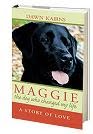
MAGGIE: the dog who changed my life

MAGGIE: the dog who changed my life
Click photo to visit dawnkairns.com

Wednesday, March 16, 2011

L.A. Passes Puppy Mill Law

Posted By Dawn Kairns, Author of  MAGGIE the dog who changed my life A Story of Love 

(Original Post on Care 2 blog, "Breaking News: L.A. Passes Puppy Mill Law" by Sharon Seltzer)

It looks like Los Angeles County didn’t want to wait for a national or statewide puppy mill law to go into effect.  On Tuesday the Board of Supervisors passed an ordinance to protect animals raised by breeders or kept in pet stores.

According to Daily News Wire Services, the law was introduced by Supervisor Michael Antonovich, “an animal lover who presents a dog or cat for adoption at virtually every board meeting he attends.”

The ordinance is an amendment to Title 10 – the code relating to the licensing of animals and animal facilities, and the care and breeding of animals.

The new ordinance will require breeders to:
  • Only breed dogs that are at least 12 months old.
  • Keep puppies in their possession until they are at least 8 weeks old.
  • Place pregnant dogs in separate living quarters at least three days before they give birth.
  • Provide nesting boxes for mother dogs and their puppies.
The new rules also make sure all puppies are microchipped or tattooed when they turn four months old.  

And pet shops will be required to inform potential pet owners where the puppies in their store come from.

The Board of Supervisors apparently had some disagreements about limiting the number of dogs a breeder could own, so they came up with this compromise.

Breeders will be limited to housing 50 unspayed or unneutered dogs unless they can prove to county officials they can properly care for more.

Those breeders will be mandated to keep stricter medical records, have staff at the facility 18 hours a day and be subject to more frequent inspections, at their own cost.

Title 10 currently requires breeders to provide “structurally sound” housing that is clean and sanitary, enclosures with solid bottoms, wholesome food, accessible clean water and proper grooming for the dogs. 

It also states no animal shall be left unattended for more than 12 consecutive hours, requires veterinary care, humane treatment and exercise.

Even with the amendments L.A.’s Title 10 is far from perfect. However it covers most of the same regulations as Missouri’s Proposition B that was passed by the voters last November. 

That law is being hacked apart by legislators and breeder associations’ who complain how its restrictions will inhibit their livelihood.

Tuesday, March 15, 2011

What You Can Do To Protect Your Pet from Alzheimer's

And How To Identify Cognitive Dysfunction in Your Pet

Posted By Dawn Kairns, Author of  MAGGIE the dog who changed my life A Story of Love

This article by Steve Dale was published in the USA Weekend on Feb. 27, 2011.

If everyone in America had a dog and walked it daily, our brains would benefit — and so would our dogs'. Carl Cottman, director of Alzheimer's Disease Research at the University of California-Irvine, says regular moderate exercise turns out to be healthy for our heads as well as our hearts. And the same goes for our dogs.

As Alzheimer's disease occurs in people, so does a similar syndrome in our pets, referred to as cognitive dysfunction (CD). And like Alzheimer's in people, cognitive dysfunction is increasingly common, or so it seems.

"It's always been there," says veterinary behaviorist Gary Landsberg of Thornhill, Ontario, director of veterinary affairs at Cancog Technologies. "Our pets are living longer, and we're learning much more about identifying cognitive dysfunction." Landsberg is now researching the disorder in cats.

The acronym for pet owners to identify CD is referred to as DISH:

D — Disorientation and confusion, such as attempting to walk through the wrong side of a doggie door.

I — Changes in interactions, such as an outgoing pet becoming withdrawn.

S — Sleep disturbances: cats yowling or dogs pacing overnight for no apparent reason.

H — House soiling, having "accidents."

"Cognitive dysfunction is a diagnosis of exclusion," says veterinary behaviorist Nicholas Dodman, editor of Good Old Dog. Pet owners and their veterinarians need to rule out medical problems first. Is the cat missing the box because of diabetes? Or is the dog walking into walls at night because of impaired vision?

"What makes this complicated is sometimes there is a physical problem as well as cognitive decline," Dodman says.

Early diagnosis is challenging, but it's helpful. Landsberg says the first signs are typically changes in social interactions, which tend to be more subtle in cats.

It seems cognitive changes leading to Alzheimer's in humans might be delayed, minimized or potentially even prevented with lifetime learning and activity. That's why independent-living centers are promoting computer or dance classes, and doctors have even "prescribed" that older patients return to school. Jeffrey Kaye, director of NIA-Layton Aging and Alzheimer's Disease Center at Oregon Health and Science University in Portland, is chair of a technology task force for the Alzheimer's Association. "Certainly, there's something to all this," he says. "There are studies in people, but it's a challenge to conduct them because you can't control what people do and the circumstances which occur in their lives. In dogs, studies are easier to control."

And cognitive decline in dogs is surprisingly similar to what it is in people. Cottman has studied cognitive decline in dogs and people. In one canine study, a group of dogs was enrolled in continuing canine education and followed an exercise protocol. The control group was fed a special anti-aging diet. All the dogs were periodically tested for cognitive skills, and Cottman couldn't believe the results.

"It was a fantasy come true because the results were so definitive, proving social interactions, exercise, enrichment and diet really do make a significant difference in dogs," he says. "We believe the same must be true for people."

Cottman adds that if you do anything, take your dog for a walk: "We know moderate exercise bolsters brains in dogs and people."

Adds Landsberg: "Delaying the onset of CD in pets enhances quality of life, until kidney disease, cancer or some other disease process inevitably occurs. I wish there was a fountain of youth. But if people and pets feel better and enjoy life longer, isn't that a kind of fountain of youth?"

See original article in USA WEEKEND by Steve Dale, Protect Your pet from Alzheimer's

Friday, March 11, 2011

Rabies Vaccination Risky for Certain Dog's: HSVMA Sponsors Exemptions Bill


Did you know that the rabies vaccination can be harmful and even lethal for dogs with existing health problems?

A Canine Health and Welfare Issue

Posted By Dawn Kairns, Author of  MAGGIE the dog who changed my life A Story of Love

Read below to learn if your state already provides an exemption from rabies vaccination for dogs with
"terminal diseases such as cancer, immune-mediated diseases, severe allergies and chronic life-threatening conditions such as renal failure, severe endocrine disorders and degenerative neuromuscular diseases."
 

"The Humane Society Veterinary Medical Association is sponsoring California Assembly Bill 258 (A.B. 258),  also known as Molly’s Bill, to protect dogs whose health might be severely compromised by rabies vaccination. Molly’s Bill would provide a uniform mechanism for rabies vaccination exemptions for those dogs in whose cases—in a veterinarian’s professional judgment—vaccination may be risky, harmful, or potentially lethal and is thus medically contraindicated. These cases may include, but are not limited to, dogs with terminal diseases such as cancer, immune-mediated diseases, severe allergies and chronic life-threatening conditions such as renal failure, severe endocrine disorders and degenerative neuromuscular diseases.

During 2010, HSVMA supported a previous effort to pass Molly’s Bill. However, it stalled in last year’s legislative session. At a press conference in February, Assemblymember Curt Hagman re-introduced the legislation, and Dr. Tracy Yen spoke in support on HSVMA’s behalf. The event was also attended by the bill’s namesake, Molly, an English Springer Spaniel cared for by Sam and Cecilia Gadd of Chino Hills, Calif. Molly contracted an autoimmune disorder, and despite her attending veterinarian’s recommendation against further vaccination, local authorities denied Molly a medical waiver for her licensing.
Making matters worse?

Vaccination is a powerful medical tool with potentially powerful side effects. Research indicates that rabies vaccine-associated reactions in dogs are significant. Numerous individual veterinarians and veterinary clinics, veterinary medical teaching institutions and professional associations support the necessity for selective exemption from vaccination. Dogs exempted under A.B. 258 would be medically evaluated by a veterinarian and monitored by local public health officials. The public may actually be put at greater potential risk for zoonotic disease without a vaccination exemption provision, because pet owners who are deeply concerned about their dogs’ health and are deprived of an exemption option may choose to fly ‘under the radar,’ eluding both vaccination and licensing entirely.

From the national perspective, there is significant precedent for this type of legislation. Many states have implemented exemption from rabies vaccination programs while effectively preserving the public health. A number of states—including Alabama, Colorado, Connecticut, Florida, Maine, Massachusetts, New Jersey, New York, Rhode Island, Virginia and Wisconsin—already provide for medical exemptions from rabies vaccination in their dog licensing programs.
Take action!

Molly’s Bill is awaiting a vote in the California State Assembly. We urge our California-based veterinary professional members to contact their Assembly member  to encourage their support for this important measure. Tell them that our licensing system should be flexible enough to accommodate legitimate medical exceptions to vaccination when a dog’s health and well-being are at stake. And don't forget to tell them that you are a California voter and a veterinary professional."

Thursday, March 10, 2011

Toxic Tick and Flea Products Affect Pets and Humans

Posted By Dawn Kairns, Author of  MAGGIE the dog who changed my life A Story of Love
original post by Delia Quigley on the Care 2 Blog on Mar 9, 2011

I thought this post by Delia Quigley was worth a re-post for you, your Dogs and Cats!

The snow has not completely melted and the ticks are already making a play for Maya and Seamus. Looking back a year ago, as a new dog owner, I was instructed to buy a certain chemical product to apply to my pups, which would literally have the ticks and fleas falling dead to the floor. This, I thought to myself, is too good to be true; but because I was ignorant and advised by those I considered more knowledgeable, I bought a rather expensive 3-months supply of Frontline with the anticipation of a tick-free summer ahead. As I read the package instructions I was shocked to find that the chemical ingredients were so toxic they must be applied with latex gloves so as not to, as in never, touch my skin.

Yes, but what of my pups skin? If it is toxic to me, what must it be to their small bodies? You might think that I tossed the whole thing in the garbage on that realization, but no, I am ashamed to say that I did not. For two months I applied the toxic chemicals until one day I did my own research. What I found is shocking, perverted, untenable, and horrifying, but we Americans keep on poisoning our pets, along with ourselves and chemical companies continue to provide the loaded gun.

The active ingredient in Frontline is fipronil, an insecticide and member of the phenylpyrazole family of chemicals. Its purpose is to disrupt an insect’s nervous system functions. Well, hold on there doggie, according to the Journal of Pesticide Reform, “In tests with laboratory animals, fipronil caused aggressive behavior, damaged kidneys, and ‘drastic alterations in thyroid function.’ The fipronil-containing product Frontline caused changes in the levels of sex hormones.”

The other two toxic bad boys in Frontline are Methoprene, a neurotoxin that can cause liver enlargements, headaches, throat irritation and nausea and Ethanol, which can cause fatigue, lethargy, dizziness and nervous system disruption.

In her excellent 2008 Care2 article, The Surprising Poisons in Our Pets, Melissa Breyer reports that according to the Texas A&M Veterinary Medical Center, “dogs have much higher rates of cancer than people do, including 35 times more skin cancer, four times more breast tumors, eight times more bone cancer, and twice the incidence of leukemia.”

And here’s the kicker, the Environmental Protection Agency has classified fibronil as a carcinogen, because exposure to fipronil caused benign and malignant thyroid tumors in laboratory animals. All of which means it can cause cancer in both animals and humans.

You can be exposed to fibronil by petting an animal that has been treated with Frontline. The treatment persists for at least 56 days on pets. The good news is that the National Resources Defense Council (NRDC) has checked over a hundred tick and flea products finding that most of them contain chemicals toxic enough to cause harm to both pets and humans.  You should refer to their list before buying a product that may potentially harm your pet and contaminate yourself and your children. Fortunately, there are plenty of natural ways to control ticks and fleas in your environment. Care2 has a number of articles to help you out. Click HERE for a list of natural flea and tick control remedies.

Monday, March 7, 2011

For the Street Dogs of Chile ...

May You One Day Be Loved

Posted By Dawn Kairns, Author of  MAGGIE the dog who changed my life A Story of Love

My niece who is living in Santiago, Chile, warned me before we arrived in Chile. She knew I would ache when I saw the homeless street dogs of Chile. She was right.

If I can find good news about this it is that many of the dogs are at least fed (both by tourists and locals) and not emaciated compared to street dogs in other countries I have seen. Of course that is not true for all of them. The sad news is they don't have the magic of the human-animal bond, someone to love and care for them.

The Street Dogs of Santiago ...


You can see the lonely, lost feeling in some faces, like the first dog above. And when they are sick, they are alone, with no one to help and care for them. Some, like the two directly above, find their bonds with each other. A physician in Santiago told me that when there are too many dogs in this city, they are killed. I didn't ask how; I'm not sure I wanted to hear the answer. But they are not euthanized in the humane manner (injection) that we are familiar with here in the States.

People do have family dogs who are loved like we all love our dogs. The Chilean family my niece is staying with served us a delicious lunch one Sunday. We watched them spoil and dote on their dog as we do ours. And the family we stayed with in the Cochamo Valley had a black lab, Puff, who is very loved. He has a great life going up the valley with the horses to La Junta with the guests. (He accompanied us).

The Street Dogs of Puerto Varas ...


The dogs I met were all friendly, but it was sad to see they had come to expect not being touched. None of them sought people out for food or attention, but readily accepted the food offered. Interesting, though, many dogs refused bread -- they are used to receiving the meat and fish from people's leftovers!

One day I walked into the market in Puerta Varas to buy "meaty" treats. Since pesos seem a little like "play money," I didn't realize until later I had spent $12.00 on one round of dog treats! For future feedings, I bought hot dogs, which were cheaper than dog treats.

Puerto Octay ...


Punta Arenas ...


We were surprised by the number of purebred German Shepherds we saw. We were told that some people got dogs as puppies and then let them go when they became adults -- no longer the cute, manageable little pup. Wow. It happens here, too, doesn't it? But here it's hidden from of our view as they are swept into shelters. 
 
A Chilean tour guide in Punta Arenas told us that it is up to the mayor of each city as to what will happen to the street dogs. Here in Punta Arenas the mayor had decided to have all the street dogs killed a few years ago -- but the people of the city were up in arms. The mayor listened, so these dogs, for the time being, are allowed their lives.

The One Who Will Be Forever In My Heart ...

He's in Puerta Varas. I call him "Flash," after a German Shepherd from my childhood ... 
He followed us around town; waited for us outside the laundromat.
 
When he followed us to our rental car and lay down and watched us, I cried, and tried to explain we couldn't take him. We still had to fly to another Chilean city. I talked to a veterinarian in town about what it would take and what it would be like for him to get him to the States ...
When he watched our car drive away, my heart broke. I looked further into what it would take to get him here after we returned home, with both the airlines, CDC, etc. The logistics of vaccinations and a health certificate were quite doable. But the very long plane ride with stops with him riding in cargo, the possible refusal at the US port of entry and its ramifications if there was any question about his health, really scared me for his safety. So I am speaking with a family we met in the Cochamo Valley, a few hours from Puerto Varas. They have a friend who finds homes for strays there. Maybe ...

Friday, March 4, 2011

Resolving Conflict: What Are Your Myths and Beliefs Around Conflict?

Posted By Dawn Kairns, Author of  MAGGIE the dog who changed my life A Story of Love


Who doesn't deal with conflict on a day-to-day basis? And how many of us really learned useful tools to handle it when it comes up? Most of us are taught to fear and avoid conflict rather than to embrace it as a normal part of life. Years ago I studied the martial art of Aikido, where the key is to not resist your opponent, but to use his or her energy and go with the flow. A metaphor my Aikido instructor used to lighten our belief systems around conflict was, "What created the beautiful beaches of the world? Eons and eons of conflict, of wind and waves crashing against the rocks, breaking it down into sand ..."

The following questions were born out of both my study of Aikido and Neurolinguistic programming; they can help us explore what may be getting in our way inside of ourselves before conflict even arises: 

1. Does conflict by definition imply right or wrong?

2. How does our need to be right create or prolong conflict situations?

3. Do you want to be right or happy?

4. What does being right do or get for you?

5. Which do you use more frequently in a conflict/argument, "I" or "you"?

6. What changes do you notice in yourself and the other person when you switch from "you" phrases to "I" phrases? 

7. What happens when you ask questions of the other person in a conflict to discover more of their position rather than making accusing or defensive statements?

8. What conflicts have arisen for you when you have not been genuine with another?

9. What do you have to lose by seeing, hearing and feeling the issue from the other person's position?

10. What happens as you watch and listen to yourself in a conflict "out there?" And if you or the other person acknowledges you aren't certain about your positions?

11. Are you really in control when you take a rigid point of view? What other ways are there to protect yourself?

12. Is Win - Loose/Either - Or the only option? How can both parties win?

Let me know your thoughts and may conflict become less charged for you!

Wednesday, March 2, 2011

Marky Is Loving His Forever Home

With calls by the Brownsville, Texas SPCA to Marky's new guardians, they report "they are in love with him" and that he has adapted very well. He sleeps with the 2 young girls and also with his canine sister, Medusa.

I finally received a couple of very recent photos of Marky that I share here. His puppy face that I remember from last year has matured into this precious adult face. I am amazed how much he reminds me of our Maddie!

This is a happy ending, indeed!

Posted By:
Dawn Kairns 
https://blogger.googleusercontent.com/img/b/R29vZ2xl/AVvXsEhkMvEcr1rSrSWb96YsGoOOPvq98JXC1i6obm7q74N_t16VtUgTPPNCk6WgYqrLprxsGyWxMgsVqHTYN6L3nLVMZaKt-kc9mZIrqAgVkWUzfQ4US29wHMgZ2-OewnzTexhG9dj9-BfGg3I/s640/smaller+tilted+bookcover+from+paint.jpg
Blog:      Dawn Kairns and Maggie the Dog 
Twitter:  www.twitter.com/themaggiebook