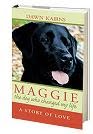
MAGGIE: the dog who changed my life

MAGGIE: the dog who changed my life
Click photo to visit dawnkairns.com
Showing posts with label abandoned pets. Show all posts

Monday, March 7, 2011

For the Street Dogs of Chile ...

May You One Day Be Loved

Posted By Dawn Kairns, Author of  MAGGIE the dog who changed my life A Story of Love

My niece who is living in Santiago, Chile, warned me before we arrived in Chile. She knew I would ache when I saw the homeless street dogs of Chile. She was right.

If I can find good news about this it is that many of the dogs are at least fed (both by tourists and locals) and not emaciated compared to street dogs in other countries I have seen. Of course that is not true for all of them. The sad news is they don't have the magic of the human-animal bond, someone to love and care for them.

The Street Dogs of Santiago ...


You can see the lonely, lost feeling in some faces, like the first dog above. And when they are sick, they are alone, with no one to help and care for them. Some, like the two directly above, find their bonds with each other. A physician in Santiago told me that when there are too many dogs in this city, they are killed. I didn't ask how; I'm not sure I wanted to hear the answer. But they are not euthanized in the humane manner (injection) that we are familiar with here in the States.

People do have family dogs who are loved like we all love our dogs. The Chilean family my niece is staying with served us a delicious lunch one Sunday. We watched them spoil and dote on their dog as we do ours. And the family we stayed with in the Cochamo Valley had a black lab, Puff, who is very loved. He has a great life going up the valley with the horses to La Junta with the guests. (He accompanied us).

The Street Dogs of Puerto Varas ...


The dogs I met were all friendly, but it was sad to see they had come to expect not being touched. None of them sought people out for food or attention, but readily accepted the food offered. Interesting, though, many dogs refused bread -- they are used to receiving the meat and fish from people's leftovers!

One day I walked into the market in Puerta Varas to buy "meaty" treats. Since pesos seem a little like "play money," I didn't realize until later I had spent $12.00 on one round of dog treats! For future feedings, I bought hot dogs, which were cheaper than dog treats.

Puerto Octay ...


Punta Arenas ...


We were surprised by the number of purebred German Shepherds we saw. We were told that some people got dogs as puppies and then let them go when they became adults -- no longer the cute, manageable little pup. Wow. It happens here, too, doesn't it? But here it's hidden from of our view as they are swept into shelters. 
 
A Chilean tour guide in Punta Arenas told us that it is up to the mayor of each city as to what will happen to the street dogs. Here in Punta Arenas the mayor had decided to have all the street dogs killed a few years ago -- but the people of the city were up in arms. The mayor listened, so these dogs, for the time being, are allowed their lives.

The One Who Will Be Forever In My Heart ...

He's in Puerta Varas. I call him "Flash," after a German Shepherd from my childhood ... 
He followed us around town; waited for us outside the laundromat.
 
When he followed us to our rental car and lay down and watched us, I cried, and tried to explain we couldn't take him. We still had to fly to another Chilean city. I talked to a veterinarian in town about what it would take and what it would be like for him to get him to the States ...
When he watched our car drive away, my heart broke. I looked further into what it would take to get him here after we returned home, with both the airlines, CDC, etc. The logistics of vaccinations and a health certificate were quite doable. But the very long plane ride with stops with him riding in cargo, the possible refusal at the US port of entry and its ramifications if there was any question about his health, really scared me for his safety. So I am speaking with a family we met in the Cochamo Valley, a few hours from Puerto Varas. They have a friend who finds homes for strays there. Maybe ...

Sunday, August 29, 2010

Hurricane Katrina’s Lesson about Animals: "Mine," a Documentary (Video)


Before Hurricane Katrina, the policy in the United States was that human life eclipsed the life of an animal. Thankfully, attitudes are changing.  Today, many people consider pets to be family members.

According to a post by Megan Drake on Care2.com, the best thing to come out of Hurricane Katrina for animals was the federal Pets Evacuation and Transportation (PETS) Act, which was signed into law on October 6, 2006. PETS "requires local and state jurisdictions to take into account domestic pets and service animals when formulating and implementing disaster plans.  It also gives FEMA (Federal Emergency Management Agency) the power to deny FEMA funds to municipalities and states that do not form or implement such plans."

During Katrina many people had to be forcibly removed from their homes because they wouldn't leave their animals. Tragically, their pets were left behind to fend for themselves against the forces of nature. A huge number of Americans descended on the New Orleans and Mississippi areas to help rescue the pets that made it through. I was one of those people. Watching people who lost their pets in the hurricane come to the makeshift shelter I was volunteering at to look for their pets and not find them was a heart break. Often, these folks never saw their pets again, because even if their pet survived, by the time families came looking, chances were high that the animal had already been shipped to a shelter somewhere in the United States -- to be adopted out to someone else.

"Mine, a documentary by filmmakers Geralyn Pezanoski and Erin Essenmacher explores the journey of five Katrina dogs and their humans who searched for them in the midst of trying to pick up the pieces of lives mangled by catastrophe.  The film won awards including the 2009 South by Southwest Film Festival and Independent Lens Audience Award for 2009-2010."

Pezanoski was touched by the length to which these pet parents would go to reunite with their "children" and offered to show Mine to community groups like shelters, rescue groups, and  libraries. If you want to help spread Mine's message you can schedule a showing in your locale.  Email: info@minethemovie.com.

"Mine's impact will educate and change attitudes about the place pets hold in our society and ultimately change laws, giving rights to animals," according to Megan Drake. "It is powerful, poignant and a must-see for anyone concerned about their own furry family members. It is also a great movie to watch as a family and will teach children about the place animals hold in our hearts and our obligation to them."


(Adapted from the Care 2 Blog)


A great resource book written by Jenny Pavlovic, author of 8 State Hurricane Kate to help ensure you don't lose your animals in a disaster is titled, Not Without My Dog.


Posted By:

Dawn Kairns  

Twitter: themaggiebook

Wednesday, November 4, 2009

A Solution to the Heartbreak of Losing Your Pets in Home Foreclosures

People losing their homes to foreclosure has been a sad and unfortunate fact of life for some time now. The cost to these folks in mental and emotional stress is immeasurable. Add to this stress that many of those who have lost their homes have also had to give up their pets, and I can't even begin to imagine their heartbreak. Then there is the heartbreak and grief the pets experience as most are placed in shelters with an unknown fate, not really understanding why they've been abandoned. I don't know about you, but it is so painful for me to think about.

I have some first hand experience. A year after Maggie died, my husband and I adopted Chloe, an 11-year-old golden retriever from Golden Retriever Rescue of the Rockies. Her family of 11 years moved to Peru. It was Chloe who taught me the deep grief a dog experiences when they are abandoned, for whatever reason, by the people they so love and are bonded to. I know people sometimes feel they don't have a choice, so when I speak of abandonment my intention is not to make the people wrong or judge them. Most of them, too, are heartbroken. I am speaking purely from the dog/cat/animal's emotional point of view here.

As for Chloe, the grief was literally written all over her face. The woman who fostered her commented, "I have fostered Goldens for years, and this is the first time I have had one cry the entire night after her person dropped her off." You see, Chloe knew she'd been left behind forever by her loved ones. She was an incredibly sensitive girl, and her heart was absolutely broken. We were lucky to see her grief stricken eyes begin to smile over time as she delighted in the active and stimulating life we offered her. Although she loved us dearly during the 3 1/2 years she graced our lives, I know she never forgot her original people.

My second experience with animals being separated from their people and families was when I traveled to Mississippi and worked in a makeshift animal shelter after Hurricane Katrina. I worked with the dogs, and after all that they'd been through, their stress level was high. But it was bigger than the trauma of living through the hurricane and its aftermath. I can remember one in particular, a black lab mix who I brought into my lap outside to hold and comfort. But the entire time I held her, she was not really with me. Her eyes looked far beyond me and were searching, and I knew she was looking for her people. My heart ached for her.

So when I began hearing about the many animals being given up to shelters in the wake of all the foreclosures, I felt desperate as I considered their uncertain fate in being added to the already overcrowded shelter populations. I thought there must be some way for our country to deal with this so that people would not have to give up their animals forever, that they could be reunited at some point and have both animal and human spared the painful grief of losing each other.

Well, Scott Lanz clearly felt the same way and created www.foreclosurepets.org. According to Scott,"the goal of www.foreclosurepets.org is to provide a FREE SERVICE where current homeowners can establish an account where they will be able to post their pet’s information, including photos, description, and contact information in order to find them a temporary home or a new family. We also encourage other rescue groups/non profits/and even agents to post animals they have or may find in foreclosure homes on our site."

The mission of www.foreclosurepets.org is to help any homeowner facing foreclosure in the United States "to find a new home and/or temporary adoption for their pets until they can get back on their feet." According to Scott Lanz, there are over 1.6 million foreclosures and with the current economy there will be more in the near future. Even worse than taking their faithful pets to a shelter, many are being left behind by homeowners to fend for themselves. This is resulting in animals starving and dying. Please don't do this to your animals. They can't survive on their own, and they suffer horribly when they are abandoned this way. They deserve so much better treatment.

Foreclosure Pets also has a lost/found section for animals on their site. So if you find a pet or lose your own, you can post the information on their website. If you or someone you know are in danger of losing their home, please have them visit www.foreclosurepets.org to give their pet a chance to find a loving home.

Posted By:

Dawn Kairns
Author of MAGGIE: the dog who changed my life
www.dawnkairns.com
www.maggiethedogwhochangedmylife.blogspot.com
www.twitter.com/themaggiebook