MAGGIE: the dog who changed my life

MAGGIE: the dog who changed my life
Click photo to visit dawnkairns.com

Wednesday, January 18, 2017

Could Bella Be Your Own Emotional Support Dog?

Hi, I'm Bella
Bella is a sweet 5 year old female pit bull terrier. She has had 3 homes, one of them for 4 of her 5 years. Here Bella lived with 2 other dogs and 3 children. "She is great with other dogs and kids," says this guardian. Her favorite company was their other dog, Maddie. The reason they relinquished her was, "the dogs are kenneled all day together and get no attention. They can't be outside because the neighbors complain. She needs a good home with lots of attention!" And, of course, physical activity.

Bella was accustomed to staying home alone for five to six hours and was comfortable alone for seven to eight hours. She is housetrained, likes to run and play fetch and loved being with family, greeting family and strangers alike with loving jumps and kisses. 

According to another of her guardians, however, Bella will do best in a home without other animals, as she doesn't do well greeting other animals and gets nervous/fearful around other dogs, where she reacts with barking. This guardian feels that this sweetheart would be fine being placed in a home with children (she lived with a 3-year-old and a 6-year-old).

Bella has never bitten or snapped at anyone. She has had basic obedience training and knows sit, lay down, go potty and paw (shake). According to this owner, "Bella is a sweetheart, great with kids, strangers, men and women. She gets very active around other dogs so introduce them slowly in a controlled environment. Preferably don't house her with other dogs. She is very well-trained, does not pull and does not bark. Any home would be lucky to have her."

Sweet Bella
Bella's last adopter was going to be away on military service and wasn't aware of her medical issue when he adopted her. Bella is hypothyroid, which means her metabolic rate is slower than normal. It is not at all uncommon in dogs and is easily treated with thyroid supplementation, which Bella will likely take for the rest of her life. This adopter only had Bella for one day. He said she "is a sweetheart who just gets excited ... I would take her back in a heartbeat."

While in the shelter, Bella has exhibited reactivity towards other dogs for which she is receiving behavioral management with the training department to resolve this problem. She may need further training with this issue and a free session is offered through the Humane Society of Boulder Valley's training department. 

Are you looking for a loving companion dog for you and your family? Do you want to rescue a special pet from an animal shelter to adopt for your own? Are you wanting an emotional support dog and don't mind putting in a little extra time working with you new forever friend around other dogs with trainer assistance? And making sure she gets to run and play? If this is you, Bella is your girl! You can find her at the Humane Society of Boulder Valley.

Dawn Kairns is the author of Maggie the Dog Who Changed My Life


Thursday, January 5, 2017

Are You My Forever Person?


Casey in her HSBV corner condo
I returned as a volunteer to the Humane Society of Boulder Valley (HSBV) in October, 2016 to work in the dog adoptions center. My job description includes walking the dogs and "enriching their lives" while they are in the shelter environment. The animals that come through their doors are some of the luckiest of those furry angels unlucky enough to end up in an animal shelter at all. What I noticed is that it was rare to see the same dogs from one week to the next as they get adopted pretty quickly here in Boulder. Such is the beauty of living in a town that loves to adopt shelter animals.
LOVE my soft toys!
Well, most dogs get adopted quickly, that is. Of course there are those few who need a little extra training and behavioral work, both inside the shelter and once they walk out the door with their new forever person/family. Perhaps they have separation anxiety, or are dog aggressive but people-loving, or a little overly protective with their family. Casey is one such pup I noticed who was passed over week after week, setting up camp in her corner "condo." She seemed depressed lying alone with her toys, encased in glass and tile. But when I saw her ready to go for a walk with her handler, I saw a sweet, happy girl, ready to go with toy in mouth!
Casey is a 9-year-old female lab, German shepherd, pointer mix. She loves people, and carrying her soft, furry toys around in her mouth. It is believed that she lived the first 6 years of her life with one guardian. Sadly, during the past 3 years, Casey has been adopted and returned to the Humane Society of Boulder Valley several times, likely leading to her exhibiting signs of separation anxiety where she didn’t before. The biggest reason for her returns is conflicts with other dogs if they get too close, so Casey will do best in a home as the only animal.
Her last adopter regrettably took her for a walk with their small baby in a stroller right after adopting Casey. This is never advised until a new guardian has a chance to get to know their new dog, and how she will react when she sees other dogs, cats, squirrels, etc. In her excitement on their first walk, Casey pulled hard on her leash and the baby’s father, unable to manage her, fell, the baby stroller leaving his hands and rolling away from him! This was enough for him to bring poor Casey right back to the shelter.

Casey has received behavior modification at HSBV for her tendency to have conflicts with other dogs and more recently for separation anxiety. She may need further behavioral management, and one consult through HSBV is offered to you, the adopter for free.
She likely has chronic generalized arthritis and needs pain management. A glucosamine supplement such as Glycoflex or Cosequin along with an anti-inflammatory such as Rimadyl is recommended. Casey also needs weight reduction/management, which will likely help her arthritis pain as well. She will welcome gentle exercise and a well-padded bed. Casey is not perfect; but the perfect person and situation are out there for her. Could that be you?

If you have a lot of love to give a dog and are ready to receive the love coming back at you, if you enjoy a training challenge, and are curious, patient and committed, might you be Casey's forever person?

If you want to meet or learn  more about Casey, contact the Humane Society of Boulder Valley at 2323 55th Street, Boulder, CO 80301. You can call them at 30-3442-4030.

Posted by:
Dawn Kairns
Author, MAGGIE the Dog Who Changed My Life


Thursday, August 11, 2016

Problem Dog or Dog Needing a Purpose?

Maddie right after we adopted her
Hordes of animals wait in shelters every day for their human to find them and give them  companionship and a forever home. However, according to Amanda Hanson, founder of Shelter Dogs with Jobs, sometimes it is the prospect of a purpose and a job that provides a happy ending for certain homeless dogs. Especially those dogs labeled "problem dogs" by their owners and left at a shelter because they do not know how to handle them.  Perhaps they are too high energy, or their energy is directed in a destructive manner. With proper training, structure and "employment", these once homeless (and probably quite intelligent and easily bored) dogs may shine.

Our constant fetcher in her prime
 I suspect our 11-year-old lab/lab mix, Maddie, was just such an owner surrender in a shelter  in Denver when she came to be ours at the age of 10 months. Extremely high energy with a fetching instinct that wouldn't quit, she was dogs with jobs, dogs with the purpose, problem dogspolice dogs, seizure alert dogthe kind of dog that if you did not show her a good time and give her the mental stimulation she needed she would find it her own way. In retrospect, she probably would've been a great search and rescue dog.  Perhaps a good police dog.  Instead, she has  brought smiles to many as a therapy dog and just in her day-to-day life with the people whose paths cross hers as she goes about her day with us.

Read more about Hanson as a dog trainer and rescuer in the Care 2 blog, Could Giving Animals Jobs Instead of Homes Solve the Stray Problem? and the organization she started with two others, Mo Eppley and Sabrina Zitzelberger. From being an emotional support animal to alerting their family to seizures to doing police work, dogs with certain character traits from being very calm or highly focused to playing fetch incessantly will provide the clues to the kind of match they need in their jobs.


Tuesday, July 19, 2016

Days of Dog Labs in Medical Schools Finally Over

I am reprinting this letter from Neal Barnard, M.D., President of the Physician's Committee for Responsible Medicine (PCRM)  so we can all know how hard they worked over many years to create this  long over-due win for animals.

"I have momentous news to share. After more than three decades of perseverance by the Physicians Committee for Responsible Medicine, we can now announce that the days of using dogs and other animals to teach medical students are finally over.

When I was a medical student at George Washington University, I refused to participate in a required "dog lab," and I vowed to end these laboratories. Well, the last two known holdouts—the Johns Hopkins University and the University of Tennessee—have both made the decision to end the use of animals in their medical schools, which means that all medical schrools in the United States and Canada are completely free of animal laboratories in teaching. We have won this fight.

In 1985, when I founded the Physicians Committee, most medical schools required students who were eager to learn how to treat and heal to instead kill their first patient. Dogs were injected with various drugs to see the physiological responses or cut open so students could perform minor surgical procedures. At the end of every dog lab, the animal was killed.

We worked hard to stop these labs for two reasons: First, the obvious cruelty to the animals was unconscionable. Second, when medical students are trained like this, they come to believe that killing animals is somehow essential to medicine and science. That had to stop.

At many medical schools, students who refused to participate were penalized or even expelled. At the Uniformed Services University of the Health Sciences (the U.S. military's medical school), students could be court-martialed for refusing to take part in the animal labs.

Often we worked directly with medical students and faculty—like those at Harvard Medical School—to replace animals. Other times, we used the law, like when we helped a University of Colorado student sue her school for requiring that she participate in the dog lab. At other schools, we held demonstrations with celebrities and other physicians. We put up billboards. We also held on-campus presentations and discussions. Over the years, as we brought the practice into the public eye, schools switched from dogs to less popular animals, hoping to mute criticism.

Recently, we knew of just two medical schools that were using animals to teach students—the University of Tennessee and Johns Hopkins University. Last month, we shared the great news that, after years of pressure from us and recent criticism by Maryland lawmakers, Johns Hopkins finally dropped its animal lab from the surgery clerkship curriculum. Well, that decision had ripple effects. We pushed hard on the University of Tennessee, which decided to follow suit.

I should clarify that this is the end of animal use in medical school courses. That's a great thing. But animals are still used in more advanced training (in surgical and emergency medicine residencies, for example), and there is an enormous amount of animal use in basic research, unfortunately. We are continuing to work in those areas as well and are steadily winning those battles. But as of now, at every medical school in the United States and Canada, students will get their M.D. or D.O. degrees without ever even being allowed to harm animals.

Thank you for your dedication to creating a more compassionate future. We could not have achieved this milestone without you."

Thank you, Dr. Barnard, for your years of commitment and compassion to/for freeing laboratory animals!

Days of Dog Labs in Medical Schools Finally Over

I am reprinting this letter from Neal Barnard, M.D., President of the Physician's Committee for Responsible Medicine (PCRM)  so we can all know how hard they worked over many years to create this  long over-due win for animals.

"I have momentous news to share. After more than three decades of perseverance by the Physicians Committee for Responsible Medicine, we can now announce that the days of using dogs and other animals to teach medical students are finally over.

When I was a medical student at George Washington University, I refused to participate in a required "dog lab," and I vowed to end these laboratories. Well, the last two known holdouts—the Johns Hopkins University and the University of Tennessee—have both made the decision to end the use of animals in their medical schools, which means that all medical schrools in the United States and Canada are completely free of animal laboratories in teaching. We have won this fight.

In 1985, when I founded the Physicians Committee, most medical schools required students who were eager to learn how to treat and heal to instead kill their first patient. Dogs were injected with various drugs to see the physiological responses or cut open so students could perform minor surgical procedures. At the end of every dog lab, the animal was killed.

We worked hard to stop these labs for two reasons: First, the obvious cruelty to the animals was unconscionable. Second, when medical students are trained like this, they come to believe that killing animals is somehow essential to medicine and science. That had to stop.

At many medical schools, students who refused to participate were penalized or even expelled. At the Uniformed Services University of the Health Sciences (the U.S. military's medical school), students could be court-martialed for refusing to take part in the animal labs.

Often we worked directly with medical students and faculty—like those at Harvard Medical School—to replace animals. Other times, we used the law, like when we helped a University of Colorado student sue her school for requiring that she participate in the dog lab. At other schools, we held demonstrations with celebrities and other physicians. We put up billboards. We also held on-campus presentations and discussions. Over the years, as we brought the practice into the public eye, schools switched from dogs to less popular animals, hoping to mute criticism.

Recently, we knew of just two medical schools that were using animals to teach students—the University of Tennessee and Johns Hopkins University. Last month, we shared the great news that, after years of pressure from us and recent criticism by Maryland lawmakers, Johns Hopkins finally dropped its animal lab from the surgery clerkship curriculum. Well, that decision had ripple effects. We pushed hard on the University of Tennessee, which decided to follow suit.

I should clarify that this is the end of animal use in medical school courses. That's a great thing. But animals are still used in more advanced training (in surgical and emergency medicine residencies, for example), and there is an enormous amount of animal use in basic research, unfortunately. We are continuing to work in those areas as well and are steadily winning those battles. But as of now, at every medical school in the United States and Canada, students will get their M.D. or D.O. degrees without ever even being allowed to harm animals.

Thank you for your dedication to creating a more compassionate future. We could not have achieved this milestone without you."

Thank you, Dr. Barnard, for your years of commitment and compassion to/for freeing laboratory animals!

Wednesday, September 16, 2015

I'm Still Here With You

My sister said good-bye to her soul mate dog of 13 years last week, Sadie. When I lost my soul mate dog, Maggie, I was devastated and of course, my sister is also devastated and lost without her canine companion. This heart-melting poem was sent to me yesterday by a friend with the subject line, "Losing a Pet," and so I sent it to my sister. It so describes how I feel about our beloved pets' spirits still being with us. At the end the email message said "Go like Animal Rescue Home page for more." I did, but was not able to find this beautiful poem that brought tears welling up in my eyes. So I do not know who to attribute it to. If it is from the Animal Rescue Home, thank you:

"I stood by your bed last night, I came to have a peep.
I could see that you were crying, You found it hard to sleep.
I whined to you softly as you brushed away a tear,
"It's me, I haven't left you, I'm well, I'm fine, I'm here."

I was close to you at breakfast, I watched you pour the tea,
You were thinking of the many times, your hands reached down to me.
I was with you at the shops today, Your arms were getting sore.
I longed to take your parcels, I wish I could do more.

I was with you at my grave today, You tend it with such care.
I want to re-assure you, that I'm not lying there.
I walked with you towards the house, as you fumbled for your key.
I gently put my paw on you, I smiled and said " it's me."

You looked so very tired, and sank into a chair.
I tried so hard to let you know, that I was standing there.
It's possible for me, to be so near you everyday.
To say to you with certainty, "I never went away."
You sat there very quietly, then smiled, I think you knew...
In the stillness of that evening, I was very close to you.

The day is over... I smile and watch you yawning
and say "good-night, God bless, I'll see you in the morning."
And when the time is right for you to cross the brief divide,
I'll rush across to greet you and we'll stand, side by side.
I have so many things to show you, there is so much for you to see.

Be patient, live your journey out...then come home to be with me...."

Author Unknown to me

Thursday, May 7, 2015

So Many Dogs, So Little Time

YOU can Recover From the Loss of Your Beloved Canine Companion

Maggie & me days before she died
"'Older dogs that have lived their entire lives with someone are taken to humane societies and rescue groups for reasons as numerous as dog breeds. They have the hardest time being adopted,' Dawn Kairns writes-- in one of the best of all the dog books I've read yet -- in a market full of grieving pet owners immortalizing their pet with a book. This one is filled with insight and wisdom.


'I have this feeling that our special animal friends find their way back to us after they pass on,' Dawn Kairns tells us. Pet owners the world over will believe it, or want to believe it. After losing her beloved canine companion Maggie, Kairns delved into Jung and cited evidence details about Maggie that support this consoling theory: 'The collective unconscious is where we come from, we return to it when we can, and we ultimately return to it when we die.'

"I had just finished reading another dog lover's lament, Mark J. Ascher's "Humphrey Was Here." Interesting contrasts between the two dog owners. Ascher is more of a skeptic. This sounds like me: 'If it was God's will, I wanted to know how he dispersed his tragedies -- an immediate investigation of (God's) distribution system was in order. If I had bad karma, I demanded to know what I had done in another life ... If everything happened for a reason, I wanted to know the reason now, when the pain was intense. I wanted answers; I kept coming up with questions.'

But Kairns offers that spiritual consolation I can only hope-wish-hope for: '...there’s more to this world than what we experience with our limited five senses. Can it be that the spirit world is right here, but most of us lack the extrasensory abilities to perceive it?'

The book opens in a present-tense account of life with Maggie, the dog who is so much more than a pet. Later we get to the "if only I'd known" and "what if" stuff, thoughts we all suffer. One factor contributing to Maggie's untimely demise may have been the thing we believe is best for our pets. My own (former) vet scoffed at me when I pointed out the #1 ingredient in Science Diet is grain. Which one of us got the college degree in veterinary science, he said? Well, call me impudent, but I noticed our dogs fared better when they sneaked out and found fresh venison. No, it never became a staple of their diet, but their droppings clearly showed that fresh venison was easier on their digestive system. Unfortunately, their love of people food and their ability to get it (mastery of the cute, pleading face) also may have led to their pancreative failure at ages 13 and 14. For large Collies, maybe the life expectancy is rarely much better than that. And if you asked Blaise and Bailey, I'm sure they'd have opted for shorter lives than lives without chicken, roast beef, pizza and the occasional cheese puff.

Page after page of this book "speaks" to me as a mother of three and a former companion of two majestic, nearly human Collies. I kept Kindle-sharing lines that had me nodding in agreement or empathy. Rather than retype them here, I'll trust readers to find the page of Kindle Highlights.

I'm skeptical about some of the reincarnation theories but very hopeful that we will indeed meet up again with our lost loved ones, canine, feline, human, equine, or whatever, in a next life. Those who experience the "evidence" are blessed.

This book delivers the happy ending of a new adventure with another dog. So many bereft dog lovers say they'll never get another dog because of the pain of losing one again, or because no dog can replace the one who died. There are so many, many dogs out there, on death row in animal shelters, awaiting adoption. No one with the means to care for a dog has to go dog-less.

My husband is in no hurry to get another dog, but I'm ready for one to turn up, scouring the Rescue sites and local shelter listings, watching and waiting. Meanwhile, I'm one of those strangers who accosts dog owners in public: “I need a dog fix." Mine died. (Or, "We’re here on vacation, and mine is at home.”) Thanks to all of you who indulge me and let me greet your dog.

NOTE: this is one Kindle-Share that bears repeating far and wide --

Maggie loved the switch from dog food to raw
'There are now several brands of high-quality pet foods made with human-grade protein as the first ingredient and without by-products or chemical preservatives. These can be found at smaller holistic pet food stores and include brands such as Canidae, Innova, Natural Balance, and Chicken Soup for the Dog Lovers Soul, among others. Flint River Ranch products can be ordered online.'

Kairns recommends a diet of raw ground turkey, vegetables, grains, and beans, adding vitamin supplements and a nutritional powder of kelp, nutritional yeast, bone meal, and lecithin.

I would add that if your dog has allergies, inform the delivery guys who offer a treat to every dog who greets them. One of our Collies tested allergic to beef, brewer's yeast, and a gazillion other ingredients in dog food and treats."

Posted by Dawn Kairns and taken directly from Carol Kean's Amazon Review. I added the photos. To Carol, my heartfelt thanks. She captures the essence of MAGGIE better than anyone to date in both her above review of MAGGIE and on the Kindle Highlights page:


the ability exists in all of us to intuitively communicate with nature and animals. It’s “the first language, the foundation of spoken and written words, and the common link Read more Kindle Highlights quotes here.

Friday, March 13, 2015

The Simpsons Co-Creator Was an Angel to the Animals

A CARE (Colorado Animal Rescue Express) rescue dog
Did you know that Sam Simon, the co-creator of "The Simpsons" spent millions of dollars each year to save the lives of dogs through his establishment of the Sam Simon Foundation? His non-profit organization for dogs was also created to enrich people's lives.

Simon passed away on March 8, 2015 after a battle with colon cancer that was diagnosed in 2012. After learning of his prognosis of only several months to live, Simon decided give his millions to animal charities and the hungry. Not that he wasn't already spending millions to help animals even before his late stage cancer diagnosis. On  a wonderful piece of real estate in Malibu, his Foundation gave stray and abandoned dogs a new chance at life. In 2007, 60 Minutes called the Sam Simon Foundation “the grandest dog shelter in the country."

Some of the ways Simon has used his millions to help animals and the animal rights cause include:

  • a mobile veterinary clinic that travels throughout Los Angeles to assist low-income folks and their pets.
  • a hearing dog program where the Foundation rescues dogs from shelters and humane societies and trains them to become Certified Hearing Dogs.
  • service dogs for veterans where the foundation trains shelter dogs to assist veterans with PTSD, or trained to help veterans with hearing loss, traumatic brain injury or moderate physical limitations.
  • visitation at assisted living facilities where dogs regularly visit and brighten the days of residents of Los Angeles assisted living facilities.
  • adoption program for shelter and rescue dogs where those rescued dogs who don't quite have what it takes to be service dogs can still make amazing companions. 
Markie, rescued in Texas by my husband and me
Simon has also made large donations to PETA (People for the Ethical Treatment of Animals) and the Sea Shepherd Conservation Society. The latter was able to add a fourth ship to its fleet (since Simon bought it for them), and this ship is now defending whales from Japanese whaling activities in the Southern Ocean Whale Sanctuary.

Simon also created the Feeding Families program in 2011 to respond to families and individuals in economic crisis who are unable to provide food for their children and pets, feeding about 200 families per day. As though all of this is not enough of an amazing legacy, Simon, along with Ingrid Newkirk and PETA began buying zoos and circuses in order to send the animals, those he referred to as "the most abused animals in the country," to a sanctuary.

Thank you, Mr. Simon, for your legacy of love to the animals. And thanks to the Care 2 Causes Blog for the full story on Sam Simon and his wonderful animal philanthropy.

Posted by Dawn Kairns
Author of Maggie the Dog Who Changed My Life

Sunday, February 8, 2015

What Is a Puppy Mill?

I have written about puppy mills before, but because there are still between 2,000 and 3,000 USDA-licensed breeders (or puppy mills) known to be operating in the United States, we still have much work to do to raise awareness to end this horrific treatment of our best friends. This number does not include the breeders who are not required to be licensed by the USDA or the number of illegal puppy mill breeders operating without a license, it's impossible to accurately know how many there truly are. "The ASPCA estimates that there could be as many as 10,000 puppy mills in the United States."

The highest concentration of puppy mills is in the Midwest, with Missouri being the leading puppy mill state. There are also high concentrations of puppy mills in Pennsylvania, Ohio and upstate New York, and parts of Wisconsin. "Commercial dog breeding is very prevalent among Amish and Mennonite farmers."

What Is a Puppy Mill


Although there is no legal definition of a puppy mill, according to the ASPCA, a puppy mill "is a large-scale commercial dog breeding operation where profit is given priority over the well-being of the dogs."

Some puppy mill puppies are sold to pet shops and their lineage records are often falsified. Others are sold directly to the public "over the Internet (many puppies sold online come from puppy mills), through newspaper ads, and at swap meets and flea markets." Because breeding at puppy mills is done with no consideration of genetic quality, generations of dogs are born with hereditary defects which the unsuspecting public "inherits" when they purchase a new puppy through those means mentioned above. A responsible breeders, on the other hand, "places the utmost importance on producing the healthiest puppies possible."

When a pet store owner tells you they get their puppies from "licensed USDA breeders" or "local breeders," it means they get their puppies from puppy mills. A breeder must be licensed by the USDA in order to sell puppies to pet stores, and pet stores often use this licensing to provide a false sense of security to their customers. Responsible breeders want to screen potential buyers to ensure that their puppies will go to good homes, so they would never sell a puppy through a pet store.

Conditions Are Deplorable in Puppy Mills


The conditions most puppy mill dogs are kept in are deplorable. According to the ASPCA, "puppy mills usually house dogs in overcrowded and unsanitary conditions, without adequate veterinary care, food, water and socialization. Puppy mill dogs do not get to experience treats, toys, exercise or basic grooming. To minimize waste cleanup, dogs are often kept in cages with wire flooring that injures their paws and legs—and it is not unusual for cages to be stacked up in columns. Breeding dogs at mills might spend their entire lives outdoors, exposed to the elements, or crammed inside filthy structures where they never get the chance to feel the sun or breathe fresh air." Female dogs are bred with little to no recovery time between litters. After a few years, when they can no longer can reproduce because they are so depleted, they are frequently killed.


Having Papers Means Nothing!


Being "registered" or "having papers" merely means that the puppy's parents both had papers. Many registered dogs are sold in puppy mills. "Many, many pedigreed dogs come from puppy mills! The only way you can be sure that a puppy came from a reputable source is to see where he or she came from yourself."


What You Can Do?

Adopt! Many purebred dogs end up in shelters or rescue groups, so please explore these options before you search for a reputable breeder. If you do buy a dog from a breeder, be sure to meet the puppy's parents or at least the mother. Check out their living conditions. "Never meet a breeder at an off-site location, and never have a puppy shipped to you sight-unseen."

Better yet, adopt a puppy mill survivor. "Puppy mill survivors often need patient, loving adopters who can help them learn to trust people."

Above all, refuse to shop at any store that sells puppies, even if you are only buying food or toys. This is the best way to put puppy mills out of business.

Thank you to the ASPCA for this information. To learn more about puppy mills, the health and behavioral problems found with puppy mill dogs, and what you can do to help this cause, visit their website.

Posted by Dawn Kairns, author of MAGGIE the Dog Who Changed My Life

Friday, January 16, 2015

Dog Rides Bus to Dog Park By Herself


KOMO Channel 4 reported this Seattle story of Eclipse, a black lab/mastiff mix who has seemed to figure out mass transit on her own! Eclipse jumps on the bus by herself and gets off at the dog park when her owner takes too long finishing his cigarette at the bus stop! He catches up with her later. Passengers and bus drivers alike know Eclipse and she makes their day. Enjoy watching this KOMO  news report--I sure did:


Read the full story here: Seattle dog's rush hour ride: on the bus, by herself, weekly

Posted by: Dawn Kairns
Author of MAGGIE the Dog Who Changed My Life

Monday, December 22, 2014

The True Story of Rudolph the Red-Nosed Reindeer

My friend sent this to me a few days ago. I had never heard this before and found it really beautiful and inspiring. Maybe you have never heard it either?

The True Story of Rudolph

A man named Bob May, depressed and brokenhearted, stared out his drafty apartment window into the chilling December night. His 4-year-old daughter Barbara sat on his lap quietly sobbing. Bob's wife, Evelyn, was dying of cancer.

Little Barbara couldn't understand why her mommy could never come home. Barbara looked up into her dad's eyes and asked, "Why isn't Mommy just like everybody else's Mommy?"

Bob's jaw tightened and his eyes welled with tears. Her question brought waves of grief, but also of anger. It had been the story of Bob's life. Life always had to be different for Bob. Small when he was a kid, Bob was often bullied by other boys. He was too little at the time to compete in sports. He was often called names he'd rather not remember.

From childhood, Bob was different and never seemed to fit in. Bob did complete college, married his loving wife and was grateful to get his job as a copywriter at Montgomery Ward during the Great Depression.

Then he was blessed with his little girl. But it was all short-lived. Evelyn's bout with cancer stripped them of all their savings and now Bob and his daughter were forced to live in a two-room apartment in the Chicago slums.

Evelyn died just days before Christmas in 1938. Bob struggled to give hope to his child, for whom he couldn't even afford to buy a Christmas gift. But if he couldn't buy a gift, he was determined to make one - a storybook!

Bob had created an animal character in his own mind and told the animal's story to little Barbara to give her comfort and hope. Again and again Bob told the story, embellishing it more with each telling.

Who was the character? What was the story all about? The story Bob May created was his own autobiography in fable form.

The character he created was a misfit outcast like he was. The name of the character? A little reindeer named Rudolph, with a big shiny nose.

Bob finished the book just in time to give it to his little girl on Christmas Day. But the story doesn't end there.

The general manager of Montgomery Ward caught wind of the little storybook and offered Bob May a nominal fee to purchase the rights to print the book.

Wards went on to print, “Rudolph, the Red-Nosed Reindeer” and distribute it to children visiting Santa Claus in their stores. By 1946 Wards had printed and distributed more than six million copies of Rudolph.

That same year, a major publisher wanted to purchase the rights from Wards to print an updated version of the book. In an unprecedented gesture of kindness, the CEO of Wards returned all rights back to Bob May.

The book became a best seller. Many toy and marketing deals followed and Bob May, now remarried with a growing family, became wealthy from the story he created to comfort his grieving daughter. But the story doesn't end there either.

Bob's brother-in-law, Johnny Marks, made a song adaptation to Rudolph. Though the song was turned down by such popular vocalists as Bing Crosby and Dinah Shore , it was recorded by the singing cowboy, Gene Autry.

"Rudolph, the Red-Nosed Reindeer" was released in 1949 and became a phenomenal success, selling more records than any other Christmas song, with the exception  of "White Christmas."
 
The gift of love that Bob May created for his daughter so long ago kept on returning back to bless him again and again. And Bob May learned the lesson, just like his dear friend Rudolph, that being different isn't so bad. In fact, being different can be a blessing.

Happy Holidays, Everyone!
Dawn Kairns, Author of  Maggie the Dog Who Changed My Life

Tuesday, November 11, 2014

Please Just Give Me a Sign

Bailey Bear
My friend recently lost her beautiful Golden Retreiver, Bailey Bear (BB), to heart failure. Like so many of us, she was not prepared and it was a devastating loss for her. Again like so many of us when we lose a beloved pet, she experienced guilt. In her case it was concern that she and her husband had left BB alone too much when they went away on trips. Now, mind you, Bailey Bear was taken to a popular, upscale Boulder kennel where she received a lot of attention from people and played with other dogs. But that was where my friend's guilt came in. Was BB happier with all the excitement of being with other dogs and people than spending time at home with Patricia and her husband? Of course we know the answer to that! I had been on hikes with Patricia and Bailey Bear. BB adored my friend.

Soon after BB passed, Patricia was running one day and talking to BB's spirit. She asked BB  if she had been happy with how they cared for her during her lifetime. Patricia  asked her to give her some sort of a sign that she had been happy. She kept looking around for signs as she ran - butterflies, birds, etc. When she got back in her car after her run and while driving home, Patricia continued to talk to BB.

Lola
"Now here comes the WOW part." she told me as she recounted her story to me. "As I was walking into the door of my house Rhonda (BB's caregiver from Cottonwood Kennel) sent me a text with a photo that I thought was BB. A couple of minutes later she sent another text to tell me that the photo she sent was of BB's sister. Her name was Lola and it was the first time she had been to Cottonwood! She did some things that reminded Rhonda of BB, so she looked at her information. Lola had the same birthday as Bailey Bear - Valentine's Day 11 years ago! Rhonda confirmed with the owners when they picked her up that she came from the same breeder. I think BB gave me a sign through Lola."

As though BB wasn't convinced that was enough of a sign, Patricia had a most unusual experience with a wild animal -- a marmot -- right on her front door step. She heard a noise and went to explore. There, standing at her front door looking right in the window and scratching on it as if to want in, was a marmot! That just doesn't happen!

"In the 12 years we've lived here, I have NEVER seen a marmot up here," Patricia told me. "Roman (her husband) saw a marmot one time about 3 years ago."

Marmots don't do this!!
I, too, have had out of the ordinary experiences with wild animals after a loved one has passed. Like the bird who grazed my face with its' wing after my parents' passed. You may call it coincidence. But I can't ignore the serendipity of it all. How about you? Do you have your own stories you'd like to share in the comments below about how your pets or other loved ones who have passed have found a way to make their presence known to you from the other side?

Posted by Dawn Kairns, Author of
MAGGIE the Dog Who Changed My Life

Wednesday, June 11, 2014

Why Are There So Many Animal Stories?

Several months ago I was watching Mark Nepo on the Oprah Winfrey network (OWN).  I don't remember how the topic came around to animals but evidently Mark asked a Native American elder why there were so many animal stories.  The wise elder responded:

Maddie

"Animals never forget their original instructions, but human beings do.  So we need animals in our lives to remember the constancy of love, to be present, to be immediate to heaven here on earth."

Maddie & Tigger in back of truck on way to Tucson last winter

How true is this? Can you relate? I sure can.

Maddie's favorite activity in the world!

Along those lines Rev. Ed Bacon, also on the OWN network commented that animals "have this power to show us our true selves."

The ever-present Tigger
Where on earth would we be without the animals in our lives?

Order pages for my books:

MAGGIE the Dog Who Changed My Life
FINAL YEARS Stories of Parent Care, Loss and lives Changed


Wednesday, June 4, 2014

Possible Cure for Canine Parvovirus?

My Precious Maggie as a Puppy
According to the AP, a North Dakota company that discovered an antibody technology while trying to cure dying geese is using its research to save puppies. Early tests with Avianax performed on 50 puppies in seven states resulted in a 90 percent cure rate for parvovirus, which kills some puppies while others are often euthanized due to the high cost of treatment.

The U.S. Department of Agriculture issued a conditional permit for the field trials that are taking place in sites in seven states. Visit this ABC news link to learn more and read the full AP article.

If you wish, a click on my book titles below will take you to their order pages:

MAGGIE the Dog Who Changed My Life
FINAL YEARS Stories of Parent Care, Loss and lives Changed

Thursday, May 8, 2014

Cooper the Family Dog Protects 3-Year-Old Boy in NorthDakota

Posted on @GoodNewsCops on Twitter
The family dog, Cooper, protected a missing 3-year-old boy from the elements near his home early Tuesday morning, including a thunderstorm, in Cooperstown, North Dakota.

3-year-old Carson Urness had been missing since about 7:30 p.m. Monday evening. He wandered away from his family’s 10-plus acre property while his mother was inside watching their 11-month-old daughter. Cooper was also "missing."

"Cooper is the family's German shepherd-Golden retriever mix who was adopted three years ago by the family after he had been found abandoned on the side of the road near a relative’s house," according to a May 8 Newsmax article.

The parents were joined by local police, a fire department airplane, and 200 neighbors in the in the search for their son. But they were unable to locate the boy. Due to weather conditions those searching on foot were sent home at about 2:00 a.m.

Police sent out a four-wheeler at about 2:30 a.m. on a final sweep of the property, and discovered Carson in a patch of tall grass with his faithful dog lying over him.

Read full Thursday, May 8, 2014 story by Michael Mullins here on Newsmax.

You can order my books here:
MAGGIE the Dog Who Changed My Life
FINAL YEARS Stories of Parent Care, Loss and lives Changed

Wednesday, April 23, 2014

Fight Pet Cancer

My precious black lab, Maggie, was taken way too early by cancer. This is a photo of her taken just days before we had to say good bye. You can see the sadness in her eyes.

Cancer is the number one disease in pets. It prematurely ends the lives of more dogs and cats than any other disease. The Morris Animal Foundation has been funding pet cancer research since 1962; they have funded hundreds of cancer studies.  "Our research has led to more effective treatments, better diagnostic tools and identification of genetic risk factors—all of which are helping owners and veterinarians prevent and treat cancer in pets."

The Morris Animal Foundation is giving funds to more than 30 active cancer studies in 2014 and they are conducting the Golden Retriever Lifetime Study (Blue Buffalo is a platinum sponsor of this study). It is "the largest canine study ever conducted in veterinary medicine."  

“Every pet deserves a long, healthy life. Sadly, cancer has taken the lives of too many pets, including my beloved dog Luna,” said David Haworth, DVM, PhD, president/CEO of Morris Animal Foundation. “Our Foundation is working with the very best veterinary scientists in the world to help us understand cancer ... We believe that research is the answer to cancer.”

The Morris Animal Foundation has launched the Unite to Fight Pet Cancer Campaign to help invest in preventions and treatments for the deadly cancers that take our pets. You can join the Unite to Fight Virtual Pet Cancer Walk on Sunday, June 22, 2014 an inaugural virtual fundraising event that will give pet guardians all around the world a way to honor their dogs and cats who have succumbed to cancer and to come together to support pet cancer research funded by Morris Animal Foundation.

To order my books click links:
MAGGIE the Dog Who Changed My Life
FINAL YEARS Stories of Parent Care, Loss and lives Changed

Friday, February 28, 2014

Dog Voice and Sight Program Meeting Correction with Boulder City Council & OSMP

After my last post regarding the March 5 meeting of Boulder Open Space and Mountain Parks (OSMP) and the Boulder City Council regarding OSMP recommendations to update the Voice and Sight Tag Program in Boulder, I received an email from Steve Armstead, OSMP Environmental Planner and Project Lead informing me of the following:

"On March 5, an ordinance modifying the city code to enable the program updates will be presented to the Boulder City Council. As an initial introduction of the ordinance, this item is expected to be placed on the council’s 'consent agenda' which means there isn’t a public hearing for the item. A public hearing on the proposed changes will likely happen at a second meeting tentatively planned for April 1."

I inquired with FIDOS and was told that "the Voice and Sight discussion may be moved off the agenda all together as there is a discussion about a Sister City in Japan. We are working with the city to make sure it
will be on that date and will be sending out a newsletter with the final proposals and update on the
Council schedule on Friday the 28th or Saturday, after OSMP releases the final proposals...We can however provide feedback to the Council during the open session which precedes the meeting." This is important as it will give the new council members 2 weeks to consider about what they hear.

"What you can do is after 4.30pm on Friday 28th, sign up to speak at this link  http://www.eventbrite.com/e/city-council-meeting-march-5-2014-600-pm-registration-9308456845?aff=eorg.  But if it's not in the agenda, you won't have a place to speak, so you may want to go to this link to voice your opinion in an email to the Boulder City Council on the proposed restrictive changes to the Voice and Sight Program for dogs and their guardians on Boulder Open Space

"On the second reading it will be on the agenda and people will be able to talk directly to the item..." But by that time, says FIDOS from past experience many councilors have made up their minds by then. So Boulder dog guardians please let your voices be heard!

Click title below if you want to order  my book(s):

Monday, February 24, 2014

Protect Boulder Dogs' Freedom on Open Space

From Boulder FIDOS and B4ROS:

Help me continue playing on Boulder trails
Boulder City Council will meet to have the first reading of OSMP’s extreme proposed Green Tag program changes on Wednesday, March 5th.

Please attend to show your support for your fellow dog guardians, and to show your opposition to the proposed green tag program changes. You're asked to come to the meeting wearing your dog leash, to plan to speak at the meeting and/or write to the Council members at council@bouldercolorado.gov.

Here are some talking points for a speech or letter recommended by FIDOS (Friends Interested in Dogs and Open Space and B4ROS (Boulder for Reasonable Open Space) to oppose OSMP’s extreme proposed changed to the Green Tag program. I have copied all of the following verbatim:

1) OSMP is unnecessarily attempting to punish the majority of dog guardians for the infractions of a few.
2) OSMP’s proposed changes are unfair. OSMP has gone over the top in targeting the single user group of dog guardians with these costly, complex, and excessively punitive proposals.
3) Regarding offenses such as one strike loss of Green Tag for chasing wildlife, or two strike loss of Green Tag if your dog does not come IMMEDIATELY when called --- No other user group faces loss of open space privileges for committing any offenses on or off of open space. Climbers do not lose open space privileges if they violate a seasonal raptor closure. Mountain bikers do not lose open space privileges for biking on a trail closed to bikers. Hikers do not lose open space privileges for hiking on closed trails, or for creating social trails. People do not lose open space privileges for harassing wildlife while trying to take that perfect photograph. Dog guardians should not be unfairly targeted with the harsh punishments outlined in OSMP’s proposals, which would even include Green Tag loss for a single offense of chasing a squirrel into a tree - on Open Space land or anywhere in the city of Boulder.
4) The $734,000 price tag, for just the first year, needed to implement OSMP’s proposed Green Tag Program changes, then followed by a $135,000 ongoing annual cost, is too high. This money could perhaps be better spent on building new trails.
5) Historically, Boulder has always been a dog friendly place. Just look at the picture in the 1967 first Open Space tax poster. If we don’t allow dogs proper off-leash access, only the wealthy, who can afford acres of land, will have this privilege. This culture of dog friendliness has been eroding gradually, and now there is another OSMP proposal to introduce a much more restrictive and controlled environment, with a complex set of rules and punitive regulations. Dogs are family members. Dogs need to run and to exercise. Dogs benefit us all by making us lead healthier lifestyles.

Maddie loves to run on Boulder trails
OSMP has used your tax dollars to prepare and fund unnecessary changes to the Voice and Sight program. These changes will have only 'social' impact (memo to council 6/18/13), designed solely to reduce dog related 'conflict' on open space. This perceived conflict is supported by carefully designed studies paid for by OSMP to counter previous studies conducted by CU.

Voice and Sight dog guardians will face increased fees, penalties and revocation of V&S open space access as well as DUI style re-education for an enhanced range of infractions. No other open space user cohort is governed by regulation of this scope and magnitude.

Click title below if you want to order  my book(s):

Friday, February 7, 2014

Craigslist Inadvertently Causing Harm to Animals

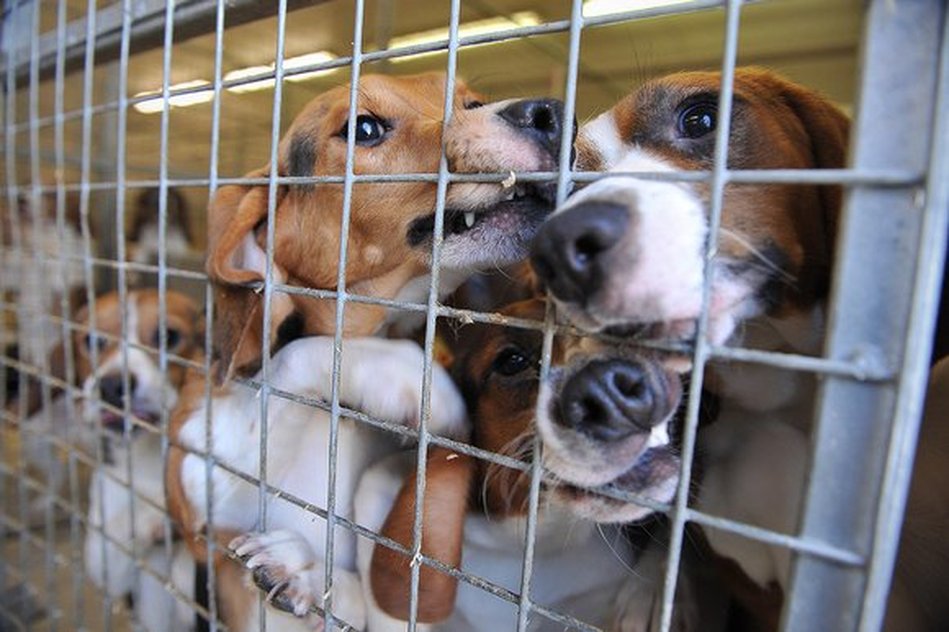
According to the Care2 petition site, "Craigslist is helping dog abusers find animals to torture by failing to enforce their own rules." You won't find the animals for sale in the "for sale" section because it is supposedly against the policy of Craigslist. Some dogs and cats are offered for free. The concern is that animals given away on Craigslist could be used for research facilities, as bait animals for dog fighting, or by people who torture and kill animals. Technically, you can’t sell animals on Craigslist, but you can charge a re-homing fee. This may open a door for puppy mill operators, too.

What can you do? You can visit  the Care 2 petition site to sign the petition to DEMAND AN END TO SELLING DOGS ON CRAIGSLIST. You can help save the sweet innocent face above from the poor dog below.

Ariel Wulff made a great suggestion in the article Pets in Danger on Craigslist. Because Craigslist reaches every major city in US, she viewed the Craigslist pet ads every day in her city and skimmed every dog and cat ad. She wrote a short letter to each person  advertising their pet on Craigslist for free. Ariel believes that "many of these people love their pets and don’t even want to get rid of them, but are in desperate situations and feel like they have no other choice. They honestly do not know the danger they are putting their beloved pets in."  She suggests we can do the same in our cities. It's a way to do something to help dogs and cats that you may never have thought of.

Check out my books on Amazon if you are interested:
MAGGIE the dog who changed my life  
FINAL YEARS Stories of Parent Care, Loss and Lives Changed