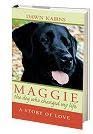
MAGGIE: the dog who changed my life

MAGGIE: the dog who changed my life
Click photo to visit dawnkairns.com

Thursday, December 30, 2010

Shocking Animal Cruelty in Other Countries - Can We Change It?

Imagine you are out walking your dog, and an official grabs your dog's leash and beats him to death as you watch, horrified and helpless. According to the Shanghai Daily Newspaper, it happened in Mouding county in Yunnan province in southwestern China in 2006. 50,000 dogs were slaughtered over five days in a government-ordered crackdown! Their reason for the bludgeoning deaths? Three people died of rabies. Only 3 percent of dogs are vaccinated against rabies and each year more than 2,000 people die from rabies. How about vaccinating dogs rather than clubbing them to death? Where are your hearts, China? Your compassion?

China is a country where dog meat is eaten; dogs have never had an easy time there. The county police chief led killing teams that entered villages at night in this massacre. They made noise to get dogs barking, then beat them to death. Owners were offered 63 cents per animal to kill their own dogs before the teams were sent in. Can you even imagine?

Ironically, Mouding is famed for its Buddhist shrines -- what's wrong with this picture? Not my take on Buddhism by any stretch. Couldn't the government have prevented this cold-blooded, violent, brutality by creating a program to vaccinate dogs against rabies? Read full story at MSNBC.msn.com. My understanding is the slaughter of innocent dogs has not stopped with this one city. PETA recommended a boycott of Chinese products. I'd say that's the least we can do.

Rescued from Puerto Rico and adopted
Similarly, imagine living in a public housing complex and having animal control workers show up at your door, seize your dog or cat, drive away with her and throw her off a 50-ft. bridge to her death. In a brutal incident last October, 2007 in Barceloneta, Puerto Rico, this is exactly what happened to dozens of dogs and cats. This incident in Puerto Rico received a lot of international attention and outrage, but perhaps not enough. Keep in mind that Puerto Rico is a territory of the United States. So they ARE under our animal cruelty laws. But obviously they are not enforced by anyone, including our government. This outrageous incident prompted a visit to Puerto Rico from Kim Intino of the Humane Society of the United States in December, 2007 to meet with tourism officials to determine how to address the island’s abundance of unwanted animals. My understanding is that the HSUS is supporting several spay/neuter initiatives on the island. This is where it starts -- to prevent overpopulation, but the existing animals need more! Children are raised thinking this heinous treatment of animals is fine. We have to change that! People in Puerto Rico need to be re-educated regarding humane treatment of animals since abuse is so common.  Read more about this incident in USA Today here.

Clearly, many cultures do not respect animals or share our love for pets. Most countries in the Third World don't have laws against animal cruelty. Mexico is one of them.  Muslims regard dogs as unclean and owners may have their pets confiscated while on a walk. In parts of Asia, cats and dogs are skinned alive and boiled. Sadly because children are indoctrinated in these forms of violence to animals in many countries like Puerto Rico, they find animal cruelty to be a 'normal' aspect of life. It is so important to teach them, through humane education, that there is NOTHING normal about animal cruelty -- to teach them to love and respect precious animals instead!

Canadian born Steve McGarva has first-hand experience with animal cruelty in Puerto Rico while living there for two years. Stay tuned for my next blog post that tells his story, including video footage, of his shocking discoveries about animal cruelty while living on the "Island of Enchantment," and what he did and continues to do about it.

What can you do? Pressure the tourism industry and government to continue developing humane programs. For example, if you visit Puerto Rico (or any other tourist destination) and are disturbed by the sight of homeless dogs, it can be effective to let the tourism agencies know that. Suggest the solutions of spay/neuter, legislation, and humane education, NOT eradication. Support local groups that are focusing on spay/neuter, such as PAWS in Isabela, Puerto Rico. Find groups that are offering spay/neuter and humane education trips to these countries such as the group McGarva started, the Achates Legacy Rescue Foundation, and join them.

Animal cruelty in our own country with puppy mills, dog fighting, and so much more is bad enough. What do you think? Can we change animal cruelty in other countries?

Posted By:
Dawn Kairns 
Author of MAGGIE the dog who changed my life A Story of Love

https://blogger.googleusercontent.com/img/b/R29vZ2xl/AVvXsEhkMvEcr1rSrSWb96YsGoOOPvq98JXC1i6obm7q74N_t16VtUgTPPNCk6WgYqrLprxsGyWxMgsVqHTYN6L3nLVMZaKt-kc9mZIrqAgVkWUzfQ4US29wHMgZ2-OewnzTexhG9dj9-BfGg3I/s640/smaller+tilted+bookcover+from+paint.jpg
Website: www.dawnkairns.com
"They stay in our lives for a while, leave footprints on our hearts, and we are never, ever the same." -- Author Unknown
 

Monday, December 27, 2010

Stop Fightin' the Dogs (music video)

This fantastic music video, 'Stop Fightin' the Dogs', made by the Urban Animal Alliance, is wonderful for raising awareness of dog fighting issues and encouraging us to take a stand against dog fighting. The Urban Animal Alliance consists of concerned citizens who are bringing attention and action to the issues of animal abuse in America's inner cities and suburbs. They are raising awarenessof animal rights in urban America. Please visit http://www.urbananimalalliance.org/ to learn more about their programs and awareness-raising events, including how to recognize dog fighting/dog fighters in your communities and what you can do to stop dog fighting.

"Across the country, in basements and back alleys, open fields and empty lots, dogs are placed in “sporting” rings and cheered on to fight by their owners and spectators (sometimes children), many who have bet money on the winners. The dogs tear at each others' faces, throats and ears and often keep fighting to the death. Some owners kill their dogs when they lose ... According to law enforcement officials and animal welfare organizations, it’s on the rise all over the United States, in cities, suburbs, and rural areas... Pit bulls are most commonly used for dog fighting ... Other animals are also used to train dogs for fighting. Smaller dogs, cats, rabbits, and other small animals can be sacrificed as “bait” animals. Often these animals are stolen or obtained from free animal listings in classified ads and online ... Dog fighting is related to other types of violence and illegal activities. And young children are sometimes in the audience at matches, which can promote insensitivity to animal suffering, enthusiasm for violence and a lack of respect for the law." (from  urbananimalalliance.org/)

The Urban Animal Alliance is "comprised of Hip hop artists, sports role models, ordinary concerned citizens and entertainment bigwigs alike, all working together dedicated to changing the social mores that violently impact not only so many voiceless animals, but the children around them."

Please take a moment to visit The Urban Animal Alliance now and learn more about their valuable work for animals and people. At least watch their amazing video by clicking 'Stop Fightin' the Dogs' now and pushing the play button. You'll be glad you did. 


Posted By:
Dawn Kairns 
Author of MAGGIE the dog who changed my life A Story of Love

https://blogger.googleusercontent.com/img/b/R29vZ2xl/AVvXsEhkMvEcr1rSrSWb96YsGoOOPvq98JXC1i6obm7q74N_t16VtUgTPPNCk6WgYqrLprxsGyWxMgsVqHTYN6L3nLVMZaKt-kc9mZIrqAgVkWUzfQ4US29wHMgZ2-OewnzTexhG9dj9-BfGg3I/s640/smaller+tilted+bookcover+from+paint.jpg
Website: www.dawnkairns.com
"They stay in our lives for a while, leave footprints on our hearts, and we are never, ever the same." -- Author Unknown
 

Sunday, December 19, 2010

The Texas/Mexico Border Rescue Dog: Remember Marky?

Marky and me in Brownsville PetSmart

It's been almost a year now. I know many of you remember my stories/posts about Marky, the dog Tom and I rescued near the Mexican border while we were in South Texas. I hadn't planned on writing another update until he was adopted. I never dreamed Marky would still be in his foster home a year later, so I think an update is in order. 

I am now a volunteer for the Rocky Mountain Lab Rescue (RMLR). Awhile back I asked one of our board members if we could find a way to transport Marky from Brownsville, TX to Colorado. The adoption rate for animals between the two areas of the country are like night and day. RMLR agreed, even though the logistics may not be easy, and I was thrilled! I thought the Brownsville SPCA would be, too. Tom and I would have fostered Marky as a RMLR dog until he found a home. RMLR dogs are typically adopted out after being in foster 2-4 weeks. Compare that to a year!

So what happened and why isn't Marky sitting next to me as I write this? The Brownsville SPCA wouldn't agree to send him unless he went straight into a forever home here rather than a foster home. BSPCA didn't want to take Marky out of his stable situation to go into another foster home, and then have to move to yet another home. I do understand and appreciate their thinking and concerns for Marky on this. But I'm also sad to think of him staying perhaps yet another year in foster in Brownsville, TX when finding a forever home in CO may have already even happened if he was here ...

Marky and me, PetSmart Adoption Event

The good news is EVERYONE at BSPCA is in love with him. Marky is a "couch potato" they say -- very affectionate. He loves other dogs, cats, people, and is just a very sweet boy, they tell me. Well, didn't I know that the first time I looked into his hopeful brown eyes on the road, with a coyote headed his direction? As his flea-ridden , smelly, skinny body rode on my lap in the truck, I knew this one was a sweet, special dog -- a real keeper -- for someone. Could you be Marky's forever person??


Posted By:
Dawn Kairns 
Author of MAGGIE the dog who changed my life A Story of Love

https://blogger.googleusercontent.com/img/b/R29vZ2xl/AVvXsEhkMvEcr1rSrSWb96YsGoOOPvq98JXC1i6obm7q74N_t16VtUgTPPNCk6WgYqrLprxsGyWxMgsVqHTYN6L3nLVMZaKt-kc9mZIrqAgVkWUzfQ4US29wHMgZ2-OewnzTexhG9dj9-BfGg3I/s640/smaller+tilted+bookcover+from+paint.jpg
Website: www.dawnkairns.com
"They stay in our lives for a while, leave footprints on our hearts, and we are never, ever the same." -- Author Unknown
 
Become a fan on Facebook of MAGGIE: the dog who changed my life

Tuesday, December 7, 2010

Therapy Dogs Go To Court

After reading several articles about dogs being used in courtrooms therapeutically to help calm victims of violent crimes, I'm all the more proud of my black lab, Maddie, and her work as a therapy dog with the kids at the juvenile center.

"The young woman in Seattle was having second thoughts about testifying in the 2008 trial of a man accused of abducting and raping her," states Kathleen Gray in her February, 2010 USA TODAY article. That was until Ellie, an 8-year-old Labrador retriever used by the King County prosecutor's office was brought in. Ellie helps to calm victims and witnesses of violent attacks.

According to Ellen O'Neill-Stephens, the senior prosecuting attorney and founder of Seattle-based Courthouse Dogs LLC, Ellie helped the victim stay calm, her presence helping the victim describe the attack. The attacker was found guilty. Stephens feels that the specially trained dogs provide a non-threatening presence for such victims, who may find it difficult to talk to about a violent crime. The courthouse dogs go through about two years of training at centers such as Canine Companions for Independence.

In Houston, the district attorney's office started its own courthouse dog program called Paws and Order: SDU (special dog unit). Volunteers bring the dogs to the courthouse once a month and meet with children who have witnessed domestic violence according to Harris County Assistant District Attorney Donna Hawkins. Their stress lessens after playing with the dogs.

In southern Missouri, therapist Diane Silman regularly uses Simon, her 2-year-old black Labrador, to help create a non-judgmental atmosphere during interviews and court testimony of abused children and domestic violence victims.


A similar program is being started in the Honolulu Prosecutor's Office to help victims and witnesses -- especially traumatized children -- to navigate their way through the criminal justice system. Courthouse Dogs founder Ellen O'Neill-Stephens flew in from Seattle to help establish the program in Hawaii according to a November, 2010 article in Hawaii News Now. Honolulu's first courthouse dog will be Pono, a 3-year-old black Labrador female provided through Hawaii Canines for Independence, who is training Pono. An  example of how Pono can help is a young girl who refused to tell a forensic investigator about the abuse she suffered but gave a graphic description to the courthouse dog who was in the interview room, reports Hawaii's Star Advertiser last month.

Courtroom dogs are also helping teenage drug court participants and in adversarial plea bargaining sessions, reports the Star Advertiser. They greet jurors, and and their parents arriving for traumatic court proceedings. Courtroom dogs also sit in the witness box next to young and elderly victims and witnesses. And it seems the prosecutors and defense attorneys find themselves petting and stroking the dogs to calm their own nerves.

Kelley McMillan reports in  Newschief.com in a September, 2010 article that New Mexico will soon be bringing one such dog, Cooper, a 2-year-old golden retriever, to Lea County. Cooper will be the first courthouse dog placed with any organization in New Mexico. Several other New Mexico agencies will quickly follow suit for courts in Roswell and Taos.

Dogs help us with so many things. Now, add to the list that they are helping victims of violent crimes and abuse, young and elderly alike, to get through difficult, painful testimony on the witness stand. According to O'Neil-Stephens, having the dog with a child in court can make the difference between a guilty verdict or an acquittal.

Posted By:
Dawn Kairns 
Author of MAGGIE the dog who changed my life A Story of Love

https://blogger.googleusercontent.com/img/b/R29vZ2xl/AVvXsEhkMvEcr1rSrSWb96YsGoOOPvq98JXC1i6obm7q74N_t16VtUgTPPNCk6WgYqrLprxsGyWxMgsVqHTYN6L3nLVMZaKt-kc9mZIrqAgVkWUzfQ4US29wHMgZ2-OewnzTexhG9dj9-BfGg3I/s640/smaller+tilted+bookcover+from+paint.jpg
Website: www.dawnkairns.com
"They stay in our lives for a while, leave footprints on our hearts, and we are never, ever the same." -- Author Unknown
 
Become a fan on Facebook of MAGGIE: the dog who changed my life

Thursday, November 25, 2010

Missouri Wants to Keep Puppy Mills in Business, Despite Passing Prop B


This post was written on the Care 2 Blog by alicia graef. This is such an important issue, so crucial to the welfare of dogs, that I want to share it with you on my blog, too:

On November 2, Missourians cast their votes and passed Prop B, the Puppy Mill Cruelty Prevention Act, a citizen initiative brought to voters to stand up for dogs languishing in puppy mills in their state. Unfortunately, legislators are already working to kill this new law.

Missourians for the Protection of Dogs, a coalition formed by animal protection organizations, businesses, veterinarians, and citizens, hit the streets educating people about the atrocities inherent to puppy mills, such as cramped conditions, dogs being trapped in their own filth and sick and injured dogs being left with no veterinary care to name a few. 

Over 190,000 signatures were delivered to the Secretary of State in Missouri to get Prop B on November’s ballot in the country’s worst state for puppy mills. With an estimated 3000 puppy mills licensed by the USDA and the Missouri Department of Agriculture, it’s been called the puppy mill capital of America.

Weak laws regulating commercial kennels have made it the perfect place for unscrupulous breeders to call home. According to the ASPCA, Missouri supplies over 40 percent of the puppies you can find in pet stores across the country. 

Prop B, which will take effect in 2011, isn’t anything outlandish. The bill calls for an increase in standard care, including providing food and water, vet care, protection from the elements, exercise, “constant and unfettered access” to the outdoors, room to move around and stretch and rest between breeding cycles. It would apply to breeders with more than 10 dogs and limit the number of breeding dogs to 50 per facility. Violations would result in up to 15 days in jail and a fine of $300.

Prop B calls for nothing more than adequate care for an animal we fondly, and commonly, refer to as man’s best friend. Missourians spoke. They don’t like puppy mills. Prop B passed with 51.6 percent of the votes. Unless they do math differently in Missouri than they do everywhere else, that’s the majority. End of story, right?

Unfortunately, no. It took less than a week for opponents to start coming out of the woodwork trying to get Prop B watered down or repealed.

Breeders of course heard a resounding ca-ching as the new law would significantly raise the cost of running a commercial breeding facility, while others in agribusiness are worried that regulations will expand to livestock. The Tea Party was, of course, also upset.

Worse, legislators are listening and will be discussing possible actions in the new session starting January 5.
“We will start working on that issue probably immediately,” said Senator-elect Mike Parson, a Bolivar Republican. Incidentally, there are 150 licensed breeders in his district.

Rep. Tom Loehner, a Koeltztown Republican who is chairman of the House Agriculture Policy Committee said that the whining heard about the issue in rural areas could “represent a mandate for change,” as most of the votes came from urban areas.

Not to be a smarty pants, but those votes all count the same whether or not the came from rural or urban areas.

Additional concerns were raised over job loss and the potential for Prop B to put legitimate breeders out of business. However, Barbara Schmitz, spokeswoman for Missourians for the Protection of Dogs, brilliantly pointed out that Prop B would be economically beneficial by providing an increased demand for veterinary care, while simultaneously reducing the financial burdens of rescues and other funding allocated to the mistreatment of animals. 

As for putting legitimate breeders out of business, what legitimate breeder needs more than 50 breeding dogs? That’s 50 litters of puppies per breeding cycle, yet we destroy millions of innocent dogs every year simply because there aren’t enough homes and Missouri wants to let their state continue to contribute to this horrendous industry churning out puppies like inanimate objects?


Dawn Kairns 
Author of MAGGIE the dog who changed my life A Story of Love

https://blogger.googleusercontent.com/img/b/R29vZ2xl/AVvXsEhkMvEcr1rSrSWb96YsGoOOPvq98JXC1i6obm7q74N_t16VtUgTPPNCk6WgYqrLprxsGyWxMgsVqHTYN6L3nLVMZaKt-kc9mZIrqAgVkWUzfQ4US29wHMgZ2-OewnzTexhG9dj9-BfGg3I/s640/smaller+tilted+bookcover+from+paint.jpg
Website: www.dawnkairns.com
"They stay in our lives for a while, leave footprints on our hearts, and we are never, ever the same." -- Author Unknown
 
Become a fan on Facebook of MAGGIE: the dog who changed my life

Friday, November 19, 2010

Saving Gracie: the Animal Rescue Railroad in Action

Marco--RMLR Featured Dog
I recently became a volunteer with Rocky Mountain Lab Rescue, a small group of volunteers who locate Labrador retrievers and Lab mixes who are about to be euthanized, often with the help of out-of-state shelter volunteers who alert them to dogs whose time is running out. On Wednesday evening, my husband and I had the great fortune to participate in saving Gracie, a lab mix who found her way to Colorado via the efforts of The Rocky Mountain Lab Rescue (RMLR) and  Colorado Animal Rescue Express (C.A.R.E.). C.A.R.E. is one group RMLR works with to transport their dogs from "high-kill" states. Gracie came from Missouri and was picked up in Hayes, Kansas by the Colorado Animal Rescue Express  van, along with about 20 other rescued dogs. C.A.R.E. makes these runs twice a week to rescue dogs and cats from high-kill shelters in Colorado and neighboring states. They work with over 110 rescue organizations like Rocky Mountain Lab Rescue.

When we arrived in the parking lot meeting place and found the C.A.R.E. van, our very frustrating bumper-to-bumper, stop-and-go rush "hour" drive to get there was immediately forgotten by both of us. Staring back at us from the open van were sets of uncertain, wondering dog and puppy eyes, represented by numerous breeds and mixes, still in kennels awaiting pick up from their rescue group. 

"What is going to happen to me now?" I could almost read in their precious faces. Other dogs had already been gathered from their crates and were being walked or led by a rescuer to their cars, on their way to foster homes. A woman by the van with a very kind, open face asked who we were. It was Linda, the person who started C.A.R.E. I could feel the love and sense of fulfillment radiating from her. I imagined she could feel the joy of having just given 20 dogs a second chance at life! If not for her efforts, they would all be dead soon. I'll never forget that scene. So inspirational! We introduced ourselves & told her we were with RMLR, looking for Gracie. She directed us to our RMLR transport coordinator, Jessica, just across from the CARE van.

I squatted down to a very frightened Gracie, looking warily about and pulling on her leash. I took off my glove and slowly held out the back of my hand. She sniffed my hand, then immediately gave my chin several licks.

"Wow," said Jessica. "That's the most we've seen from her all night! She is so scared." Jessica had already chipped Gracie, and we did a hurried exchange, with Tom placing Gracie in the kennel in back of my car. She tried to get away at first, her body frozen in fear as he picked her up. 

After warning me that Gracie was a "flight risk," off we drove to take her to her new foster home. Gracie whined periodically, and I talked to her, explaining to her that this drive was much shorter than the one she just endured, and that she would be well cared for in her new foster home. Every time I spoke to her, she stopped whining. Soon, Tom joined me. The time between her whining lessened. I explained to her about "forever homes," and assured her she was safe. The whining ceased completely.

When we arrived at the foster home, Karen's (foster mom) husband came out so he and Tom could carry Gracie's kennel into the house. Thump, thump, went her tail. A good sign. She was smiling a little now, and the fear was gone. We were met inside the front door by Karen, her anxiously anticipating 2 children, and their Golden Retriever.The men placed the kennel on the floor and opened the door. Off Gracie galloped, wasting not a moment as she leaped up and began playing with the Golden; she then ran to explore the house. That was my next moment of inspiration and reward for the evening, seeing the joy and the opening up of a little dog who less than an hour ago was terrified.

But inspiration didn't stop there. I considered the beauty of what was happening here; how wonderful it was for a family to engage in such a life-affirming activity together with their children. To invite an unknown dog into their family and space, if only for a little while; to be Gracie's springboard into her new life. What a beautiful value to teach and share with children, that of giving life and love to an abandoned animal! The energy all around us was high and joyful.

Please visit the Rocky Mountain Lab Rescue website to learn more about their mission, to volunteer, or to see their adoptable dogs. RMLR  has no shelter and relies ONLY on foster homes.

Please visit the Colorado Animal Rescue Express website to learn more about their wonderful mission. Since C.A.R.E.'s inception on 6/27/2007, 415 transports, 7,363 dogs and 483 cats have been saved through their transport.

So, who really rescues who? Ah, indeed anyone involved in rescuing animals knows that the act indeed does boomerang ... and the gift is to the giver. 

Posted By:
Dawn Kairns 
Author of MAGGIE the dog who changed my life A Story of Love

https://blogger.googleusercontent.com/img/b/R29vZ2xl/AVvXsEhkMvEcr1rSrSWb96YsGoOOPvq98JXC1i6obm7q74N_t16VtUgTPPNCk6WgYqrLprxsGyWxMgsVqHTYN6L3nLVMZaKt-kc9mZIrqAgVkWUzfQ4US29wHMgZ2-OewnzTexhG9dj9-BfGg3I/s640/smaller+tilted+bookcover+from+paint.jpg
Website: www.dawnkairns.com
"They stay in our lives for a while, leave footprints on our hearts, and we are never, ever the same." -- Author Unknown
 
Become a fan on Facebook of MAGGIE: the dog who changed my life