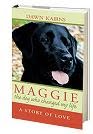
MAGGIE: the dog who changed my life

MAGGIE: the dog who changed my life
Click photo to visit dawnkairns.com

Sunday, August 29, 2010

Hurricane Katrina’s Lesson about Animals: "Mine," a Documentary (Video)


Before Hurricane Katrina, the policy in the United States was that human life eclipsed the life of an animal. Thankfully, attitudes are changing.  Today, many people consider pets to be family members.

According to a post by Megan Drake on Care2.com, the best thing to come out of Hurricane Katrina for animals was the federal Pets Evacuation and Transportation (PETS) Act, which was signed into law on October 6, 2006. PETS "requires local and state jurisdictions to take into account domestic pets and service animals when formulating and implementing disaster plans.  It also gives FEMA (Federal Emergency Management Agency) the power to deny FEMA funds to municipalities and states that do not form or implement such plans."

During Katrina many people had to be forcibly removed from their homes because they wouldn't leave their animals. Tragically, their pets were left behind to fend for themselves against the forces of nature. A huge number of Americans descended on the New Orleans and Mississippi areas to help rescue the pets that made it through. I was one of those people. Watching people who lost their pets in the hurricane come to the makeshift shelter I was volunteering at to look for their pets and not find them was a heart break. Often, these folks never saw their pets again, because even if their pet survived, by the time families came looking, chances were high that the animal had already been shipped to a shelter somewhere in the United States -- to be adopted out to someone else.

"Mine, a documentary by filmmakers Geralyn Pezanoski and Erin Essenmacher explores the journey of five Katrina dogs and their humans who searched for them in the midst of trying to pick up the pieces of lives mangled by catastrophe.  The film won awards including the 2009 South by Southwest Film Festival and Independent Lens Audience Award for 2009-2010."

Pezanoski was touched by the length to which these pet parents would go to reunite with their "children" and offered to show Mine to community groups like shelters, rescue groups, and  libraries. If you want to help spread Mine's message you can schedule a showing in your locale.  Email: info@minethemovie.com.

"Mine's impact will educate and change attitudes about the place pets hold in our society and ultimately change laws, giving rights to animals," according to Megan Drake. "It is powerful, poignant and a must-see for anyone concerned about their own furry family members. It is also a great movie to watch as a family and will teach children about the place animals hold in our hearts and our obligation to them."


(Adapted from the Care 2 Blog)


A great resource book written by Jenny Pavlovic, author of 8 State Hurricane Kate to help ensure you don't lose your animals in a disaster is titled, Not Without My Dog.


Posted By:

Dawn Kairns  

Twitter: themaggiebook

Wednesday, August 18, 2010

Pets in Cars in Summer: A Deadly Mix

Even though summer is winding down, we still have over month of  potential hot weather. Warm temperatures can quickly become deadly inside of a closed car for an animal. Dogs are the most common animals left in cars, and they cool themselves primarily by panting -- unlike humans who have sweat glands throughout our bodies to regulate heat. Canine panting is not as efficient as human sweating is at cooling the body. In a very short time, dogs can suffer critical damage to vital organs and systems from over heating.

Leaving the windows open just a few inches is simply not adequate. We've all heard periodic tragic news reports this summer of animals, especially dogs, being left in cars and dying from heat stroke. It only takes 10 minutes for the interior of a car to heat to 102 degrees on an 85 degree day, and 30 minutes to heat to 120 degrees according to the ASPCA.

Governor Arnold Schwarzenneger signed legislation in 2006 (see 10news.com) making it illegal in California to leave pets alone in a hot car. An officer can remove a pet from a closed car in dangerous conditions. According to the Aspca blog, "at least 14 states and many municipalities have enacted laws to address the problem of animals left in cars in extreme temperatures. Under these laws, police, animal control agents, peace officers and others may be authorized to enter a vehicle by whatever means necessary to remove an animal."

It's still important to call law enforcement or animal control even if your state doesn't have a specific law addressing animals left in hot cars according to Jill Buckley, Senior Director of ASPCA Government Relations and Mediation. "It may be considered animal cruelty under your state or local laws.”

Try to find the animal's guardian if you see it in a closed or almost closed car on a warm day. The first priority is to get the dog out. Don't place yourself in danger in the process -- call local law enforcement or animal control.


The ASPCA has a flyer titled, Pets in Hot Cars flyer that you can distribute to help educate people about the dangers of leaving pets in hot cars.  You can print and distribute these flyers here.


Posted By:

Dawn Kairns  

Twitter: themaggiebook

Saturday, August 14, 2010

The Great Animal Rescue Chase (VIDEO)

My husband and I still talk about Marky, the flea-infested pup we rescued off the road in South Texas last winter. And Tawny, the fearful pitbull we fostered and rehabilitated that the shelter wanted to euthanize. Both these dogs made us turn "I can't" into "I will find a way; I can."

I first saw this video on the Care2.com Blog. It suggests we all become part of a global animal rescue campaign. Stopping to rescue an animal takes time. It takes compassion. It takes being a hero. 

Visit The Great Animal Rescue Chase website to read more about the campaign. This is taken from their site:

"Welcome to the event that celebrates the heroic nature of the animal lover with an amazing mission to rescue one million. This free event is open to people everywhere ..."

"So pull your car over and move the turtle off the road. Untangle the fishing line wrapped around a pelican's wing. Call authorities to report that dog chained up without food or water. Take in that elderly stray cat wandering through the winter snow. Be late for work. Get swamp water on your sneakers. Get fur on the back seat of your car. And 10 years from now, you'll still be talking about the day you saved a life."

We don't just save these animals. They save us by making us push ourselves to stand up for them, to call on resources we didn't know we had, to bring out the best in ourselves -- for them.


Posted By:

Dawn Kairns  

Twitter: themaggiebook

Tuesday, August 10, 2010

Woman Builds Fences To Give Dogs Their Freedom

When I read this story by Diane Herbst |on Tonic, it was one I felt it was very worth sharing:

Giving Dogs Their Freedom, One Fence At a Time

Most everyone Hardy has encountered who chain their dogs are uneducated and poor. They tell her the dog is chained for protection. Or they need the money from the puppies. Hardy's gift of gab works wonders. "I tell them it's a lot easier for me to break in if they are chained," she says. "I tell them no one wants the puppies, they just end up in a shelter."
picture_1.png
Mikael Hardy was horrified to see how many people near her home in South Carolina kept their dogs chained up, outside, every hour of every day. So she got up off the couch, knocked on their doors and did something about it. 
picture_1.png
When Mikael Hardy (right) moved from Atlanta to Greenville County, S.C., she discovered a frightening way of life. Some of her new neighbors kept their dogs chained up outside every day and every night — oftentimes emaciated, sad creatures with empty water buckets and no food. "I saw all these chained dogs, and I said, 'What is this?'" Hardy says. "I knew I needed to save them."
Last year, Hardy, 40, started knocking on doors, asking these neighbors if she could build them a fence, get their dog spayed or neutered, and provide dog food, toys and veterinary care. For free. "At first they thought there was a catch," she says. "They probably thought I was on crack."

Since August of 2008, however, Hardy has persuaded almost 60 different owners to allow her to build a fence and provide romping room for some 70 dogs. The only requirement: each owner must spay or neuter their dogs before construction begins, paid for by Hardy and her nonprofit, PAWSitive Effects. Incredibly, Hardy has a 90-percent success rate. "We've approached this as a friendly venture, I keep on talking and eventually they say yes," she says in her fast Southern drawl. "It is just so emotionally and physically abusive to keep these dogs at the end of a chain."
unhappydog.jpg
For her first few fences, each 600 square feet, Hardy borrowed money from her mother. "We had no money," says Hardy, whose husband, Brad, 40, two teenage children and a loyal group of volunteers all pitch in to build the fences, which cost $400 a piece; medical costs for each dog is another $130. "The people she builds the fence for are so grateful or so thankful, and they can't help but notice the change in their dog," says regular volunteer Jami McLean, 32, a human resources manager for a Fortune 500 company.
"You have a dog that is snarling, defensive, and as soon as you release him into the fenced area, the dog changes immediately," she continues. "They begin running around, sniffing, throwing their toys in the air. It is by far the most rewarding part of building the fence."

When not building fences, Hardy juggles co-owning a flooring company with Brad, and raising daughter Tatum, 13, and son Tyler, 14, who has bilateral ophthalmia (no eyes), autism, obsessive compulsive disorder and a low I.Q. Both kids work on the weekly fence-building projects, with a waiting list through September.
"Tyler tells people what to do," says Hardy, laughing. The Hardy family also includes eight dogs — four rescued from living on a chain. "It's hard not to gush about Mikael and the whole Hardy family," says McLean. "You see Tyler, with a lot of obstacles to overcome, and not once do you hear the kid say 'I don't want to do that.'"

Hardy tackles each home that she visits knowing the result will be a fence. Occasionally, she skips the fence and rescues the dog. One dog (above, left) was all skin and bones, so thin that her front left arm slipped through her collar, which embedded deep in her skin. Sores enveloped the pup's body. "I said, 'Keeping a dog like this is illegal,'" Hardy recalls.
The owners gave their dog to Hardy, who found a loving family — one that includes two dogs and a 30-pound cat — to adopt her. However, an angry Hardy pressed charges against the owners, who were allowed to settle their case and 30 days later obtained another dog — who they chained up. Says Hardy: "It's deplorable."
happydog1.jpg
Hardy's efforts are part of a burgeoning number of volunteers across the US working to let chained dogs free, sometimes with unintended results. Hardy had volunteered for the Pennsylvania-based group Dogs Deserve Better, whose founder was convicted of theft in 2007 for rescuing a chained, dying dog who could not stand, refusing to return him to his abusers. Hardy's experience with the group eventually led to her founding PAWSitive Effects.

Since Hardy built her first fence last year, she has raised and spent some $45,000 — all from private donations. "At least I'm making a dent," she says. "At the end of the build, when I put that dog in that fence, you've dramatically improved that dog's life. It makes you feel so good."

To take a stand and help Mikael better the life of local pups, click here to donate.

Photos courtesy of Mikael Hardy.

Posted By:

Dawn Kairns  

Twitter: themaggiebook

Saturday, July 31, 2010

Cinnamon Rocks: Perhaps Cats Really Do Have 9 Lives

2nd Opinions Can Save Your Animal’s Life

As many of you know, Cinnamon, our 17 year old cat, was doing so poorly a couple of weeks ago we feared we’d have to euthanize her. We are travelling in our camper with her, so we weren’t able to see her regular veterinarian. After a blood test, the Montrose vet diagnosed her with early kidney failure, a very significant anemia, and probable leukemia or lymphoma. It took me a couple of days to get out of my shock and emotions enough to consult with our vet in Boulder. With his voice of calm, Craig said  Cinnamon’s kidney disease was not that bad, and the he sure wouldn’t be able to say from looking at her white cells that she had a blood cancer without confirmation from a pathologist. 

“We need to know if her anemia is regenerative or not,” he said. “That will tell us if her kidneys are causing it (this is a non-regenerative anemia) or if there is another cause such as bleeding somewhere, a blood-borne infection that is destroying her red blood cells, her own immune system destroying red cells, or possibly a cancer.” 

He said he often gave older anemic kitties B12 injections each week. He and another vet in his office both suggested trying a course of antibiotics in case there was an infection from a tick or other blood borne pathogen causing her anemia, increased white count, and poor health. Soon after our conversation, Cinnamon’s appetite took a turn for the worse. I spoke with the Montrose vet re: Craig’s suggestions and one of my own.

“What about steroids?” I asked. “Wouldn’t that help if it were cancer?” I knew of a dog with a stomach cancer that lived another quality year on steroids after he initially stopped eating and was diagnosed with cancer. When I took Cinnamon on Tuesday, July 20 for a second blood test (this one to go to pathology), the Montrose vet suggested we give her a steroid injection that would last 8 weeks rather than giving her pills each day.

“It will help with any inflammation her body is dealing with, whether from an infection or cancer,” she said. I was desperate at this point, as Cinnamon had lost most interest in eating and was rapidly losing weight. I knew the steroid could help her appetite and her sense of well being. At 17 years old, I wasn’t very concerned about the long term affects of steroids – just giving Cinnamon quality now.

The blood and pathology report came back the next day. There was NO report of increased or suspiciously shaped lymphocytes (one part of the white cell count). Her neutrophils, part of the white cells that fight infection, were “slightly toxic looking.” Cinnamon’s anemia IS regenerative, which means it is not being caused by her kidneys. The Montrose vet still stuck to her cancer suspicion, though. Why, I’m not sure – perhaps her own instincts, perhaps not being able to admit she was wrong about what she saw on the first slide a week earlier. The truth is we still don’t know what is causing Cinnamon’s anemia. But the vet did prescribe the antibiotic, and a vet tech very kindly came out to our truck at my request to give Cinnamon the steroid injection so she didn’t have to go inside the vet’s office.

The steroid injection was a Godsend. Cinnamon’s appetite began to improve within the first 24 hours. Her mood improved and she began to seem like the cat we knew again. The wonderful thing is that cats don’t have the adverse affects from steroids that humans and dogs do. I planned to wait a few days before beginning her antibiotic. I wanted Cinnamon to have a chance to gain some of her lost weight back and enjoy eating again. Plus, I was afraid to rock the boat – I had my cat back. What if the antibiotic made her sick? The Montrose vet told me esophageal stricture in cats was a possible side effect of Doxycycline if it got stuck in her esophagus and that I needed to follow the pill with 6 cc of water. I knew I wasn’t going to get into a forceful match with Cinnamon at this stage in her life, which is another reason I waited to give the antibiotic. We’ve always had such a rapport and understanding –I wanted this to be the same. I knew what we were enjoying was the masked symptom effect of the steroid injection, and that Cinnamon’s anemia was still raging. The antibiotic may be a shot in the dark, but it may also be her only hope at cure. 

Finally, we started the antibiotic last Monday. I give it in 2 small pieces in pill pockets which she takes like treats, followed by several of her favorite treats, and then I place her water dish in front of her and she drinks of her own accord (one blessing of her increased drinking).  We’re 6 days into it and 8 to go – no side effect thus far.

I won’t know until we repeat Cinnamon’s blood test after we get home in August if this course makes a difference in her anemia. We don’t have a firm diagnosis. Perhaps she does have cancer, I don’t know. I will not be doing invasive tests to find out. For now, we have our purring cat back, and her purr lulls me to sleep at night while her soft fur caresses my arm. I will savor every quality moment with my Cinnamon until the journey’s end, grateful for this extra time.

Photos: All taken on 7-28-10 in our camper except bottom photo of Cinnamon relaxing on back taken this morning.

Posted By:

Dawn Kairns  

Twitter: themaggiebook


Tuesday, July 27, 2010

The Apology Video (Excuses When Giving up Animals to Shelters)

"The Apology Video" was made by Retriever Rescue of Colorado (www.therroc.com). RROC is the 2009 National Youtube Contest Winner for this animal advocacy video. "The finalists were selected by Ben Stein and the SPCA of the United States and the winner was voted by America."

Please take a few moments to watch -- a video I recommend watching to anyone before committing to a dog or any animal, or before you consider taking your commitment to your animal too lightly.

Please visit Retriever Rescue of Colorado at www.therroc.com.


Posted By:

Dawn Kairns  

Twitter: themaggiebook