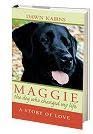
MAGGIE: the dog who changed my life

MAGGIE: the dog who changed my life
Click photo to visit dawnkairns.com

Tuesday, June 29, 2010

Dogs’ DNA Used to Track Their Abusers: 17 Plead Guilty in Dog Fighting Case

ST. LOUIS — "Scientists and animal rights advocates have enlisted DNA evidence to do for man’s best friend what the judicial system has long done for human crime victims. They have created the country’s first dog-fighting DNA database, which they say will help criminal investigators piece together an abused animal’s history by establishing ties among breeders, owners, pit operators and the animals themselves."'
Read the full story in the New York Times

According to Care2, 17 abusers in the multi-state dog-fighting raid last July have plead guilty as a result of dogs' DNA evidence.


Posted By:

Dawn Kairns  


Twitter: themaggiebook


Thursday, June 24, 2010

Dogs Are Not Mere Possessions: Tethering Dogs Becomes Illegal in More Communities

Many of us would never consider chaining our precious dogs for hours, or worse, for days or months. But too many people don't give it a second thought, forcing their dogs to endure even extreme weather conditions without exercise or companionship. Tethered dogs tend to be more aggressive and anxious, not to mention being horribly lonely.  Kudos to Alexandria who just passed a law against this miserable practice. They have limited tethering a dog to 3 hours maximum. Read the full story here on the Care 2 Blog.

With dog deaths and injuries up during the summer months due to the heat, chaining dogs may also soon be illegal in Guilford County, North Carolina. May many communities soon follow your wonderful examples and make dogs a part of the family, ending their suffering and isolation at the end of short chains.Read the full story here.

Posted By:

Dawn Kairns  


Twitter: themaggiebook


Monday, June 21, 2010

Is Humane Education For Kids the Answer to Preventing Animal Abuse?

Last week when my therapy dog, Maddie and I visited the juvenile center, I added something new to my usual humane education talk: I brought in my counseling background and talked to the kids about finding the unconscious positive intention behind their "criminal" behavior. We went on to discuss separating their positive intention from negative behavior; to find a beneficial way to meet that positive intent so they can let go of the behavior that isn't working so well for them or society. As Maddie and I continue our weekly therapy visits to the juvenile center, I can't help but think that widepread humane education programs in schools could really help kids understand the value of kindness to and love for animals; that humane education programs might help decrease the rising incidence of animal cruelty among children. 

Then I read this post today on the Care 2 blog, and realized we are on the same page regarding humane education: 

The Answer to Preventing Animal Abuse: Humane Education?  

posted on the Care 2 blog by Megan Drake

"We seem to constantly hear about animal abuse in the news.

Philadelphia just reported of a young, female pit bull found hanged on a playground.  In Baltimore there seems to be an epidemic of animal abuse amongst the youth, which includes a puppy beaten to death, another dog pelted with stones and yet another set on fire -- just this year alone.

With all the animal abuse happening in the world, there might just be a solution -- humane education.  Citizens for a No-Kill Philadelphia provides a Humane Education Program to fifth graders at John Wister Elementary School. CNKP is a group of Philadelphia citizens, led by Garrett Elwood, who have organized with the goal of making Philadelphia a no-kill city by 2018.

One of the many stops along the road to achieving that goal is to educate Philadelphia's youth about kindness toward animals. CNKP reports "Many incidents of animal abuse and neglect occur simply because of ignorance. We feel that our children could make better decisions for the future if only given the proper information on which to base their decisions."

The CNKP Humane Education Program is provided free of charge.  Once per month, for the entire school year, Claire Tillman, Program Director, visits fifth graders at John Wister Elementary School.   

Teaching Goals include ..." Read the full story here on Care 2 

Posted By:

Dawn Kairns  


Twitter: themaggiebook


Wednesday, June 16, 2010

Feeling Powerless About the Gulf Oil Spill? 10 Ways You Can Make a Difference

Many of us feel so powerless to help or change how the continuing oil spill catastrophe in the Gulf is damaging wildlife, the environment, and people's lives. So anything we might be able to do may ease a tiny part of our helplessness is important. On June 13 I posted "How You Can Help Gulf Animals Impacted by BP Oil Spill -- Or Why Can't We?"

Beth Buczynski posted the following on the Care 2 blog the next day. I want to share part of her post with you here, too. To read Beth's original post on Care 2 go to http://www.care2.com/causes/environment/blog/oil-spill-10-ways-you-can-help/:


"Even if you can't physically make it to the Gulf to lend a hand, here are 10 important ways you can make a difference to those who are on the ground fighting to keep up with this tragedy:

1. Boycott BP
Yes, this catastrophe could have happened to any petroleum company, but no matter which corporation is ultimately at fault, consumers MUST communicate their disapproval with the most powerful weapon they have: their pocketbooks. BP brands to avoid include Castrol, Arco, Aral, am/pm, Amoco, Wild Bean Cafe, and Safeway gas. For more news on the boycott already in progress, visit the Boycott BP page on Facebook.

2. Tell the Government, "Enough is enough!"
The only way to help prevent future disasters it to let our politicians know that off-shore oil drilling is dangerous, and we want it to stop. Sign the Care2 petition telling President Obama to reconsider his plan to expand offshore drilling and invest in clean energy resources instead. It's always powerful to contact your representatives directly, too. Help Oceana reach its goal to gather 500,000 names on a petition to stop offshore drilling permanently.

3. Shave Your Head
Ok, maybe just trimming off a few inches is enough. Matter of Trust, an ecological charity based in San Francisco, has a hair mat, oil-spill program that uses human hair to produce super-absorbent mats that can be used to clean up messes including oil spills (pet hair works too!).
Since putting out the call for hair to help soak up the BP oil spill, Matter of Trust has collected 400,000 pounds of hair and sent it to addresses along the Gulf Coast, but more is always needed.

4. Purchase Dawn Dishwashing Detergent
If you remember the tragic 1989 Exxon Valdez oil spill of 1989 you likely remember that the chemical composition of Dawn detergent makes it perfect for animal rescue. Purchasing a bottle or two of Dawn dishwashing liquid at your local grocery store gives you two ways to help: a) you can enter the bottle's activation code at Dawn-Dish.com triggering a $1 donation to wildlife conservation efforts from the Marine Mammal Center and the International Bird Rescue Research Center, and b) you can donate your bottle of Dawn directly to the Gulf clean-up efforts through the Facebook page Help Us Help the Gulf Wildlife.

5. Donate Essential Supplies For Volunteers
Suncoast Seabird Sanctuary, which was a significant workforce in the disastrous Tampa Bay 1993 oil spill and has experienced avian care professionals on-staff desperately needs donations of kennels, towels, gas gift cards, paper towels, and bottled water to assist their avian hospital in treating and rehabilitating wildlife that has been affected by the oil spill.

6. Support Those Saving The Wildlife
The National Wildlife Federation has set up mobile giving services to support their work in the Gulf Coast. Donors can send a text message with the code "WILDLIFE" to 20222 to automatically give a $10 donation to help wildlife affected by the oil spill.
The International Bird Rescue Research Center (IBRRC) lets you support the 16 members of their Oil Spill Response Team, as well as other non-profit organizations working in the region, by "donating, becoming a member or adopting a bird."

7. Become A Hero
Sign up with The National Audubon Society to get trained and volunteer to help local birds.
Register through OilSpillVolunteers.com to volunteer or join a cleanup organization.
Volunteer with Global Green, an organization that plans to spend the coming months working to protect injured wildlife and lobbying Congress to enforce tougher regulations on the oil and coal industries.

8. Save A Fisherman
The mission of the Gulf Relief Foundation is to provide relief to the fishing community of the Gulf Coast and their families, and to address the long-term challenge of restoring and protecting America's coastal wetlands.
Text "GULFAID 10" to 27138 to donate $10 to Gulf Aid. Replace "10" with the number of US dollars (no $ sign) you'd like to pledge, donate as little or as much as you like. You can also visit Faux Pas Prints for the latest official GulfAid.org merchandise. Portions of the proceeds go to the Gulf Relief Foundation.

9. Join Hands
Begun in Florida, Hands Across the Sand is an international movement concerned with protection of our coastal economies, oceans, marine wildlife, fishing industry and coastal military missions. Cities all across the world are pledging to stage peaceful demonstrations on June 26th during which thousands of people will join hands to convey a simple, yet powerful message: NO to Offshore Oil Drilling, YES to Clean Energy. Learn more about how to organize or join an event in your area.

10. Get Connected and Inspired
Join the Facebook group 1 Million Strong Against Offshore Drilling. Check out the action page for more suggestions of how to lend your voice to the anti-drilling movement."


Posted By:

Dawn Kairns  

Twitter: themaggiebook


Sunday, June 13, 2010

How You Can Help Gulf Animals Impacted By BP Oil Spill -- Or Why Can't We?

Sea turtle

National Wildlife Federation

Wildlife casualties in the Gulf of Mexico from the Deepwater Horizon oil spill are adding up. Numerous sea turtles, dolphins and migratory birds have died or are dying on gulf beaches. Sadly, this is just the beginning of the uphill battle for wildlife in the region.
 
Many people have wondered how they can help these animals. The National Wildlife Federation reports that they are on the front lines helping to assess damage and deploy resources to restore delicate nesting and breeding grounds. According to the National Wildlife Federation, you can donate money to their organization to "help protect the over 400 species of treasured wildlife that stand to lose so much from this devastating tragedy. Your support will go right to work protecting wildlife and wild places impacted by the BP oil spill disaster." You can learn more about NWF's Gulf Oil Spill Restoration Fund...

They are also helping coordinate the on-the-ground volunteer effort, including Gulf Coast Surveillance Teams, which are being deployed to monitor the coastline for wildlife in distress.

NWF also encourages you to speak up by telling your senators that now more than ever we need to pass comprehensive legislation that provides America with cleaner and safer energy choices.

If you live in the area and find injured wildlife, NWF advises NOT to attempt rescue yourself, but call the "Oiled Wildlife hotline" at 866-557-1401.

To learn more visit the National Wildlife Federation online at:  http://www.nwf.org/Wildlife/Wildlife-Conservation/Threats-to-Wildlife/Oil-Spill.aspx

Coalition to Restore Louisiana
According to Connie Chan in her June 4, 2010 post on Yahoo! Green, Coalition to Restore Coastal Louisiana maintains a list of volunteers prepared to help with wildlife recovery, monitoring and photographing oil movement, and providing boats and drivers for response activities. You can donate to Coalition to Restore Coastal Louisiana or register to volunteer. This is for registration only as they do not appear to actually be taking volunteers.


Florida

Connie Chan also mentions the following organizations in her story:

Wildlife Sanctuary of Northwest Florida
Ready to mobilize and provide appropriate care to injured or orphaned indigenous wildlife. You can find volunteer opportunities with Wildlife Sanctuary of Northwest Florida or donate.


The National Wildlife Federation Gulf Coast Surveillance Teams look for volunteers to track and report impacts of the oil spill, support wildlife rescue and rehabilitation efforts, and restore damage to delicate coastal ecosystems in the Gulf of Mexico. You can sign up with them to volunteer.
An article titled The Gulf Coast Oil Spill: How to Help in Take Part originally listed numerous organizations to volunteer with, but many of them appear to now be closed to volunteer sign up. I mention a few of the organizations here who apear to be the currently active wildlife organizations. Most emphasize that volunteers must be trained.   

International Bird Rescue and Research Center has sent a team of specialists to the region to help with any oiled wildlife. The center's site has a comprehensive Spill Response FAQ for those who want to learn how oiled birds are cleaned and treated, and answers to many other questions such as the survival rate of the affected birds. IBRRC says that  because BP has committed to paying for the clean-up and wildlife rescue efforts in the Gulf of Mexico following the Deepwater Horizon oil spill, "your donations cannot be used to fund bird rescue operations in the Gulf of Mexico spill." You can visit the IBRRC website to learn more here: http://ibrrc.org/  

National Audubon Society appears to be recruiting volunteers to be trained to respond to the oil spill. Register to volunteer here. Donations also are a way you can help.  

Deepwater Horizon Response Unified Command The group is soliciting the public's ideas for stopping the flow of oil, containing or recovering it, or cleaning it up. Click here to submit your suggestion or call 281-366-5511  

Sierra Club has a sign up for volunteers who are Gulf Coast residents. Sign up online.

It is a mystery to me that with such a massive oil spill where the numbers of oiled, sick, and dying birds and wildlife are increasing with each passing day, and with so many willing volunteers, that volunteers are not being accepted by many organizations. I understand the need for trained volunteers. But people can be trained to help in such a dire emergency. It may be the only chance for these innocents coated in oil.

Is it that there is a liability concern because of the toxins in the oil and dispersants that volunteers will be exposed to? Is it BP not letting volunteers in? When I watch BP security guards on a public beach trying to stop a media person from interviewing workers, I can't help but wonder what it is that we the people don't know. What do you think the reasons are?

Posted By:

Dawn Kairns  


Twitter: themaggiebook


Friday, June 11, 2010

Family Dog Playing With Baby Video -- What A Belly Laugh!

Okay, my posts have been pretty heavy recently with my focus on the animals affected by the Gulf oil spill. I thought a fun, happy video that will make you laugh was in order. Enjoy!


Isn't this precious? What a belly laught this child has!

Watch for a post later today or tomorrow on how you can help the Gulf animals.

Dawn Kairns  


Twitter: themaggiebook