Book Review for “Maggie: The Dog Who Changed My Life”
by Jenny Pavlovic, author of "8 State Hurricane Kate"
There are many books about special and beloved dogs, but this book goes much deeper than most. The reader is compelled to keep going, to sneak the book to work and get around any obstacle that would prevent one from reading straight through to the end. We learn early in the book that Maggie is special, but what may take the reader longer to realize is that Dawn is just as special–developing her own intuitive abilities during the course of the story. Dawn’s awakening with regard to Maggie’s health, the quality of her pet food, and the meanings of Dawn’s own dreams is a remarkable part of this story. Her willingness and ability to share this valuable information… about how our dogs view us, how the food we give them may be killing them, and how dreams and intuition may provide a more accurate diagnosis than a highly trained veterinarian… is a valuable gift. Dawn and Maggie had an amazing bond because they were both tuned in. Dawn generously teaches us valuable lessons that she learned through sometimes heartbreaking experience, and we would be wise to listen. She continues to be an advocate for the well-being of our companion animals, teaching about pet food, puppy mills and more. And Maggie’s story compels us to keep reading, straight through to the end. We would be wise to listen to what Maggie has to say as well.
Learn more about Dawn and Maggie and order the book online at www.dawnkairns.com
Written by Jenny Pavlovic, author of 8 State Hurricane Kate.
Visit Jenny's website at: www.8statekate.net/
Posted By:
Dawn Kairns
Author of MAGGIE: the dog who changed my life
www.dawnkairns.com
www.maggiethedogwhochangedmylife.blogspot.com
www.twitter.com/themaggiebook
MAGGIE: the dog who changed my life
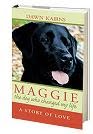
Click photo to visit dawnkairns.com
Thursday, July 30, 2009

Sunday, July 26, 2009
More Dogs Die Due to Behavior Problems Than Any Single Disease: Fund to Benefit Canine Behavior Studies
"It's thought by at least one veterinary behaviorist that more dogs die as a result of behavior problems than any one disease. I started this fund in my mother's memory at AKC's Canine Health Foundation because most of what they fund helps people as well as dogs; a win/win. This means that there can be help not only for breeding programs and pet owners but for people as well. Perhaps research can help with canine cognitive dysfunction which is the equivilent of Alzheimer’s Disease. This fund can help make life better for dogs and their owners and help further the human-animal bond, keeping dogs in their homes. The possibilities are widespread. This will help all dogs, purebred and mixed breeds alike." -- Darlene Arden
 AMERICAN KENNEL CLUB CANINE HEALTH FOUNDATION press release

Marcia Polimer Abrams Fund to Benefit Canine Behavior Studies
The AKC Canine Health Foundation announces the establishment of the Marcia Polimer Abrams Fund for Canine Behavior Studies. The Donor Advised Fund (DAF) was created in memory of author and CHF President’s Council Member Darlene Arden’s mother, and will benefit studies focusing on unlocking the mysteries of canine behavior.
A certified animal behavior consultant, Arden’s writing focus has been on helping dog owners in identifying and eliminating unwanted behaviors in their pets. The author of “Small Dogs, Big Hearts,” “The Angell Memorial Animal Hospital Book of Wellness and Preventive Care for Dogs," and now her new behavior book, “Rover, Get Off Her Leg,” Arden has specialized in behavior issues of dogs 20 pounds and under. Portions of the proceeds from “Rover, Get Off Her Leg,” will benefit the fund and will lead to future behavior studies as identified through the Canine Health Foundation grants review process...
"... Behavior is at the very core of the human-animal bond, says Darlene Arden. "I also know that whatever studies the CHF funds will also ultimately benefit people. It’s truly a win/win for dogs and their human companions. I also hope it will help breeders breed dogs that are mentally as well as physically sound. I think my mother would wholeheartedly approve.”
Donations can be made to the fund online by clicking here or by contacting the Canine Health Foundation toll free (888) 682-9696.
The AKC Canine Health Foundation announces the establishment of the Marcia Polimer Abrams Fund for Canine Behavior Studies. The Donor Advised Fund (DAF) was created in memory of author and CHF President’s Council Member Darlene Arden’s mother, and will benefit studies focusing on unlocking the mysteries of canine behavior.
A certified animal behavior consultant, Arden’s writing focus has been on helping dog owners in identifying and eliminating unwanted behaviors in their pets. The author of “Small Dogs, Big Hearts,” “The Angell Memorial Animal Hospital Book of Wellness and Preventive Care for Dogs," and now her new behavior book, “Rover, Get Off Her Leg,” Arden has specialized in behavior issues of dogs 20 pounds and under. Portions of the proceeds from “Rover, Get Off Her Leg,” will benefit the fund and will lead to future behavior studies as identified through the Canine Health Foundation grants review process...
"... Behavior is at the very core of the human-animal bond, says Darlene Arden. "I also know that whatever studies the CHF funds will also ultimately benefit people. It’s truly a win/win for dogs and their human companions. I also hope it will help breeders breed dogs that are mentally as well as physically sound. I think my mother would wholeheartedly approve.”
Donations can be made to the fund online by clicking here or by contacting the Canine Health Foundation toll free (888) 682-9696.
The Marcia Polimer Abrams Fund for Canine Behavior Studies is a donor directed fund established at: American Kennel Club Canine Health Foundation, Inc. It is a 501(c)(3) nonprofit.
It's posititons are:

1. To fund research into behavior problems
2. To help save dogs's lives and help them stay in their homes.
3. Whatever research helps dogs, also helps people.
2. To help save dogs's lives and help them stay in their homes.
3. Whatever research helps dogs, also helps people.

Posted By:
Dawn Kairns
Author of MAGGIE: the dog who changed my life
www.dawnkairns.com
www.maggiethedogwhochangedmylife.blogspot.com
www.twitter.com/themaggiebook
Tuesday, July 21, 2009
Do You Travel With Your Pets?
 How I love camping trips with my animals! We just returned from hiking explorations of the Wind River Range, the Teton Mountains and the Gros Ventre Range. Cinnamon, our cat, and Maddie, our dog, travel with us. Maddie is sooo energetic. Those few people we passed on the trails would comment on her energy and joy.
"Now that dog has some hunt in her!" commented one man as Maddie flew back and forth across the grassy meadow. Well, we aren't hunters, but I'm sure Maddie wouldn't mind at all if we were. Watching her run and do her own form of hunting is a thing of beauty to watch and brings smiles to our faces. This is a picture of Maddie and me at the top of Coal Creek -- Mesquite Divide with the back of Grand Teton in background.
 My nephew, Brad and his fiance, Lauren, traveled from Boise, Idaho to meet us in the Wyoming Wind River Range before Tom, my husband and I rolled further north in Wyoming. Of course, Brad brought his black lab, Drake and Lauren brought her dog, Moose. You see Drake here with Maddie enjoying his daily hot dog
 treat from me at our campsite. It was an adventure in itself getting 4 humans, 2 large black labs, a Shiatsu, and a cat in one small camper for dinner!
And who says small dogs can't do long hikes with the big dogs? Here is Lauren's solution to Moose's tired little legs, but that didn't stop him from traveling up Green River Lakes trail with the rest of us!

My favorite has to be my 16 year old cat, Cinnamon, who gets braver each year. Here you see her looking out the truck window in Pinedale, Wyoming, a first for her since she began traveling with us at age 12. She used to hide in her litter box in the back seat during all stops. Who says an old kitty can't learn to have new adventures?
I wouldn't miss these trips with my special animals. Do you travel with your pets? Let us hear about your adventures ...
Posted By:
Dawn Kairns
Author of MAGGIE: the dog who changed my life
www.dawnkairns.com
www.maggiethedogwhochangedmylife.blogspot.com
www.twitter.com/themaggiebook
Tuesday, July 14, 2009
Biggest Dogfighting Raid in History Reveals Even Bigger Problem
Taken from Care 2 Animal Welfare Causes
This Wednesday, approximately 450 dogs were seized during raids in seven states (Arkansas, Illinois, Iowa, Missouri, Nebraska, Oklahoma and Texas). Animal welfare groups call this the largest simultaneous raid of dogfighting operations in U.S. history.
Each rescued dog will be evaluated in hopes of placing as many as possible in adoptive homes.
Animal welfare advocates worked with federal authorities for 18 months on this seizure. So far, 26 people have been accused of cruelties ranging from denying animals medical treatment to shooting poorly-performing dogs in the head and disposing of their bodies into a river or burning them in a barrel.
Although no one can help but to feel that the world is a little brighter now that these 450 innocent animals finally have a chance for the safe and loving homes these deserve, this week's seizure also puts the true size of the insidious problem of dogfighting into perspective. The Humane Society of the United States estimates that at least 40,000 people are involved in professional dogfighting, while hudreds of thousands more participate in urban and rural "street fighting."
If no fewer than 40,000 people are keeping this horrific form of gambling and entertainment alive, imagine just how many dogs are involved.
Dogfighting operations typically are not small acts of animal cruelty, but part of organized criminal networks. When it's not unusual for as much as $30,000 to change hands in a single dogfight, fully eradicating the industry will be an uphill battle.
Take action! Please send your note of thanks to the governors of the seven states who helped to make this historic raid a reality. Encourage them to continue to support the good work of their state attorney general, local officials and caring volunteers.
Posted By:
Dawn Kairns
Author of MAGGIE: the dog who changed my life
www.dawnkairns.com
www.maggiethedogwhochangedmylife.blogspot.com
www.twitter.com/themaggiebook
This Wednesday, approximately 450 dogs were seized during raids in seven states (Arkansas, Illinois, Iowa, Missouri, Nebraska, Oklahoma and Texas). Animal welfare groups call this the largest simultaneous raid of dogfighting operations in U.S. history.
Each rescued dog will be evaluated in hopes of placing as many as possible in adoptive homes.
Animal welfare advocates worked with federal authorities for 18 months on this seizure. So far, 26 people have been accused of cruelties ranging from denying animals medical treatment to shooting poorly-performing dogs in the head and disposing of their bodies into a river or burning them in a barrel.
Although no one can help but to feel that the world is a little brighter now that these 450 innocent animals finally have a chance for the safe and loving homes these deserve, this week's seizure also puts the true size of the insidious problem of dogfighting into perspective. The Humane Society of the United States estimates that at least 40,000 people are involved in professional dogfighting, while hudreds of thousands more participate in urban and rural "street fighting."
If no fewer than 40,000 people are keeping this horrific form of gambling and entertainment alive, imagine just how many dogs are involved.
Dogfighting operations typically are not small acts of animal cruelty, but part of organized criminal networks. When it's not unusual for as much as $30,000 to change hands in a single dogfight, fully eradicating the industry will be an uphill battle.
Take action! Please send your note of thanks to the governors of the seven states who helped to make this historic raid a reality. Encourage them to continue to support the good work of their state attorney general, local officials and caring volunteers.
Posted By:
Dawn Kairns
Author of MAGGIE: the dog who changed my life
www.dawnkairns.com
www.maggiethedogwhochangedmylife.blogspot.com
www.twitter.com/themaggiebook
Sunday, July 5, 2009
Advocate for Your Pet: Misdiagnosis Happens! Part 2
On June 19, 2009 I posted an experience my husband and I had with our rescued black lab, Maddie, being misdiagnosed with masticular myositis last fall. I promised I would share with you a second serious misdiagnosis that occurred in December, 2009 while we were in Texas with Maddie and Cinnamon, our cat.
I share these examples of misdiagnosis to encourage you to trust your intuition with your pets as no one know your animals like you do. Many of us have wonderful veterinarians that we trust and know want the best for our pets. But our animals can't talk, so a veterinarian's job of diagnosing our precious pets can be more difficult than a doctor diagnosing a human illness. As a mother with her child, our intuition often gives us valuable information regarding our pets if we pay attention. Please bring it to the table when you take your pets to their vets when intuition speaks loudly to you.
It was a warm, humid day on South Padre Island – in the 70’s. Maddie had developed a bit of a limp from running and playing ball on the sand as she chased it into the ocean, so Tom, my husband, was playing with her in the grass outside the condo we were renting to give her even ground to run on. He played with her for about 15 minutes. As they walked down the walkway toward our condo, Maddie’s hind legs gave way, frightening Tom tremendously. He walked in visibly shaken, and told me what had happened, but I could see for myself. As we spoke, Maddie was clearly weak and uncoordinated in her walk, and again her back legs swayed towards the ground. She was panting heavily. We immediately rushed her to the vet on the other side of the bridge in Port Isabel. When the veterinarian walked into the room, I immediately had that intuitive feeling I now recognize—I wanted to see someone else. But there were only 2 vets in the clinic, and the other one was busy seeing her clients. We were not close to a larger town, so this was our choice.
We described the period of exercise that led up to Maddie’s symptoms, explaining that she had never exhibited symptoms remotely similar. We informed the vet of her recent limp, but explained she had developed a similar limp after playing in the sand last year, also. Other than a hesitancy jumping up into our truck, which we thought had been due to tired muscles from her incessant desire to run and play, we had no other symptoms to share.
The veterinarian examined her along her spine and felt Maddie moved away from his touch when he examined her cervical spine. I can’t say I saw that. He said he wanted to take some X-rays of her spine and needed to sedate her to do so. We needed to leave her there for a couple of hours. I felt reluctant about having Maddie sedated, but wanted to rule out a herniated disc. I knew the X-rays wouldn’t be definitive, but might show a narrowing disc space. The clinic didn’t have access to an MRI scanner, so we had to begin somewhere. By this time Maddie’s panting had eased and she was walking fine, with no apparent weakness. Little did I know the vet was searching for a much more serious condition.
Upon our return, a vet technician escorted us into a room to wait for the doctor to come speak with us. I sensed his seriousness & my gut tightened. When the vet walked in and placed the X-rays up for us to see, he pointed to an area of Maddie’s cervical vertebrae that appeared to exhibit a subluxation to him. He believed Maddie had Wobbler’s Syndrome, or Cervical Spondylopathy. When I asked him to explain what that was, Tom and I both nearly buckled at his next statement.
“It’s a compression of the spinal cord from malformed vertebrae. It’s just a matter of time before she becomes paralyzed,” he related with regret. He went on to explain how his nieces’ dog had just been diagnosed with this.
The Great Dane is the principal breed affected with Canine Wobbler's Syndrome or Cervical Spondylopathy, I later learned from Bruce R. Wittels, D.V.M. at http://www.chetbacon.com/wobblers.htm. "It consists of uncoordination or lameness caused by pressure on the spinal cord as it travels through the neck (at any age for any reason) ... Many dogs will object to neck manipulation and may even collapse when the movement is forced.
The pressure of the spinal cord is due to improper formation of the anatomical parts surrounding the spinal cord during growth. The pressure can be due to one or a combination of the following:
1. weak ligaments
2.hyperplasia of the yellow ligaments - normally these are thin loose elastic sheets located between the arches of adjacent vertebrae.
3. malformation of the vertebrae
“How do you know she doesn’t just have a subluxed vertebrae like we get as humans, where we need a chiropractic adjustment?” I inquired.
The vet never really answered that question. “I can’t be 100% sure this is what she has until she has dye injected with films taken. But I’m pretty sure Wobbler’s Syndrome is what she has.
The treatment for Maddie was high doses of Prednisone and having her be a couch potato, totally inactive. I asked what other anti-inflammatory agent we could give her. She had not been off Prednisone very long since her misdiagnosis of masticular myositis. I insisted I wanted to try something other than steroids. The vet strongly advised against a milder anti-inflammatory, but went along with me, so he prescribed Deramaxx.
We left devastated. How could my high-energy, athletic, joyful girl become paralyzed? This couldn’t be! I called our vet in Boulder and he asked us to have the digital X-rays sent to him. He gave me the name of a neurologist in Denver and I called and made an appointment. We planned on leaving South Padre Island for home the next day, weeks earlier than planned. Then a voice inside said, “Wait a minute. Vets have been wrong before. Consider how you felt about him when he walked into the room, and his interaction with Maddie. Look at Maddie, she seems fine! I remembered how Tom wanted to turn the air conditioning on in the car on the way to the vet to cool her off. Could Maddie have overheated? I knew humans could become weak when dehydrated. I began looking up the symptoms of canine heat exhaustion/dehydration, and there it was.
HEAT EXHAUSTION SYMPTOMS:
(from Heat Related Illnesses Website)
Heat Exhaustion occurs with exercise, particularly on hot, humid days. The symptoms are similar to those of heat stroke, but may not be associated with an elevation in body temperature, as is the case with heat stroke.
HEAT EXHAUSTION SYMPTOMS INCLUDE (but are not limited to):
Heavy panting ... gasping for air, dog begins to weave when s/he walks, muscle weakness, dog lies down or collapses and cannot get up ... collapse or fainting, mentally dazed, vomiting, muscle cramps (seizure-like tremors), abnormally rapid heartbeat and rapid breathing ...
In addition to the above, heat stroke symptoms may also include (but are not limited to): Incoordination - stumbling and/or trouble standing or walking, listlessness or weakness, seizures, unconsciousness, weakness and muscle tremors, difficulty standing or walking, diarrhea.
Animals showing these signs need immediate medical treatment, so take the dog to a veterinarian or animal emergency room as soon as possible. This is an EMERGENCY! Even at the earliest stage of heat stroke, you may be fighting for your dog's life. If not treated immediately, these symptoms can be followed in minutes by collapse, seizures, coma, and death.
WHAT TO DO:
This is a life threatening situation and needs immediate veterinarian attention. There are a few things you can do if your vet has to call you back or on the way to the veterinarian's office or emergency room:
1) Immediately move the dog to a cooler area. Place the dog in a shady area or put a large umbrella over him/her.
2) Offer the pup small amounts of water (too much water may cause the dog to vomit and add to your pet’s dehydration).
3) If the dog will not drink of his/her own accord, then wipe the mouth area with a clean, wet cloth.
4) Sponge down the whole body, including tummy and groin area with COOL, not cold water.
5) If you do not have an electric fan, improvise one with a towel or something that will cause a draft around the wet dog; however, do not do anything that might panic him/her unnecessarily. Fanning the dog will help to cool him/her through the process of evaporation. If the dog has collapsed, continue with the above steps until professional help arrives. Be prepared to carry out cardiopulmonary resuscitation (CPR) should it become necessary. The dog needs electrolyte replacement and oral replacement is not sufficient. The electrolytes need to be replaced through intravenous (IV) administration.
The Bottom Line?
I knew in my gut after reading about canine heat exhaustion, and watching Maddie become more and more herself over the next several hours, that we were dealing with heat exhaustion, not cervical spondylopathy. With the later, she should have gotten progressively worse. My veterinarian at home was a great help, too. "We can't hang our hats on that diagnosis," he said after viewing Maddie's X-rays. But he cautioned us to keep her quiet until we knew for sure, preferably by seeing a veterinary neurologist. But I did know. Over the next several days we slowly increased her exercise. Maddie was fine. Thank heavens! To this day she is the graceful athlete she has been for the past 4 years! All's well that ends well! Once again, as Maggie taught me and I share in MAGGIE: the dog who changed my life, trust your intuition when it comes to your pets! And know the difference between their heat tolerance in dry vs. humid conditions, as we so humbly learned.
Posted By:
Dawn Kairns
Author of MAGGIE: the dog who changed my life
www.dawnkairns.com
www.maggiethedogwhochangedmylife.blogspot.com
www.twitter.com/themaggiebook
I share these examples of misdiagnosis to encourage you to trust your intuition with your pets as no one know your animals like you do. Many of us have wonderful veterinarians that we trust and know want the best for our pets. But our animals can't talk, so a veterinarian's job of diagnosing our precious pets can be more difficult than a doctor diagnosing a human illness. As a mother with her child, our intuition often gives us valuable information regarding our pets if we pay attention. Please bring it to the table when you take your pets to their vets when intuition speaks loudly to you.
It was a warm, humid day on South Padre Island – in the 70’s. Maddie had developed a bit of a limp from running and playing ball on the sand as she chased it into the ocean, so Tom, my husband, was playing with her in the grass outside the condo we were renting to give her even ground to run on. He played with her for about 15 minutes. As they walked down the walkway toward our condo, Maddie’s hind legs gave way, frightening Tom tremendously. He walked in visibly shaken, and told me what had happened, but I could see for myself. As we spoke, Maddie was clearly weak and uncoordinated in her walk, and again her back legs swayed towards the ground. She was panting heavily. We immediately rushed her to the vet on the other side of the bridge in Port Isabel. When the veterinarian walked into the room, I immediately had that intuitive feeling I now recognize—I wanted to see someone else. But there were only 2 vets in the clinic, and the other one was busy seeing her clients. We were not close to a larger town, so this was our choice.
We described the period of exercise that led up to Maddie’s symptoms, explaining that she had never exhibited symptoms remotely similar. We informed the vet of her recent limp, but explained she had developed a similar limp after playing in the sand last year, also. Other than a hesitancy jumping up into our truck, which we thought had been due to tired muscles from her incessant desire to run and play, we had no other symptoms to share.
The veterinarian examined her along her spine and felt Maddie moved away from his touch when he examined her cervical spine. I can’t say I saw that. He said he wanted to take some X-rays of her spine and needed to sedate her to do so. We needed to leave her there for a couple of hours. I felt reluctant about having Maddie sedated, but wanted to rule out a herniated disc. I knew the X-rays wouldn’t be definitive, but might show a narrowing disc space. The clinic didn’t have access to an MRI scanner, so we had to begin somewhere. By this time Maddie’s panting had eased and she was walking fine, with no apparent weakness. Little did I know the vet was searching for a much more serious condition.
Upon our return, a vet technician escorted us into a room to wait for the doctor to come speak with us. I sensed his seriousness & my gut tightened. When the vet walked in and placed the X-rays up for us to see, he pointed to an area of Maddie’s cervical vertebrae that appeared to exhibit a subluxation to him. He believed Maddie had Wobbler’s Syndrome, or Cervical Spondylopathy. When I asked him to explain what that was, Tom and I both nearly buckled at his next statement.
“It’s a compression of the spinal cord from malformed vertebrae. It’s just a matter of time before she becomes paralyzed,” he related with regret. He went on to explain how his nieces’ dog had just been diagnosed with this.
The Great Dane is the principal breed affected with Canine Wobbler's Syndrome or Cervical Spondylopathy, I later learned from Bruce R. Wittels, D.V.M. at http://www.chetbacon.com/wobblers.htm. "It consists of uncoordination or lameness caused by pressure on the spinal cord as it travels through the neck (at any age for any reason) ... Many dogs will object to neck manipulation and may even collapse when the movement is forced.
The pressure of the spinal cord is due to improper formation of the anatomical parts surrounding the spinal cord during growth. The pressure can be due to one or a combination of the following:
1. weak ligaments
2.hyperplasia of the yellow ligaments - normally these are thin loose elastic sheets located between the arches of adjacent vertebrae.
3. malformation of the vertebrae
“How do you know she doesn’t just have a subluxed vertebrae like we get as humans, where we need a chiropractic adjustment?” I inquired.
The vet never really answered that question. “I can’t be 100% sure this is what she has until she has dye injected with films taken. But I’m pretty sure Wobbler’s Syndrome is what she has.
The treatment for Maddie was high doses of Prednisone and having her be a couch potato, totally inactive. I asked what other anti-inflammatory agent we could give her. She had not been off Prednisone very long since her misdiagnosis of masticular myositis. I insisted I wanted to try something other than steroids. The vet strongly advised against a milder anti-inflammatory, but went along with me, so he prescribed Deramaxx.
We left devastated. How could my high-energy, athletic, joyful girl become paralyzed? This couldn’t be! I called our vet in Boulder and he asked us to have the digital X-rays sent to him. He gave me the name of a neurologist in Denver and I called and made an appointment. We planned on leaving South Padre Island for home the next day, weeks earlier than planned. Then a voice inside said, “Wait a minute. Vets have been wrong before. Consider how you felt about him when he walked into the room, and his interaction with Maddie. Look at Maddie, she seems fine! I remembered how Tom wanted to turn the air conditioning on in the car on the way to the vet to cool her off. Could Maddie have overheated? I knew humans could become weak when dehydrated. I began looking up the symptoms of canine heat exhaustion/dehydration, and there it was.
HEAT EXHAUSTION SYMPTOMS:
(from Heat Related Illnesses Website)
Heat Exhaustion occurs with exercise, particularly on hot, humid days. The symptoms are similar to those of heat stroke, but may not be associated with an elevation in body temperature, as is the case with heat stroke.
HEAT EXHAUSTION SYMPTOMS INCLUDE (but are not limited to):
Heavy panting ... gasping for air, dog begins to weave when s/he walks, muscle weakness, dog lies down or collapses and cannot get up ... collapse or fainting, mentally dazed, vomiting, muscle cramps (seizure-like tremors), abnormally rapid heartbeat and rapid breathing ...
In addition to the above, heat stroke symptoms may also include (but are not limited to): Incoordination - stumbling and/or trouble standing or walking, listlessness or weakness, seizures, unconsciousness, weakness and muscle tremors, difficulty standing or walking, diarrhea.
Animals showing these signs need immediate medical treatment, so take the dog to a veterinarian or animal emergency room as soon as possible. This is an EMERGENCY! Even at the earliest stage of heat stroke, you may be fighting for your dog's life. If not treated immediately, these symptoms can be followed in minutes by collapse, seizures, coma, and death.
WHAT TO DO:
This is a life threatening situation and needs immediate veterinarian attention. There are a few things you can do if your vet has to call you back or on the way to the veterinarian's office or emergency room:
1) Immediately move the dog to a cooler area. Place the dog in a shady area or put a large umbrella over him/her.
2) Offer the pup small amounts of water (too much water may cause the dog to vomit and add to your pet’s dehydration).
3) If the dog will not drink of his/her own accord, then wipe the mouth area with a clean, wet cloth.
4) Sponge down the whole body, including tummy and groin area with COOL, not cold water.
5) If you do not have an electric fan, improvise one with a towel or something that will cause a draft around the wet dog; however, do not do anything that might panic him/her unnecessarily. Fanning the dog will help to cool him/her through the process of evaporation. If the dog has collapsed, continue with the above steps until professional help arrives. Be prepared to carry out cardiopulmonary resuscitation (CPR) should it become necessary. The dog needs electrolyte replacement and oral replacement is not sufficient. The electrolytes need to be replaced through intravenous (IV) administration.
The Bottom Line?
I knew in my gut after reading about canine heat exhaustion, and watching Maddie become more and more herself over the next several hours, that we were dealing with heat exhaustion, not cervical spondylopathy. With the later, she should have gotten progressively worse. My veterinarian at home was a great help, too. "We can't hang our hats on that diagnosis," he said after viewing Maddie's X-rays. But he cautioned us to keep her quiet until we knew for sure, preferably by seeing a veterinary neurologist. But I did know. Over the next several days we slowly increased her exercise. Maddie was fine. Thank heavens! To this day she is the graceful athlete she has been for the past 4 years! All's well that ends well! Once again, as Maggie taught me and I share in MAGGIE: the dog who changed my life, trust your intuition when it comes to your pets! And know the difference between their heat tolerance in dry vs. humid conditions, as we so humbly learned.
Posted By:
Dawn Kairns
Author of MAGGIE: the dog who changed my life
www.dawnkairns.com
www.maggiethedogwhochangedmylife.blogspot.com
www.twitter.com/themaggiebook
Friday, July 3, 2009
A Message From FIDOS (Friends Interested in Dogs and Open Space)
I realize this post is geared towards dog guardians in the Boulder County area, but it feels important to share. This information is taken in full from an update from the FIDOS organization.
The Western Trail Study Area: Dogs Beware
After having completed its restrictive Visitor Master Plan (VMP), Boulder's Open Space/Mountain Parks (OSMP) department is going back over the whole system piece by piece and "fine tuning" management strategy in one so-called Trail Study Area (TSA) at a time. In principle, "fine tuning" ought to imply seeking a balance between increasing and decreasing restrictions. However, in the first two TSAs (Marshal Mesa and Doudy Draw-Eldorado Mountain), changes have been in the direction of increased restrictions on dogs.
Up next for consideration is the Western Trail Study Area, which includes popular voice and sight trails such as Shanahan Ridge, the Mesa Trail, Chautauqua, Sanitas and many others. The area spans OSMP land west of Broadway, from Eldorado Road in the south to the Mount Sanitas area in the north. At a recent study session, OSMP staff stated that they want to designate some existing trails in this area as "no-dog," so dog owners should watch this process closely.
This attitude is disappointing because dog owners had already accepted many new restrictions in the development of the VMP. Large portions of Open Space land, previously designated voice and sight received the Habitat Conservation Area (HCA) designation, which carried the default regulation of requiring dogs to be on leash and to remain on designated trails. In all, at least 31 trails received additional dog restrictions. Even on voice and sight trails, dogs must be leashed at trailheads. And no dog can be off leash unless they wear a green tag showing that their owner has watched a training video.
FIDOS accepted the new restrictions in good faith because the compromises were seen as a kind of insurance against greater losses in the future. HCA zones received severe default dog restrictions, but so-called Recreational and Natural Areas still received the default designation of voice and sight. Upon approving the VMP, City Council described the plan as a fair and balanced solution. Although the VMP did allow for changes, the hope has been that the balance between stricter and less strict regulations reflected in the VMP would be preserved.
The Scary Part: How Will Decisions Be Made?
There has been much debate on how decisions about the WTSA will be made. The OSMP department is promoting the creation of a citizen's advisory committee, the Community Group Forum (CGF), which would discuss the issues and make recommendations to the Open Space Board of Trustees. The sobering part is that OSMP does not intend to allow advocacy groups such as FIDOS to select representatives to serve on the group. This attitude is reminiscent of the attitude responsible for the infamous Visitor Plan Advisory Committee, which was created to provide recommendations on the Visitor Master Plan. Officers of FIDOS and other advocacy groups were specifically not invited to serve on that committee, which created an uproar from recreational groups.
The method of selecting the CGF participants has been hotly debated lately, but it appears that they may be selected by a group of interested persons from the general public. Thus, it is crucial that dog-friendly citizens engage in this process. Those interested in influencing the selection of CGF participants will have an opportunity to sign up at an OSMP sponsored meeting on Tuesday July 14 or at an OSMP website still to be created. Even if you are not interested in participating further in the CGF, please at least sign up to help select CGF representatives. Otherwise, dog owners could be left without representation on the CGF.
FIDOS Goals for the Western Trail Study Area
Our goals for the WTSA are modest. Broadly speaking, we just want the agreements made in the VMP to be honored. Some specific items are listed below:
• Neighborhood Voice & Sight. FIDOS has continually emphasized the need to retain voice and sight access for neighborhood trails. Most dog owners walk their dogs daily and local voice and sight trails are an important part of their lifestyle. In fact, dog access opportunities are, for many dog owners, a consideration in choosing a neighborhood in which to live. When trails become leashed residents have to drive to the nearest voice and sight trail every day.
• Balance. At the very least, increases in restrictions should be balanced by corresponding decreases in restrictions.
• Social Trails. Certain social trails (unofficial trails) that have been enjoyed for years should be formally designated or simply left alone to be used by those familiar with them.
• Fern Canyon Trail. This trail, which was designated leash in the VMP, should be converted to voice and sight. The trail lies within a Natural Area, for which the default designation is voice and sight, and it is steep and rocky, providing little opportunity for off-leash dogs to leave the trail. Furthermore, the steepness makes it awkward and dangerous to walk a dog on leash.
• EM Greenman Trail. This trail received a no-dog designation in the VMP because it passed through a sensitive area. The trail has since been rerouted away from the sensitive area, so the no-dog designation should be removed. This would allow dog walkers to hike a complete loop with their dogs.
Get Involved With FIDOS
If you are interested in working more closely with FIDOS or in helping determine our goals and objectives, learn about the possibilities by contacting Lori Fuller, FIDOS vice president at
LORI@BOULDERFULLER.COM
Please Support FIDOS
FIDOS has a large membership, but we are not particularly strict about collecting dues. We rely on your contributions and involvement. If you have not contributed lately, please help. Send contributions to: FIDOS, P.O. Box 18928, Boulder, CO 80308-8928 or contribute via Pay Pall by going to FIDOS.org.
How to Contact FIDOS
boulderfidos@yahoo.com
www.FIDOS.org
FIDOS, P.O. Box 18928, Boulder, CO 80308-8928
Posted By:
Dawn Kairns
Author of MAGGIE: the dog who changed my life
www.dawnkairns.com
www.maggiethedogwhochangedmylife.blogspot.com
www.twitter.com/themaggiebook
The Western Trail Study Area: Dogs Beware
After having completed its restrictive Visitor Master Plan (VMP), Boulder's Open Space/Mountain Parks (OSMP) department is going back over the whole system piece by piece and "fine tuning" management strategy in one so-called Trail Study Area (TSA) at a time. In principle, "fine tuning" ought to imply seeking a balance between increasing and decreasing restrictions. However, in the first two TSAs (Marshal Mesa and Doudy Draw-Eldorado Mountain), changes have been in the direction of increased restrictions on dogs.
Up next for consideration is the Western Trail Study Area, which includes popular voice and sight trails such as Shanahan Ridge, the Mesa Trail, Chautauqua, Sanitas and many others. The area spans OSMP land west of Broadway, from Eldorado Road in the south to the Mount Sanitas area in the north. At a recent study session, OSMP staff stated that they want to designate some existing trails in this area as "no-dog," so dog owners should watch this process closely.
This attitude is disappointing because dog owners had already accepted many new restrictions in the development of the VMP. Large portions of Open Space land, previously designated voice and sight received the Habitat Conservation Area (HCA) designation, which carried the default regulation of requiring dogs to be on leash and to remain on designated trails. In all, at least 31 trails received additional dog restrictions. Even on voice and sight trails, dogs must be leashed at trailheads. And no dog can be off leash unless they wear a green tag showing that their owner has watched a training video.
FIDOS accepted the new restrictions in good faith because the compromises were seen as a kind of insurance against greater losses in the future. HCA zones received severe default dog restrictions, but so-called Recreational and Natural Areas still received the default designation of voice and sight. Upon approving the VMP, City Council described the plan as a fair and balanced solution. Although the VMP did allow for changes, the hope has been that the balance between stricter and less strict regulations reflected in the VMP would be preserved.
The Scary Part: How Will Decisions Be Made?
There has been much debate on how decisions about the WTSA will be made. The OSMP department is promoting the creation of a citizen's advisory committee, the Community Group Forum (CGF), which would discuss the issues and make recommendations to the Open Space Board of Trustees. The sobering part is that OSMP does not intend to allow advocacy groups such as FIDOS to select representatives to serve on the group. This attitude is reminiscent of the attitude responsible for the infamous Visitor Plan Advisory Committee, which was created to provide recommendations on the Visitor Master Plan. Officers of FIDOS and other advocacy groups were specifically not invited to serve on that committee, which created an uproar from recreational groups.
The method of selecting the CGF participants has been hotly debated lately, but it appears that they may be selected by a group of interested persons from the general public. Thus, it is crucial that dog-friendly citizens engage in this process. Those interested in influencing the selection of CGF participants will have an opportunity to sign up at an OSMP sponsored meeting on Tuesday July 14 or at an OSMP website still to be created. Even if you are not interested in participating further in the CGF, please at least sign up to help select CGF representatives. Otherwise, dog owners could be left without representation on the CGF.
FIDOS Goals for the Western Trail Study Area
Our goals for the WTSA are modest. Broadly speaking, we just want the agreements made in the VMP to be honored. Some specific items are listed below:
• Neighborhood Voice & Sight. FIDOS has continually emphasized the need to retain voice and sight access for neighborhood trails. Most dog owners walk their dogs daily and local voice and sight trails are an important part of their lifestyle. In fact, dog access opportunities are, for many dog owners, a consideration in choosing a neighborhood in which to live. When trails become leashed residents have to drive to the nearest voice and sight trail every day.
• Balance. At the very least, increases in restrictions should be balanced by corresponding decreases in restrictions.
• Social Trails. Certain social trails (unofficial trails) that have been enjoyed for years should be formally designated or simply left alone to be used by those familiar with them.
• Fern Canyon Trail. This trail, which was designated leash in the VMP, should be converted to voice and sight. The trail lies within a Natural Area, for which the default designation is voice and sight, and it is steep and rocky, providing little opportunity for off-leash dogs to leave the trail. Furthermore, the steepness makes it awkward and dangerous to walk a dog on leash.
• EM Greenman Trail. This trail received a no-dog designation in the VMP because it passed through a sensitive area. The trail has since been rerouted away from the sensitive area, so the no-dog designation should be removed. This would allow dog walkers to hike a complete loop with their dogs.
Get Involved With FIDOS
If you are interested in working more closely with FIDOS or in helping determine our goals and objectives, learn about the possibilities by contacting Lori Fuller, FIDOS vice president at
LORI@BOULDERFULLER.COM
Please Support FIDOS
FIDOS has a large membership, but we are not particularly strict about collecting dues. We rely on your contributions and involvement. If you have not contributed lately, please help. Send contributions to: FIDOS, P.O. Box 18928, Boulder, CO 80308-8928 or contribute via Pay Pall by going to FIDOS.org.
How to Contact FIDOS
boulderfidos@yahoo.com
www.FIDOS.org
FIDOS, P.O. Box 18928, Boulder, CO 80308-8928
Posted By:
Dawn Kairns
Author of MAGGIE: the dog who changed my life
www.dawnkairns.com
www.maggiethedogwhochangedmylife.blogspot.com
www.twitter.com/themaggiebook
Friday, June 26, 2009
Not all Pet Foods Are Created Equal
When my black labrador, Maggie, was 8 years old, she developed a mast cell tumor. Maggie's surgery for this tiny skin tumor was much more extensive than I was prepared for, and it took a greater toll on her energy level and well-being than I could have imagined. He r vet informed me of the potential for a high rate of recurrence of mast cell tumors. Determined that another mast cell tumor would not be Maggie's fate, I set out to educate myself about how to keep my girl healthy. Of course the first place I looked was into the world of pet nutrition. I was nothing short of appalled at what I learned about what was and wasn't in dog (pet) food. Like so many others who feed their animals veterinarian recommended brands, I had fallen into the category of feeding Maggie a very reputable food recommended by a veterinarian that I trusted. After eight years of feeding her this vet recommended brand with corn as the first ingredient, meat byproducts and the preservatives BHA, BHT, and ethoxyquin, I discovered, much to my dismay, what poor quality food I was giving to my best friend and companion.
 r vet informed me of the potential for a high rate of recurrence of mast cell tumors. Determined that another mast cell tumor would not be Maggie's fate, I set out to educate myself about how to keep my girl healthy. Of course the first place I looked was into the world of pet nutrition. I was nothing short of appalled at what I learned about what was and wasn't in dog (pet) food. Like so many others who feed their animals veterinarian recommended brands, I had fallen into the category of feeding Maggie a very reputable food recommended by a veterinarian that I trusted. After eight years of feeding her this vet recommended brand with corn as the first ingredient, meat byproducts and the preservatives BHA, BHT, and ethoxyquin, I discovered, much to my dismay, what poor quality food I was giving to my best friend and companion.
Without going into detail here, I changed Maggie to a raw food diet, with the help of a competent veterinarian to determine the proper balance of nutrients that Maggie needed. Maggie thrived on her new diet. Her shedding of eight years simply stopped. Her coat developed a shine that made people stop and ask us what we were feeding her. She developed more energy than she had prior to her surgery. (To learn more detail about my discoveries about the frightening truths adout the pet food industry and the benefits of a raw food diet for your pet, see Chapter 9, "What's Really Best for Your Pet" in MAGGIE: the dog who changed my life).
Although a raw diet is probably the best way to feed a dog or cat, as long as it is nutritionally balanced, most people just don't have the time it takes to both prepare the food and to learn about the proper balance of vitamins, minerals, and nutrients needed for their pets. Fortunately there are now many higher quality pet foods available, both online and at specialty food stores, for people who want to feed a high quality pet food to their dog or cat. These foods will contain a specific meat or a specific meat meal, such as chicken or chicken meal as the first ingredient. It will not contain any meat byproducts, corn, wheat, gluten or Brewers rice.
I'd like to share with you today one such high quality pet food called Life's Abundance. According to Janet Roberts "it is so nutrient-rich, you don't need to feed as much as most pet foods." The formulator of Life's Abundance pet food is Dr. Jane Bicks, who "has devoted her entire life to helping animals live longer, healthier lives ... She keeps up with the latest nutritional research and uses this information to provide the best formulations she can to provide excellent nutrition and a safe product. She is the author of 3 books on nutrition and responsible care for animals, has received 3 presidential citations, the Outstanding Service to Veterinary Medicine Award, and sat on the advisory board for the Cornell University Feline Health Center, among her many other outstanding achievements. She was a pharmacist, then practiced veterinary care for 10 years before entering the field of formulation. It was her desire to truly help animals and she became aware of a distinct need for high quality nutrition. She decided she could help far more animals in the long run by providing a food that supplied 100% nutrition without all the harmful ingredients normally used in the industry, so she developed Life's Abundance. Dr. Jane (also) has a non-profit foundation (The Dr. Jane HealthyPetNet Foundation) that donates to rescue groups. A portion of all sales goes to the foundation."
This seems to me a very noble mission on the part of Dr. Jane Bicks. Janet Roberts has been feeding her labs Life's Abundance for 5 years now, and says they have never been healthier or had more energy. I asked her what makes Life's Abundance pet food different/better than other natural, holistic dog foods, and she believes that Dr. Bicks and her formulation is the key. Janet also shared the following about Life's Abundance pet food that she thinks makes it a notch above the others:
"Quick Cooking time: 15 seconds maximum. We have a special extruded process that allows one of the quickest cooking times in the industry. We know that the longer a food is cooked, the more nutrients that are lost.
Low Cooking Temperature: 250 degrees Maximum- usually at about 218 degrees. We also know that cooking temperatures are important for nutrient retention in the final product.
Excellent Quality Control: Quality of ingredients are of the utmost importance. We start out with the freshest ingredients possible. Brought in the day of manufacture, inspected for freshness and contaminants. Dr. Jane Bicks oversees the manufacturing process and refuses to hold any ingredients over if one does not meet her criteria. The batch simply will not be made that day, all ingredients are removed from the premises and new fresh ingredients are brought in again for the next batch.
No Steroids or Hormones: We use fresh hormone and steroid free meat sources. Our supply of farm raised catfish for the food undergoes testing for contaminants. They are raised under controlled conditions to ensure that high levels of mercury are not present in the flesh of the harvested catfish. We use chicken meal because the water has been removed and this concentrates the protein and allows her to produce a food with a higher protein content per serving. Our source comes from only high quality USDA range free chicken meat with no bone or other by products.. We do not use organic chicken at this time. The supply for organic meats to the pet industry is very limited. The supply of high quality organic prime meat in a large enough amounts and consistent supply is just not available to allow for the quantity we need to keep up with demand. What is available to date is what is scraped off the equipment and contains too many organic by products and Dr. Jane will never compromise her protein source. Protein is the building block of all the repairs and growth of the animals body. She would prefer to use organic meat sources, but not at the expense of the animals nutritional requirements. We do use organic fruits and vegetables in our products ...
No Chemical Preservatives, additives, by products, or artificial coloring agents. No Corn or Wheat Powerful Antioxidants
AAFCO & APHIS: We strictly follow AAFCO regulations. Our food exceeds the requirements to be 100 % nutritious. Our food is certified by APHIS for the European market. This means that we cannot mislead the consumer with the labeling of our ingredients. To be able to be sold to the European market a food must meet higher standards of excellence.
Absolutely Fresh: Life's Abundance is shipped directly to the consumer & is never more than 6 weeks old when shipped. Compare this to 12-18 months that some other brands are kept in warehouses or storage trailers without any climate control.
Micro Encapsulated Probiotics: This is very important as it guarantees the friendly bacterial cultures to be alive in the food after manufacture. Our food supplies 5 different strains. It is not known in the industry exactly which strain is the best or necessary. By providing 5 different strains we are covering all the bases. Our food also supplies the digestible fiber to feed the probiotics in the digestive tract. The digestible fiber is in the form of beet pulp. It comes from a small grey beet, not sugar beets. Not only does it feed the bacteria but it provides a medium to produce a nicely segmented stool. Most other foods supply no probiotics in their food. Probiotics and the fiber to feed them is imperative for the overall health of the animal. Proper immune function begins in the digestive tract. A healthy digestive tract allows for greater absorption of nutrients. It should always be present in a high quality food. No exception.
The cost for the dry food for a 12 lb. cat is about $.30/day, and for a 60 lb. dog about $1.04/day, plus tax & shipping. The products are shipped directly to your door by UPS."
To order or learn more you can go to Janet's website at:
http://www.trilogyonline.com/Trilogy/Pets/PetsHome.aspx?realname=40024870&cat=0&hdr=&Ath=False
Posted By:
Dawn Kairns
Author of MAGGIE: the dog who changed my life
www.dawnkairns.com
www.maggiethedogwhochangedmylife.blogspot.com
www.twitter.com/themaggiebook
Subscribe to:
Comments
(
Atom
)