MAGGIE: the dog who changed my life

MAGGIE: the dog who changed my life
Click photo to visit dawnkairns.com

Wednesday, August 7, 2013

Longmont Humane Society Facing Possible Foreclosure

The following excerpts are from an article printed in the Longmont Times Call newspaper on July 25, 2013. The Longmont Humane Society is in grave danger of having to close their doors. I am posting the article here to help LHS gain as many donations as possible so they can continue doing their wonderful work for the animals. Longmont Humane has truly championed the cause of pitbull terriers. Thanks to LHS, so many pitbulls that would have faced euthanasia due to breed bans in other cities are instead enjoying their lives with loving families.

Longmont Humane Society makes plea for donations to avoid foreclosure

$772k needed by November for loan payment

By Whitney Bryen Longmont Times-Call

LONGMONT -- The Longmont Humane Society is asking for $772,227 in donations by Nov. 30 to avoid possible foreclosure later this year.

Construction cost overruns from the facility's expansion that began in 2006 and six years of financial deficits have drained the organization's reserves, leaving the humane society unable to make its 2013 and subsequent annual loan payments, executive director Liz Smokowski said.

The nonprofit needs to raise this year's payment within four months or the organization could face foreclosure or be forced to file for bankruptcy as early as December, said Smokowski, who inherited the loan when she was hired at the end of 2011.

In 2006, the town of Lyons, which uses the society's services, issued a bond for $6 million on behalf of the humane society under the state's Municipalities Development Revenue Bond Act to allow the society to begin construction. Wells Fargo now holds the loan.

In 2005, philanthropist Susan Allen of New York had promised the humane society $5 million for the expansion of its facility. That gift came over five years in $1 million increments.
...
The organization's financial problems are due to construction costs for the right away on its expansion. The organization's financial problems are due to construction costs for the 43,000-square-foot expansion and annual deficits from 2006 to 2011 exceeding $1.6 million. The cost of the expansion was forecast to be about $8.2 million but came in at $9 million by the time it opened in January 2009, Smokowski said.

Donations decreased starting in 2007 following the economic downturn, and operating costs increased once the expansion was completed due to higher utility costs and expenses associated with the care of more animals.
...
Currently loan-holder Wells Fargo has refused to renegotiate the loan. More than a dozen other banks have refused the organization's request to take over the loan, mostly due to the deficits, Smokowski said.

Shortly after Smokowski's arrival, the humane society hired an auditor to go over financial statements from 2003, which revealed six consecutive years of deficits.
 ...
The nonprofit has launched a fundraising campaign, The Longmont Humane Society: Serving the Community Now and Forever, focused on large gifts to achieve the organization's immediate and long-term goals, which include paying off the remaining $3.1 million on the loan by the fall of 2014.

...
Read full article here: Times Call

To donate checks should be made out to the Longmont Humane Society with "now and forever" written in the memo line and mailed to:

The Longmont Humane Society
9595 Nelson Road
Longmont, CO 80501

Contact: Liz Smokowski at 303-772-1232, ext. 225, or liz@longmonthumane.org or Shelley McLeod at 720-864-2878 or smcleod@longmontchamber.org

Whitney Bryen can be reached at 303-684-5274 or wbryen@times-call.com.

Friday, May 24, 2013

Decline and Death of a Parent: Stories From Those Who Have Been There

We are moved by what we love. First, it was my dog, my constant companion, Maggie, who inspired my first book, MAGGIE the dog who changed my life. Then caring for my declining parents moved me to write once again, and to talk with others to explore and share their experiences in caring for their aging and dying parents. We all lose our parents. I always knew I'd lose my parents, but was not prepared for how overwhelming and life-changing it was. Perhaps you've been there, too, or are now experiencing this challenging time in your lives.

For those of you who are interested, I describe my book below. I am also asking for your help. I have 3 working titles listed below. Will you please take a moment and respond with a comment on my blog to let me know which one speaks to you the most?  

Coming in 2013 ...

Working Titles:
Decline and Death of a Parent: Stories From Those Who Have Been There

Caring for Aging Parents: Tough Choices, Changed Lives

 Parent Loss: Choices Made, Tears Cried, and Lives Changed

Dad and me around 2000

In my book, I interview others who have lost their parents and share my story, too. We delve into:

  • Family of origin interactions, and relationship with our parents.
  • How the declining health of aging parents impacted us emotionally and in our day to day life.
  • Whether or not siblings worked together to help declining parents. Was there conflict and if so, how did we resolve it?
  • How parent decline and loss changes us and the choices we make in our lives.
  • What decisions we have to make about parent care.
  • Were we at peace with our parents before they became ill; if not, how we made peace with our parents before or after they died. Or not.
  • What happens to family dysfunctional patterns (if present) during parent illness?
  • What coping skills and resources people called on when dealing with declining parents and their eventual deaths.
  • How we who lost parents found support from friends in our grief, or did we?
  • What experiences with health care professionals were like and whether they were helpful or hindering in any way
  • What was clearing out the "stuff" in our parents’ home like?
  • Feelings that were hard to come to terms with surrounding our parents' decline and death; feelings that still haunt us or that we finally came to terms with.
  • Whether any emotions like guilt or anger, or any events interfered with or prolonged our grieving process.
  • How we resolved our grief.
  • How our culture is with grief.
  • Unusual or unexplainable experiences after we lost our parents – what some people might call “paranormal.”
  • Advice for those of you just coming into the care of declining parents or dying parents.
My hope is that this book will help those of you coming into the care of your aging, declining, and dying parents, and that you will find yourself in the stories shared by others in my book. In so doing, may you find comfort, answers, kindred spirits, and support as you go through this unavoidable milestone in your life ...

Please click here and fill out the contact form if you are interested in being on a notification list for when my book on parent aging and loss is available.

Again, I will so appreciate it if you can please take a moment to comment on your preference of title listed above. Thank you very much.

Wednesday, May 15, 2013

Colorado First State to Mandate Training for Law Enforcement Officers in Dog Behavior


Too many innocent dogs have been shot by police officers out of fear and a lack of knowledge on their part of canine behavior.  It has broken the hearts of dog guardians and unnecessarily ended the lives of good dogs.  A petition circulated to sign a bill into law requiring law enforcement officers to be trained in dog behavior and how to handle dog encounters so that innocent dogs are protected and understood rather than shot when barking at an officer.

I just received a notice from the Best Friends Animal Sanctuary Senior Legislative attorney that Colorado Governor Hickenlooper signed the Dog Protection Act bill into law this week, making Colorado the first state to mandate training in dog behavior for law enforcement officers. It will require each local law enforcement agency to provide its officers with training in how to handle encounters with dogs in the course of duty. Their training must cover how to assess a dog’s posture, barking, vocalizations and facial expressions; what options can be used to distract, escape from and safely capture a dog; and what defensive options are available in dealing with a dog.

Thank you, Colorado, for standing up to protect our canines!  And thank you, Governor Hickenlooper!  May the other 49 states soon follow!

Click title below if you want to order my book(s):

Sunday, May 5, 2013

Reading Program Therapy Dogs Help Child Overcome Black Dog Fear

Maddie has been a therapy dog reading dog at Columbine Elementary in Boulder, CO for over 2 years.  She's part of a team of five Reading Therapy dogs who come to the school every Thursday for children from first to fifth grade to read to. It's a fun, joyous time. 

During that entire two years we have all watched Jackie, a young child terrified of dogs due to a bite, slowly warm up to the dogs one by one--except for Maddie. Why?  We learned that she was bit by a black dog, and my Maddie is black.

"Do you have her?" Jackie would ask me anxiously. She always made a wide circle when she passed Maddie and kept her eyes on my hand on the leash. But Jackie also watched Maddie with interest from a distance when she was reading with the other dogs. Maddie licked the faces of the other children, rolled over on her back to be rubbed, lay her head in the their laps,and never stopped wagging her tail. Jackie's face told me that she longed to be part of that, part of the joy that Maddie had to give.

I often ask Jackie if she wanted to come read to Maddie very briefly.  The answer was always "no."  Then a couple of weeks ago I noticed Jackie watching.  Again I asked her if she wanted to read to Maddie, and to my surprise she replied, "will you hold her leash really tight?"  Of course I told her I would and she walked over tentatively with her friend in tow for support. After reading a couple of lines she delighted and surprised all of us once again by asking, "will you hold her head?"

"Yes," I told her.  Jackie reached over and patted Maddie on the head.  We all broke into applause-- teacher and volunteers alike. It was a great day, a great milestone, and a great moment not only for Jackie, but for black dogs everywhere. It is well-known that "black dog syndrome"exists, where some people tend to fear black dogs for no reason and that black dogs are passed over in the shelter over other colors, again for no good reason.

Congratulations Jackie!

Monday, April 8, 2013

Dog Freedom on Open Space Threatened Again in Boulder

This is a partial reprint from the FIDOS (Friends Interested Dogs and Open Space) April newsletter in Boulder, Colorado regarding tough new rules and punitive measures being proposed by the City of Boulder Open Space Department regarding dogs off leash on Boulder open space.  If passed the measures could result in severely restricting you and your dog's off leash enjoyment of Boulder Open Space.

Concerning Green Tag Proposals Going Before Open Space Board of Trustees (OSBT)

What started as a fine tuning of an Open Space, Voice and Sight Control program has morphed into excessively punitive, city-wide dog management scheme and yet another assault on off-leash dog access in the Open Space. 

The newly released Green Tag proposal offered by the City of Boulder's Open Space Department is confusing and necessarily onerous for all parties.  FIDOS supports those efforts included the plan which focus on education and logical punitive actions, however we are now faced with a program that will add significant expense, inconvenience, and casts a net so large that many undeserving people will get caught in it. 

These OSMP proposals will be presented to the Open Space Board of Trustees (OSBT) for approval on Wednesday, April 10th, at City Council Chambers. (linked).

Of the new Green Tag proposals causing concern proposal #6, states a dog will lose their Green Tag for a single offense of chasing wildlife - even a squirrel.  In addition all dogs in the household and all household members will lose this Green Tag privilege for the offense of the first dog.  To regain the Green Tag, the dog will have to pass a yet to be determined test. FIDOS' position is that a dog should only lose their green tag for an egregious single offense that involves injury or death to wildlife, livestock, dogs, or humans.  FIDOS believes that one minor offense such as chasing a squirrel up a tree should not result in the loss of the Green Tag.

OSMP is suggesting that any dog offense in the entire City of Boulder - on or off OSMP land - will count as a strike against the Green Tag and toward two strikes causing the loss of the Green Tag.  This suggestion alone divorces any pretense of "protecting wildlife and nature," in favor of building a bureaucracy.  FIDOS believes that offenses should only count against Green Tag privileges if they occur on OSMP property, or at places where the Green Tag is observed, such as Coot Lake or the Boulder Reservoir.  We suggest that if dog violations anywhere in the City of Boulder will count against the Green Tag, participants in the program should enjoy Voice & Sight privileges in the entire city!

For two minor Green Tag offenses or for two dog offenses anywhere in the City of Boulder, the dog and all other household members will lose Green Tag privileges.   FIDOS believes that only the person who commits the two minor Green Tag offenses (eg not carrying a leash or not picking up poop) should suffer loss of Green Tag privileges, not all household members.  

The cost of the program to Green Tag holders is becoming overly burdensome.  OSMP is recommending Green Tag renewal every year, involving a renewal fee each year for county residents.  Also, the fines for Green Tag infractions are going to be much higher. 

Finally, dog guardians will have to pay for their attendance at a required Information Session. FIDOS believes that OSMP has already made the newly proposed Green Tag program far too cumbersome.  No other user group must pay for their access to Open Space.  The administrative costs of dealing with annual renewal are unnecessary.  FIDOS recommends a 3 year Green Tag renewal, with an option for 1 year renewal for interested parties.  Potentially, the Green Tag renewal could track City Dog License renewal or rabies vaccine renewal.

FIDOS is asking for your help so that the OSBT can hear from a wide group of dog guardians. Please take a few minutes to write a letter to the OSBT (Contact information here), or even better, come to the OSBT meeting Wednesday and speak.  Letters are very powerful, as they are all read.  Reasonable arguments made by rational people do have an impact.


Also, please forward this newsletter to your friends and ask for their support.  FIDOS has been fighting the good fight to represent Boulder's dog owners.  Please help by writing a letter or speaking at the Wednesday OSBT meeting.

Tuesday, March 26, 2013

Beyond Words: Scent or Telepathy?

I am happy to share with you this Chapter 3 excerpt from my book, MAGGIE the dog who changed my life.  Please enjoy.

Beyond Words: Scent or Telepathy?
 Chapter Three, MAGGIE the Dog Who Changed My Life

© By Dawn Kairns

It’s April again and we drive the twenty two hours to South Padre Island—a funky little spit of land at the tip of Texas between the Laguna Madre and the Gulf of Mexico—for our nearly annual group windsurfing trip. It’s Maggie’s first long road trip with us.

What a delight to watch Maggie bursting at the seams at her first sight of the ocean. She is in heaven. She plunges in and out of the Gulf waves, face bright and alive, and fetches the tennis ball repeatedly. Then she bolts full speed up and down the sandy beach. Deliriously happy. Smiles appear on the faces of many beach
walkers. Following her ocean romp, I reach for her collar to place her leash on. But her unbridled enthusiasm is a step ahead of me. She spots a small boy. Before I can catch her, Maggie plants her paws on his small shoulders. He loses his balance and lands on his back in the sand with Maggie joyfully licking his face. Tom and I are mortified. I apologize profusely. Lucky for us, his father takes it well and the bewildered child breaks into a smile instead of bawling.

I put the leash on. Rather than me walking her, however, Maggie has a different idea. She grabs the leash in her mouth, and runs sideways and backwards down the beach, with occasional leaps into the air. Her whole being seems to say, “Come on! Let’s make leash walking fun, not boring!” Her practice of dancing home
in like manner following regular swims in our neighborhood lake resume upon our return, which comes sooner than expect.

Our house sitter calls. It’s Shanna. She is very ill and at a veterinary clinic. She is too weak to stand or support her head. It’s a form of kidney disease. Her kidneys are dumping too much potassium.

We fear the worst. But when we finally get to the clinic after two days of driving, she purrs the moment she sees us.

“She should be fine with this potassium supplement,” her vet informs us. I am thrilled to be taking her home because I thought this was the end. I’m impressed with these vets who brought Shanna back from the brink of death. But her comeback is slow.

Up to this point, Shanna kept her distance from Maggie. But now my kitty is weak and unable to run from her. My sweet Maggie appears to understand that Shanna is ill. She sniffs, nibbles, and licks our feline with utmost gentleness, like a mother nurtures her sick child. I am deeply touched by the love Maggie exudes, and how tuned in to Shana she is. My little princess lies next to Shanna and grooms her, and saves her from exerting energy to do it herself. My cat thrives on Maggie’s doting.  Their relationship transforms and a great friendship is born.

“She’s not just your run-of-the-mill lab,” Tom offers. “There’s more to her.  She’s got the whole package. She’s a lover of people and other animals. She’s playful, exuberant, and so devoted to us, including the cat. She’s just a hell of a dog.”

After Shanna recovers, Maggie pokes and nibbles her into play and then jumps back from her quick-moving claws. The two new friends frolic daily with each other for nearly two years. They are often side-by-side outdoors, so I never worry about a fox or coyote grabbing Shanna.

In February, 1993 we lose Shanna just before her sixteenth birthday. What an empty space she leaves in our home and hearts. Maggie mourns her as much as we do. When we leave her home alone now, there is a new look on her face.  Sadness. She misses her buddy.

Three months pass. We aren’t ready for another cat. But Maggie is. Our neighbor, Madonna, is fostering a litter of kittens in her home for the local humane society. We choose the one that prances over and swats Madonna’s St. Bernard on the paw and runs. And so it is that one spicy little ball of fire comes home to be
Maggie’s kitty. It is love at first sight for both of them.

Maggie dotes upon Cinnamon—who is no bigger than the palm of my hand—as though she is her own puppy. It’s not unusual to find Maggie’s front legs up on our bed, wrapped around our kitten as they both sleep.

Maggie is clearly Cinnamon’s main connection. Our little orange Siamese-Tabby mix seldom finds her way into our bed, but sleeps cuddled against her best buddy. Once again, Maggie has a little pal to protect outdoors. They often explore side-by-side amidst the scrub oak and pine trees, a déjà vu of Maggie and Shanna.

As Cinnamon grows, she decides it’s her job to groom our shiny seventy-two pound black canine. Each day
Maggie tolerates cat claws hooked into her jowls while Cinnamon ceremoniously bathes eyelids, inner ears and eventually her entire head with purpose. Maggie returns the favor, and nibbles Cinnamon’s entire body.

In time, Maggie’s motherly guarding, licking, and cuddling gives way to nudging and nosing our little orange dart into play. Maggie stalks, then dashes in front of Cinnamon, and entices her with play bows. Quick moves to dodge the claws follow. Then Cinnamon struts coyly by our willing lab, with that “come and get me” look. She seems to signal, “Let’s play, Mags!” And play they do, for many happy years.

Our mischievous fluffy feline ignores her scratch posts and creates her own out of our dining room chairs. This is becoming a daily ritual and I’m not pleased.

“Cinnamon, no! Stop clawing the chairs!” I yelled. Then a curious thing happens. Maggie decides to help me out. The moment she sees or hears Cinnamon clawing the chairs, Maggie springs towards her and nips her in good-natured fashion. She succeeds in chasing Cinnamon away from the chairs. My sensitive best friend knows exactly what I want after she hears me reprimand Cinnamon a few times. Maggie takes the action that the situation demands. She takes over my job to stop Cinnamon from ruining our furniture.

I do talk to Maggie continually, as though I expect her to understand and respond to my wishes.

“Excuse me,” I say if she is in my way. She moves aside to let me pass.

When I open her food cabinet, she sticks her head in to search for goodies. Of course, I can’t get my hands into it with half of her body inside of it.

“Back up, Mags.” Backwards she steps.

Maggie loves to park in the middle of our tiny kitchen floor. She likes being close to the food source. But it makes cooking space a bit too cozy and tight.

“Move, Maggie.” She gets up, sulks into the dining room and positions herself where she can keep her eye on me.

Not until I stop and realize what she is doing does her level of responsiveness begin to awaken me to a bigger picture. It’s known that dogs can be trained to understand and respond to many words. But I didn’t teach Maggie these words. What can explain this? I begin to wonder if animals rise to the occasion and respond according to the potential their guardians’ see in them just as humans tend to perform according to what’s expected of them. Through Maggie I am learning that if I respectfully expect her to be intelligent and understand what I want, she will respond to that expectation. Is that true of all dogs?

I am the student here, realizing that many humans, including myself, may have underestimated what animals are capable of figuring out and tuning in to. A sixteen month old toddler may not be developmentally capable of saying the word shoe yet, but will point to his foot when you ask him where his shoes are. He knows
exactly what you mean. Is it possible that our dogs and other animals understand our words or the gist of our conversations but we think they don’t simply because they can’t speak? The more I see Maggie as an intelligent, emotional being, and the deeper our bond becomes, the more she seems to manifest these qualities.

When I dress for work, Maggie examines my skirt or slacks by flipping them up with her nose. She sulks away in disgust and flops onto the bedroom carpet with a great sigh, and rests her head on her paws. She avoids my eyes except for an occasional raised eyebrow. There she lay even as I walk out the door in obvious disappointment. My casual clothes evoke a very different response. After one sniff, the tail starts its swing. She pushes her nose deeper into my clothes as though drinking in the scent of us hanging out and playing together. My Black Beauty Queen prances, her eyes twinkle and she exudes excitement. Of course her nose informs her of my plans.

But an amazing thing happens when I have a short workday. I stand in the bathroom in my dress clothes and apply my make-up. I consider the pros and cons of taking Maggie and letting her wait for me in the car. Without my saying a word, she appears and looks up at me with expectant, hopeful eyes that say, “Can I? Can I please?”

Her relentless stare bores straight into my heart. If I’m leaning towards leaving her home but am still wavering, she follows me down the stairs to the front door. She senses my incongruence; and uses it to sway me. Her imploring expression is impossible to resist. Maggie usually wins.

On warm days I take Maggie swimming. During cooler weather we often hike together. The time we leave varies from day to day. When I merely start thinking about leaving for the lake or the trail, up she jumps from her nap and trots into the room I’m in. Ears perk up. Her expectant expression says, “Let’s go. I’m ready!”

How does Maggie know when I am planning to leave even before I engage in getting ready behaviors? This is far from an occasional occurrence. She demonstrates an apparent awareness of my intentions on a regular basis. I didn’t know this was possible. I can’t attribute it to training or habit. I don’t know how to explain our communication. We are on the same wavelength, but how?

J. Allen Boone speaks of a similar experience with Strongheart, the famous Hollywood dog who played leading roles in the movies, The Silent Call, Brawn of the North, The Love Master, and Jack London’s White Fang. Mr. Boone cared for Strongheart in his home when Strongheart’s owner was temporarily called away from California. One day he sat at his typewriter wondering if he should finish his writing job or take Strongheart for a walk in the hills for the day. He decided on the walk. He states, “Within a few seconds after this decision had been made, the back door was knocked violently open and in a rushed Strongheart in a frenzy of excitement. Skidding to where I was sitting he gave the back of one of my hands a brief dab with his tongue, raced into the bedroom and came out almost immediately with the old sweater I always wore on our outings. Then into the bedroom again and back with my blue jeans. Then came one of my walking boots.
Then its mate. Then my Irish walking stick. All of these things he carefully placed at my feet… How did the dog know that I had changed my plans and was going to take him on an outing? There had been no outward communication between us at all… In the supposed privacy of my own mind I had suddenly changed intention, and then he appeared on the scene knowing all about it."

As Strongheart did, Maggie seems to know my intentions and wishes. We landscape our front walkway. I just finish planting flower terraces bordering both sides of the new flagstone steps. Up to now Maggie has spent years cutting across what had been weeds to get up the small hill into the yard. Now this is my flower
garden. How am I ever going to keep her out of my flowers? Three narrow stairs between the planter and the terraces lead up to the yard.

I walk down the main steps with Maggie on my heels. I point to my tender new flowers on each side, “These are Mom’s flowers, Baby Girl. You need to stay out of them.” I lead her to the narrow rock steps and point. “This is where you can go, Mags.” She follows me up the steps. “Good girl.”

The hose spool blocks Maggie’s easy passage from the porch to the steps when I water my flowers. She sits on the porch patiently and watches me until I move the spool or she gingerly steps around it. Her paws land on flagstone, not dirt. Maggie honors my wish and my love of my flowers; she never steps in them. Is it the enormous amount of time we spend together, more time than I spend with any human that allows her inherent ability to read me to grow through the years?

There are reports of epileptics whose dogs alert them to an impending seizure. One theory is that these dogs can smell the chemical changes that occur in their guardians’ brains prior to the seizure. Do chemical changes occur in my body with each different thought and emotion that Maggie can smell? The field of psychoneuroimunology has demonstrated that our thoughts create chemicals in our bodies. Perhaps through their incredible sense of smell, our canine companions can detect our thoughts and intentions at a sopshisticated level that we have not considered before.

Likewise, the Santa Maria Times reported on a woman (Jill Meza) with diabetes and a heart arrhythmia. Her dog, Cinnamon, consistently alerted her prior to drops in blood sugar and her irregular heart rhythm by whining and pacing anxiously, unable to be consoled. The dog was later trained more specifically to push on Jill’s left leg prior to the occurrence of her heart problem, and on her right leg if her blood sugar was getting too low. When Jill was on a trip to Cuba without her dog, she dreamed that Cinnamon, was pushing persistently on her right leg and then going to sit by the refrigerator. Jill got up and checked her blood sugar, and it was dangerously low. Upon Jill’s return, the friend that kept Cinnamon reported that the dog did fine except for Tuesday night when she became very agitated and woke everyone up in the house. They were unable to comfort her. Cinnamon’s agitation coincided with Jill’s hypoglycemia attack in Cuba!iii Scent can’t account for her dog’s alerting behavior in this case. There seems to be an extra-sensory, telepathic connection at work here.

These invisible, unexplainable connections fascinate me. As do dreams. My intrigue with dreams began when I was in my twenties, after my grandmother (Nanny) died. We’d had a very close relationship. I didn’t get back to Indiana in time to say good-bye, so I remained unsettled and incomplete because I didn’t have closure with her. Four months later Nanny appeared to me in radiance in a dream—although it seemed more like a vision than any dream I’d ever had. We expressed our love for each other and said our goodbyes—without uttering a word—telepathically. My unrest and regret faded into peaceful acceptance after
that.

Now I keep a dream journal. I pen them as soon as I wake up, or whatever fragments I remember. The more I record, the more I remember. Disillusioned with organized religion, spirituality is still a vital force in my life. I have come to believe dreams are communications from our souls, our individual pipelines to Divine
Intelligence, like guiding beacons that point to personal lessons we need to learn and grow from.

According to Jungian dream analysis the soul is thought to have the ability to transcend the physical world and travel in the realm of the collective unconscious in our dreams. The collective unconscious is where we come from, we return to it when we can and we ultimately return to it when we die. Dreams are an
exceptional source of information, inspiration and enlightenment that can lead to a fuller life. As you attempt to comprehend their messages, you may gain insight into your daily life and into your soul. “The unconscious mind may have the power to connect us to other levels, or dimensions, of ourselves and eventually to everyone and everything else, including Divinity.”

Most religions believe that humans are all connected spiritually. Native Americans extend that belief to all living things. Can any being communicate with us spirit to spirit through our dreams? Even our dogs, as Jill’s did?

Does an energetic link exist between Maggie’s soul and mine, and between Jill and her dog Cinnamon that is born out of the deep love and spiritual bond between us, and that allows for communication to pass between us telepathically?  The communication that occurs between Maggie and me and the others mentioned
above can’t be explained by the sensory world. If anyone had told me before my relationship with Maggie that animals have the potential for telepathic communication, I would have laughed. Not anymore. I now suspect our deep bonds with our animals foster telepathy between us.

Why do some dogs exhibit alerting abilities and others, like Maggie and Strongheart, appear to read our thoughts? Certain Eastern religions believe that some humans are advanced souls. Might the same be true of dogs and other animals?

Boone, Kinship With All Life, 35.
Chopra, Creating Health, 85-86.
Santa Maria Times
Ivin-Amar, Carl Gustav Jung on Dreams. From Dreams to Self Understanding.

© By Dawn Kairns
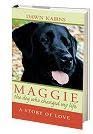
Author of MAGGIE: the dog who changed my life: A Story of Love


Monday, January 7, 2013

How Did The Elephants KNOW? Their Journey to Pay Respect

A friend sent me this amazing story that demonstrates our interconnectedness with animals. In MAGGIE the dog who changed my life I share how Maggie taught me to trust to our animals' ability to tune in to our thoughts and feelings ... to trust their telepathic ways of sending and receiving communication.  This beautiful story about elephants paying their last respects to a loved human will warm your hearts and validate animal telepathy and our invisible web of interconnectedness even more.


"Lawrence Anthony, a legend in South Africa and author of 3 books including the bestseller The Elephant Whisperer, bravely rescued wild life and rehabilitated elephants all over the globe from human atrocities, including the courageous rescue of Baghdad Zoo animals during US invasion in 2003.

On March 7, 2012 Lawrence Anthony died. He is remembered and missed by his wife, 2 sons, 2 grandsons and numerous elephants.

Two days after his passing, the wild elephants showed up at his home led by two large matriarchs. Separate wild herds arrived in droves to say goodbye to their beloved man-friend.

A total of 31 elephants had patiently walked over 12 miles to get to his South African House.


Witnessing this spectacle, humans were obviously in awe not only because of the supreme intelligence and precise timing that these elephants sensed about Lawrence 's passing, but also because of the profound memory and emotion the beloved animals evoked in such an organized way:
Walking slowly - for days - Making their way in a solemn one-by-one queue from their habitat to his house.
So, how after Anthony’s death, did the reserve’s elephants — grazing miles away in distant parts of the park — know?

'A good man died suddenly,” says Rabbi Leila Gal Berner, Ph.D., “and from miles and miles away, two herds of elephants, sensing that they had lost a beloved human friend, moved in a solemn, almost ‘funereal’ procession to make a call on the bereaved family at the deceased man's home.

If there ever were a time, when we can truly sense the wondrous ‘interconnectedness of all beings,’ it is when we reflect on the elephants of Thula Thula. A man’s heart’s stops, and hundreds of elephants’ hearts are grieving. This man’s oh-so-abundantly loving heart offered healing to these elephants, and now, they came to pay loving homage to their friend.'

Lawrence's wife, Francoise, was especially touched, knowing that the elephants had not been to *his house prior to that day for well over 3 years!

But yet they knew where they were going.  The elephants obviously wanted to pay their deep respects, honoring their friend who'd saved their lives - so much respect that they stayed for 2 days and 2 nights without eating anything.  Then one morning, they left, making their long journey back."

Pay attention to  your animals and the wild ones, those beautiful beings we share the planet with. There is SO much more to them if we but open our minds and hearts, and pay attention.