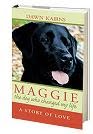
MAGGIE: the dog who changed my life

MAGGIE: the dog who changed my life
Click photo to visit dawnkairns.com

Thursday, October 14, 2010

Puppy Mills Cause Grave Suffering: Cast Your November Vote To Improve Standards


Proposition B: What It Means for Puppy Mills in Missouri

Re-printed from the Humane Society Veterinary Medical Association
By Deanna Tolliver, DVM,

As a veterinarian, I took an oath to protect animal health and relieve animal suffering. Unfortunately, as a veterinarian in Missouri, I have witnessed the worst kind of suffering in dogs from puppy mills—rotten and infected teeth, mammary gland tumors, ear and skin diseases, overgrown toenails that curl into foot pads, and coats matted so heavily that the animals could barely walk. Most of these conditions result from years of neglect and could have been prevented or treated with proper veterinary care.

Given what I have seen in these kennel dogs, I consider it my professional responsibility to support Proposition B, the Puppy Mill Cruelty Prevention Act. This commonsense measure on the November state ballot will provide more humane standards for the care of all dogs in puppy mills throughout the state.

How will Prop B impact the puppy mill industry?

Prop B would require large, commercial breeding facilities to provide dogs with sufficient food and clean water; necessary veterinary care; adequate living space, shelter and exercise; and essential rest between breeding cycles. It would also prohibit the use of wire kennel flooring and stacked cages.

The measure would also limit the number of adult breeding dogs that facilities can keep to 50 (it does not apply to breeders with 10 or fewer intact female dogs). Since each female dog is capable of producing up to five or more puppies per litter, a breeder could still sell roughly 200 to 400 puppies a year, with a potential income exceeding $100,000—much greater than that of most families in Missouri.

Changes to mass-breeding operations are long overdue

The recent rescue of more than 100 dogs from two operations in Camden and Greene counties undoubtedly confirms that Missouri has an ongoing problem with many of its 3,000 mass puppy-production facilities. The Better Business Bureau, the USDA Office of the Inspector General and the Missouri state auditor all released recent reports detailing insufficient oversight of our puppy mill industry and the grave suffering it causes—both for the dogs and for their future families.

In spite of the neglect that many of these dogs have suffered, those of us involved in rehabilitating puppy mill dogs are amazed at how quickly they respond to a gentle hand and good veterinary care. I believe that Prop B will have a substantial impact on the well-being of these dogs.

Support is on the rise, but help is still needed

Prop B has garnered mainstream support from the Humane Society of Missouri, Central Missouri Humane Society, Southwest Missouri Humane Society, the American Society for the Prevention of Cruelty to Animals (ASPCA), Best Friends Animal Society and The Humane Society of the United States (HSUS). In addition, a number of veterinarians and veterinary clinics, responsible dog breeders, religious leaders and many Missouri businesses have endorsed Prop B in order to ensure more humane treatment of commercially kenneled dogs.

As the election nears, I hope more veterinary professionals will vote YES on Prop B, endorse and support the measure, and encourage colleagues, clients, friends and family to do the same.

To read more and endorse the measure, please visit www.YesonPropB.com. Another veterinary perspective can be found in this letter to the editor, submitted to the Columbia Missourian newspaper by Dr. C. B. Chastain, DVM, DACVIM, a professor at the University of Missouri College of Veterinary Medicine, in support of Proposition B.

Dr. Deanna Tolliver, DVM, is a Prop B endorser, HSVMA veterinary member and owner of Cross Creek Animal Hospital in Waynesville, MO. She is also the proud pet parent of Janie, a Yorkshire terrier puppy mill survivor born with elbow dysplasia, who seemingly repaid the favor of her adoption by alerting Dr. Tolliver to an intruder and saving her from possible harm.

Thursday, October 7, 2010

An Animal is Abused Every 10 Seconds in America

The sad reality is that an animal is abused every 10 seconds in America. 

You can help change this unacceptable reality by becoming an ASPCA Guardian. I am writing this post to join the ASPCA and Dogtime in support of this great animal welfare cause. The ASPCA Guardians are a group of dedicated friends like you who make regular monthly gifts. This level of support makes it possible for the ASPCA to reach and rescue animals in need. You will be helping the ASPCA to make a difference for animals every month of the year. This reliable income will allow the ASPCA to focus more resources on their lifesaving programs, and less on raising the necessary funds.

Please take a moment to watch this ASPCA video that was sent to me by Dog Time Media (DogTime's mission is "to keep dogs out of shelters and to help those who are in shelters find loving homes"). Watch and listen to Tim Rickey, ASPCA Senior Director of Field Investigations and Response teams at work in the field.


In 2008 alone, the ASPCA Mobile Clinic Program spayed and neutered over 23,220 animals—a 63% increase over 2007, thereby impacting the problem of unwanted offspring and pet homelessness. Let's help keep the ASPCA in the field doing what they do best, rather than having them spend their time having to raise money. To donate to the ASPCA, please click here.

You can see below what your monthly contribution will do. ASPCA members like it because it's easy to budget and it feels great to be making a difference for animals every month of the year:
  • A donation of $18/month, you can help 10 animals get adopted.
  • A donation of $20/month helps keep the ASPCA Disaster Response Trailers stocked.
  • A donation of $36/month allows 5 dogs and 5 cats to get spayed and neutered and receive vaccinations.
Please become a Guardian and join the ASPCA donations program today. To donate to the ASPCA, please click here.

Posted by:

Dawn Kairns  

Twitter: themaggiebook

Tuesday, October 5, 2010

What Not to Say to Someone Who Is Grieving the Loss of a Pet

Having just lost Cinnamon, our beloved 17 year old cat, I can really relate to author Ingrid King's article about what NOT to say when someone is grieving the loss of their precious pet. I think you, too, will relate to Ingrid's well-written article. I share this for all of you dealing with pet loss, and for those of you who have friends or loved ones who have recently lost beloved animals. AND for Amber and Cinnamon:

Written by Ingrid King , author of Buckleys Story

Amber, Ingrid's cat
As a society, we are not equipped to handle grief and loss, and many people don't know what to say to someone who is grieving.  This can be compounded when the loss is that of a pet.  Even people who are genuinely sorry and want to express their sympathy often don't know what to say to comfort the grieving person.  

It is difficult to know what to say, and as a result, people often, without meaning to, say the wrong things that, rather than providing comfort, only serve to upset the grieving person even more.   Sometimes, the best thing to say is to simply acknowledge the loss - because the only thing worse than saying the wrong thing is to not say anything at all.  As I'm dealing with my own grief about  Amber, I am once again reminded of how much some of the things people say hurt, even though they're offered with the best intentions.

I know how you feel.  Everybody experiences loss differently.  While we may have lost pets ourselves, we can't know how the grieving person feels, because each pet and each relationship is unique.

Saying something like "I, too, have lost a pet, and I remember how awful it feels - my heart goes out to you"  instead acknowledges the griever's feelings without being presumptuous.

It will get better or time heals all wounds.  Grieving people know this on an intellectual level, but they sure don't feel that way, especially not in the early stages of grief.  Trite phrases like these only serve to minimize the loss and the very real pain the grieving person is feeling now.

Acknowledge the grieving person's sadness and pain without diminishing their emotions by suggesting that they're only temporary.

She's in a better place now.  It was probably for the best.   It was God's will.  Any variation of this will not be helpful to someone who's grieving.  Even if their belief system supports this, they're not going to find comfort in these words, and they may, in fact, serve to emphasize their pain.

Even if the grieving person believes that our animal friends never really die and that their spirits live on, any of the above phrases, directed at them in the middle of profound sadness, invalidate the very real pain of missing the lost pet's physical presence.

Let me know if there's anything I can do.  This is a classic, and natural, response to grief - we feel helpless, and we want to help the grieving person.  However, people who are grieving don't think straight, and usually don't know what they need help with, and reaching out or asking for help often requires more of an effort than they can handle.

Offer to do something concrete instead, such as bringing a prepared meal to the grieving person, or running errands for them.  If you know the person very well and you think it would be acceptable, stop by to check on them.  Otherwise, call them, but accept that they may not want to answer the phone.  Leave a supportive message, and check back again a few days later.

It was only a pet.  I find it hard to believe that some people are still saying this - it is callous and uncaring, even coming from someone who's not an animal person.  I'm fortunate that the majority of people in my life are animal people, so I've not heard this one personally, but I'm being told that it still happens more than you would think.

When are you going to get another one?  Not quite as shocking as the one above, but equally inappropriate.  Grieving pet parents know that getting a new pet can never replace the lost one, but getting a new pet after a loss is a very individual decision - everyone's schedule is going to be different.  (Read Life after Loss - Getting a New Pet for more on this topic.)

Don't cry.  Most people are uncomfortable in the presence of others who are crying.  It is painful to see someone you care about cry, but by telling them not to cry, you are prolonging the grieving process for them.

Tears heal and are part of the natural grieving process.  One of the best things you can do for someone who is grieving is to let them cry in your presence.  Offer comfort, but don't make them feel that it's not okay to cry.

There is no "cure" or "solution" for grief - it's an individual journey.  Navigating through the grieving process is difficult not just for the person who is mourning a loss, but also for those around the person.  The best thing any of us can do for someone who is grieving the loss of a pet is to set aside our own discomfort with death and loss and gently support them in their grief.

Cinnamon in our yard Spring, 2010
To learn more about Ingrid King, and her wonderful book about the lessons she learned from her cat, Buckley, visit http://ingridking.com/ and http://ingridking.com/blog/. And visit www.dawnkairns.com and fill out the contact form requesting to receive 10 Steps to Deal With the Loss of Your Pet and for more resources on pet loss grief and support.

Posted by:

Dawn Kairns  

Twitter: themaggiebook

Friday, October 1, 2010

The Untold Story: Maggie the Dog Meets the Bull

Maggie among the wildflowers in Rustler's Gulch in Crested Butte
Well, here I am once again in Crested Butte, taking a little personal retreat. Even though I arrived after the fall Aspen trees reached their peak in color, the brilliant yellows, oranges, and greens on Keebler Pass were still  nothing short of awe-inspiring. I love this place.

I took a day off from hiking today -- my legs needed it. As I was planning my hike for tomorrow on the Lower Loop trail closer to town, I suddenly realized this is the hike that contains the untold story about Maggie that never made it into my book. Why? I simply forgot to put it in!

Here it is. Some of the Lower Loop trail crosses over private property. Tom, Maggie, and I were crossing a flat, pasture like area. I could wait no longer. We were by a large tree, so I decided it was a private enough spot to use as a bathroom. Just as I was quite compromised, with drawers down, Maggie suddenly charged forward a few feet away from me, and then promptly hid behind Tom, looking through his legs. Perplexed, I looked over to my right -- and froze for a moment in my squat. For just a few feet away, blending in to the shade of the tree, was a very large bull, slowly getting to his feet to meet our "brave" dogs' challenge.

"Oh my God!" I panicked and hurriedly pulled my clothes back together and stood up, praying it didn't charge Tom and Maggie directly. The dark monster-bull with large horns intact stood there for a moment, deciding what to do with this foolish dog and her people. Without either of us saying a word, Tom leashed Maggie, and we backed away very slowly at first, and then picked up speed as we got further away. He didn't charge -- thank heaven! Of course by this time Maggie wasn't at all concerned. After all, she was counting on us to protect her!

Once we were safe and the adrenalin wore off, we were in stitches about the entire scene -- the way Maggie false-charged the bull and then hid behind Tom for protection! That's our girl, bluffing a bull while I'm half clothed and nearly next to it.

Maggie in Rustler's Gulch in Crested Butte, CO
This seems an appropriate time to share this missing and fun story with you; and to honor Maggie -- October is Maggie's birthday month. Happy Birthday, Girlfriend. I know you're out there somewhere ... and we'll always, always be connected.

Posted by:

Dawn Kairns  

Twitter: themaggiebook

Wednesday, September 29, 2010

Former Chipotle Mexican Grill Marketing Man Becomes Raw Dog Food Entrepreneur


What's Really Best for Our Pets? That is the title of Chapter 9 in my book,  MAGGIE the dog who changed my life, where I write of my alarming discoveries about the commercial pet food industry and what prompted me to change Maggie to a raw food diet. Evidently Jim Adams, former Chipotle marketing guru, feels the same way about feeding a raw food diet to dogs.

According to Denver Post Columnist, Penny Parker, in a column earlier this year, it was Chipotle founder Steve Ells' mission to use organic products and naturally raised meats whenever possible when he birthed Chipotle Mexican Grill. And it was Jim Adams, a Denver marketing man, who helped catapult Chipotle into financial success. In 2008, after 11 years of being schooled in Ells' mission, Adams left the company in a mutual agreement,

After taking some time off, Adams decided to translate his experience with Chipotle's organic food mission into making dog food. What promted him to go this route?

Adams switched his Schnauzer, who was toward the end of her life, to a raw dog food diet. He saw a big improvement in her (in much the same way I saw Maggie improve), which prompted his recent start of Red Bud's Raw Dog Food, named after his long-haired dachshund Red. Red Bud's Raw Dog Food is made from antibiotic-free chicken, ground chicken bone, and organic vegetables and fruit. It comes in frozen 1 pound packages and can be delivered to your door.  You can learn more and check the ingredient list at http://www.redbudsraw.com/.

I continue to feed a raw food diet to Maddie, our current dog. At 5 1/2 years old, she has the energy of  a pup. Many people expect her to be about 2 years old and are shocked when I tell them she's going on 6 years old!

Posted by:

Dawn Kairns  

Twitter: themaggiebook

Thursday, September 23, 2010

Do Your Animals "Speak" to You in Your Dreams?

Years ago I began recording my dreams in a journal, and spent years with a Jungian therapist learning how to interpret them. It was fascinating, and for me, a spiritual journey to learn how to pay attention to messages coming from my soul in dream symbols, reflecting life lessons I may have otherwise missed. After all, most of us are taught to think of our dreams as "just dreams" with nothing to offer or teach us about ourselves.

It wasn't until I had dreams about my dog, Maggie, that actually manifested in waking life that it began to dawn on me that some of my dreams were predictive, or clairvoyant, if you will. This is not something unique to me -- I think we all have these type of dreams, but don't pay enough attention to know it. Perhaps especially when it comes to our special animals. I began to wonder if the special bond between animals and their humans allowed for this type of animal communication to take place in our dreams. Dreams are Messages from the Soul is a chapter in my book, MAGGIE the dog who changed my life, devoted to my predictive dreams about Maggie; dreams that were trying to warn me about her health.

My cat, Cinnamon and I have always had a special communication with each other. As she was declining last month, I asked her to please let me know in a dream when she was ready to go, ready for me to me to make that decision we all dread -- to say our final good-bye.

It was Wednesday night, August 25. I slept on the living room floor, hoping Cinnamon would sleep near me. I awakened once, warmed to find her lying just a couple feet from my head. I reached out to touch her. I fell back to sleep and then the dream came:

Cinnamon and I went to speak to a young dark-haired man. He was an animal communicator. As I stood there silent, he looked at me and said, "Isn't there something you want to ask me?"
"Oh, yes," I said, as though I'd forgotten why we'd come. "Is it time to euthanize Cinnamon?"
"Yes!!" he said emphatically, while nodding his head just as forcefully. In fact, it seemed his entire body was nodding.

It was a message I could in no way miss. It was totally congruent. I awakened in tears, knowing the truth -- that this was our last night together. Cinnamon was still lying in the same spot. I got up and went to her, crying.

"I get it, Baby Soul," I told her. "I get it." She was purring. My heart was breaking, but I knew what we had to do.

I called the mobile vet the next morning and we honored Cinnamon's desire that afternoon. In all my pain in losing her, there was a comfort in having had such a clear communication from her.

A similar unmistakable dream about Cinnamon came to me years before. Cinnamon had developed hyperthyroidism, and it was a few days before she was to have surgery to remove her "enlarged" thyroid gland. The dream character was menacing as she told me in no uncertain terms that Cinnamon would die if she had this surgery. I canceled her surgery the next morning. After informing myself further about radioactive iodine treatment for hyperthyroidism in cats, I elected to go this route. After they scanned Cinnamon's thyroid gland, they told me it was a good thing I didn't have surgery done because the difference in size was nearly impossible to see with the naked eye, making it difficult to know which lobe of the gland to remove. Although I wasn't wild about exposing Cinnamon to radioactive iodine, it seemed the least invasive therapy over time. The idea of forcing medication down her every day to suppress the thyroid was not a direction I wanted to go with her. The drug route was not without its' side effects. Cinnamon did great with the iodine therapy. She never developed hypothyroidism (the iodine therapy did not destroy the "good" remaining lobe of her thyroid gland), nor did her hyperthyroidism return.

The importance of dreams are one of the ways Maggie changed my life, and why I wrote MAGGIE the dog who changed my life. I can't encourage you enough to connect with your dreams as a part of you. They can have vital messages that many of us miss because we don't give them enough credibility. Our animals, in particular, may communicate with us in our dreams.


Posted by:

Dawn Kairns  

Twitter: themaggiebook

Wednesday, September 22, 2010

Puppy Mill Rescue in Missouri: 100 Dogs Saved

100 Dogs Saved From Missouri Puppy Mill

(Reprinted from Care 2 post by Sharon Seltzer)

Teamwork between several national and local animal welfare groups saved the lives of more than 100 dogs on Tuesday from a puppy mill in Central Missouri.   

The owner of the kennel could no longer afford to feed the dogs.

The dogs, which included small breeds such as Dachshunds, Malteses, Shih Tzus, Lhasa Apsos, and large breeds such as Huskies and Boxers, were voluntarily surrendered by the owner of the puppy mill.  He contacted a local rescue group, Half-way Home Pet Rescue and explained that he couldn’t afford to feed the dogs.  The rescue group called the American Society for the Prevention of Cruelty to Animals for help.

The Rescue Plan
The ASPCA quickly put a collaborative rescue plan into action.  They sent eight members from their Anti-Cruelty team and their 60-foot-long animal transport trailer to the puppy mill.  They also enlisted the help of PetSmart Charities to supply the large number of pet transport carriers and crates needed.

The dogs were then transferred to two local animal rescue groups - the Humane Society of Southwest Missouri in Springfield and HSMO in St. Louis.  Each of the rescued pups will stay with the rescue groups until they are given a clean bill of health and ready to be adopted into a family of their own.

Collaborative Efforts Are A Win-Win
This is not the first collaborative rescue between national animal welfare groups and local organizations, but in my opinion it seems to be a new trend that wasn’t present in many large rescue efforts just a year or two ago.
Previously it was common for the animals rescued in those missions to be victimized further by deeming them unadoptable and euthanizing them.

Now it is becoming routine for the victimized cats, dogs and other animals to be sent to regional animal rescue organizations that are nursing them back to health, rehabilitating them and successfully placing them in adopted homes.   It’s a win-win for everyone.

The cooperative efforts aren’t just limited the ASPCA.   Last week a dozen regional rescue groups took in 200 dogs and 54 cats after PETA exposed a North Carolina research laboratory for the cruel treatment of the animals at the facility.

And last year the Humane Society of the United States teamed up with a multitude of local animal welfare groups after they organized the largest raid on dog fighting rings in U.S. history.  The majority of those dogs was rehabilitated and found loving homes for the first time in their lives.

Tim Rickey, the ASPCA’s Senior Director of Field Investigation and Response had this to say about the puppy mill rescue on Tuesday.  “The ASPCA is committed to assisting local animal organizations, as well as overwhelmed breeders, to help find homes for animals in situations like this.”

He also acknowledged the extra burden placed on local animal rescue groups. “Having too many dogs, as this crisis clearly illustrates, puts a tremendous strain on local agencies when they are suddenly forced to care and find homes for large numbers of animals,” said Rikey.

But everyone involved in the effort believes this is still the best way to handle large scale rescues.

Latisha Duffy of Half-way Home Pet Rescue said, “We’re grateful to national and local animal welfare groups for stepping up to the plate and working together for the common goal of saving lives.  Instead of being sold off to auction, these dogs now have a second chance at life.”

Missouri Puppy Mills
The ASPCA reported that Missouri, where the dogs were rescued, is considered to be the puppy mill capital of the country.  The state, “exports more than 40 percent of all dogs sold in pet stores nationwide,” ASPCA said in a press release.  “It is home to more than 3,000 commercial dog breeding facilities.”

Because of these facts, the ASPCA is urging those living in Missouri to support Proposition B, or the Puppy Mill Cruelty Prevention Act, which will be on the November ballot.

Posted by:

Dawn Kairns  

Twitter: themaggiebook