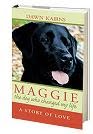
I am the author of "MAGGIE the Dog Who Changed My Life" and "FINAL YEARS Stories of Parent Care, Loss and Lives Changed." My hope is to increase awareness of animal intelligence, emotions, & the special relationship between humans & animals. Covers pet loss, puppy mill awareness, pet health, animal rescue, the spiritual bond between animals & humans, & their sixth sense way of reading us. Born out of my special bond with my black lab, Maggie.
Main Line Animal Rescue (MLAR) continues to educate the public to the terrible plight of dogs confined to our country's large-scale commercial dog breeding facilities -- puppy mills. This is why I continue to donate portions of my book's proceeds to their cause. The following information comes from their anti-puppy mill campaign:
"In 2010, the Office of the Inspector General released the results of their audit on the USDA. What they found will shock and disgust you.
While the USDA (APHIS) is charged with protecting dogs in commercial breeding kennels and broker facilities, in case after case, the federal agency has failed to enforce our laws and has allowed untold dogs to suffer while protecting the very people who abuse them.
We urge you to read the report, look at the photographs, then contact your representatives in Congress and demand that they take action to ensure the USDA is enforcing our laws to the fullest extent."
Please go to the site below to read MLAR's full story and be sure to click on their bus photo that MLAR wrapped in order to "raise public awareness and to cast a light on the inability of some APHIS employees to properly protect these dogs":
Posted ByDawn Kairns,Author ofMAGGIE: the dog who changed my life
A couple of days ago I posted about dreams, and shared that one motivation for writing my book, MAGGIE: the dog who changed my life, was to share with you the significance that dreams played in our relationship, especially towards the end of Maggie's life. Those of you who read MAGGIE know how shocked I was to discover that some of my dreams about her were even prophetic.
Just days before Maggie passed
Maggie passed on July 24, 2001. On June 9, 2000, more than a year before her death, I had the following dream:
There is a 22-year-old Golden retriever who can run faster than Maggie. She clearly has more stamina than Maggie does, and I'm worried because Maggie's stamina is not as good as this dog's is. I want Maggie to live this long and I am afraid she won't.
I didn't know this dream was our next dog announcing herself. Of course you know it was true that Maggie didn't live to be 22 years old. I grieved deeply for Maggie and finally, after a year, we decided to adopt another dog. For months prior to doing so, a voice inside kept telling me, "adopt an older dog." I wasn't sure why exactly. But I wanted to honor that voice. And I kept picturing a Golden retriever or a Golden lab mix.
Chloe--her grief is obvious--she so missed her family
We ended up adopting Chloe, an 11-year-old Golden retriever from Golden Retriever Rescue of the Rockies. No, she wasn't 22 years old. But oh my did she have the stamina for an 11-year-old! And yes, it far surpassed Maggie's stamina!
Chloe's family had moved to Peru. It felt right to bring this golden angel into our lives to love and be loved by during the remainder of her golden years. Queen Chloe shared her life with us for 3 1/2 years. Not all the pieces match 100% in a clairvoyant or prophetic dream as you can see here, but the gist of the dream manifested itself. By no means are all of our dreams prophetic, but taking the time to journal our dreams and understand them can open new doors to personal growth and insight. Dreams can help us become more of who we are, and give us personal direction in our lives if we pay attention.
I encourage you to begin a dream journal. Write down what small or seemingly nonsensical piece of a dream that you remember. The more you show your unconscious that you are listening, the more it will reveal to you as time goes on. In other words, the more dreams you will recall in more detail. Find a Jungian therapist as I did to help you with dream symbolism when you begin this wonderful inner journey. And remember, they are not "just dreams!"
Do you ever feel overwhelmed trying to keep up with Twitter, Facebook, email, texts, and your blog? I know I do, and have consciously had to cut back and limit my time with each. That's why the March 7, 2011 issue of Newsweek grabbed my eye with its' cover, Brain Freeze: How the deluge of information paralyzes our ability to make good decisions(by Sharon Begley).
If this overwhelm speaks to you in any way, I encourage you to read the full article by clicking the link under this article excerpt:
"... The research should give pause to anyone addicted to incoming texts and tweets. The booming science of decision making has shown that more information can lead to objectively poorer choices, and to choices that people come to regret. It has shown that an unconscious system guides many of our decisions, and that it can be sidelined by too much information. And it has shown that decisions requiring creativity benefit from letting the problem incubate below the level of awareness—something that becomes ever-more difficult when information never stops arriving ..."
One of my motivations for writing my book, MAGGIE: the dog who changed my life, was to share with you the significant and even prophetic information I received in my dreams, about Maggie and myself. Dreams are messages from our soul. Understanding our dreams makes us more of who we are; more genuine and authentic. They are not "just dreams" when you learn their language, as Carl Jung so aptly taught us. This excerpt I received today from The Daily Inspiration explains why understanding our dreams is so important in our lives:
Excerpt from Living Authentically: Follow Your Dreams by John D. Goldhammer, Ph.D.
"Why try to understand our dreams? Because our contemporary world urgently needs the intervention of a perspective that brings greater soulfulness and compassion into our experience and actions; qualities that our dreams help cultivate and develop. And because our dreams have a profound purpose: the creation of distinct, integrated individuals who will add vitally needed qualities to our collective life as well as encourage the development of mutual respect, interconnectedness, and empathy for each other and for our natural environment.
Indeed, our dreams are screaming solutions for the imbalance, injustice, and social chaos that permeates our present age.
We need to become much more conscious, more aware of who we are and of our particular destiny, our true vocation. Understanding dreams and incorporating their meaning into our waking life makes individuals a source of creativity, a wellspring of insight, character, and integrity, renewing society and reinvigorating culture."
This is a continuation of my April 1, 2011 post,Losing Your Pet: Grief Responses That May Surprise You, where I adapted information from a Hospice support group I attended to apply it to the intense grief most of us feel when we lose a beloved pet.
You go, girl -- in camper, just weeks before Cinnamon passed
Losing your pet is a life-changing event. Please refer to my earlier post to learn more about the vast range of grief responses that may experience in the early stages of grieving. Thankfully, healing does begin in time, and we are eventually ready to move forward with our lives; though we never forget our beloved pet who has passed. Although I lost Cinnamon in August, 2010, I still "see" her in so many places, still feel her presence often, still cry at times. We never, ever forget. But we can also honor our loved pets in the choices we make as we move on in our lives ...
Positive things to lead you in the direction of appreciating life again:
focus on the people who love you and need your love
try not to please everyone
notice your good and peaceful moments
bring comfort or joy to someone elses' life. Helping homeless animals really helped me heal after my dog, Maggie died
set a new goal that interest you
continue to remember your beloved pet in your own special ways
live each day with the awareness of all that your beloved pet (and people too) has given you to enrich your life
Redefining Yourself, Roles and Relationships
When someone or an animal loves you, they are a mirror for you, reflecting back to you who you are. When a loved one or beloved animal dies, the mirror is broken and your self image may be shattered. your role changes as you have lost a sense of who you are in the world. You may find yourself wondering "who am I?"
One task of grieving is to create a new self-image and look for new ways of being in the world. Changing your roles, relationships, and patterns takes time so be patient with yourself as you find the strength and resources within yourself and in relationships with other animals (when the time is right). You will always be influenced by the effect of the relationship that you had with your lost pet.
My thanks to these animals who have touched and inspired me and helped me move through loss:
My Maddie
Marky, who we rescued in SouthTexas
"Flash" -- a very special street dog in Chile
Name unknown, but he melted my heart
In Chile on a farm -- sent by Cinnamon so I could cuddle her and hear a purr again.
Original Post "120 Dogs Seized From Unlicensed Tennessee Puppy Mill" by Sharon Seltzer on the Care 2 Blog
More than 120 dogs that were living in horrendous conditions at an unlicensed puppy mill in Tennessee were rescued and taken to the State Fairgrounds by Animal Rescue Corps and the Warren County Sherriff’s Office on March 29.
The case began when Animal Rescue Corps (ARC) received a tip concerning the welfare of the dogs.
“These animals were suffering from starvation and various untreated illnesses. We got here just in time for some of them,” said Scotlund Haisley, president of ARC “Every year, the estimated 10,000-plus puppy mills in the U.S. produce more than 4 million puppies while millions are killed in shelters.”
Mr. Haisley took time from the exhausting efforts to care for the seized dogs to give a personal account of the rescue mission.
ARC rescuers found Chihuahuas, Pomeranians, Brussels Grissons and other small breeds living outdoors in crowded 2x3 foot rusted rabbit hutches on the property of Wilma Jones.
Haisley said the conditions “were among the worst he’s ever seen.”
The dogs all showed signs of neglect with overgrown nails, severely matted fur, bad teeth, untreated infections, burns from being soaked in urine and fecal packs. Some had “significant medical issues” and all of them were ”extremely thin.”
As the rescue team released the breeding mothers from each cage, they came across seven deceased dogs.
One small dog broke their hearts when the team found her squeezed between the bodies of two dogs that had died as she tried to keep herself warm.
Many of the dogs were covered with a pink stain that came from the rust on their wire cages. Haisley said, “When the dogs were washed the black dirt and rust just kept running off their fur.”
Newborn puppies and their nursing mothers were found living in the basement of Ms. Jones’ home. The level of ammonia coming from the dogs’ urine was so strong the Hazmat team wouldn’t allow rescuers inside to help the animals until they neutralized the fumes.
Haisley is proud of ARC’s rescue mission, “The majority of the dogs were adults and breeding mothers that have been trapped on the property their whole lives. Now they have the opportunity for a better life.”
Haisley also said, “We haven’t lost any of our charges since seizing the dogs and their numbers keep rising because several litters have been born at the fairgrounds.”
The dogs will remain at the Tennessee State Fairgrounds until Tuesday when Wilma Jones will be charged by District Attorney Lisa Zavogiannis with violations of county and state cruelty laws. Ms. Jones contends that she ”loves her dogs greatly.”
If ARC is given custody of the animals the plan is to eventually place them with local animal shelter partners and rescue groups that will ultimately find new homes for the dogs.
In the meantime, 24 hour care is being provided. Each dog is receiving veterinary care, grooming and socialization. Haisley said the surrounding community has been very supportive and brought blankets, towels and food.
“An army of local and national volunteers are cleaning cages, feeding the dogs, teaching them how to walk on a leash and doing whatever needs to be done. Local groomers have taken time away from their businesses to bath the dogs and cut away their matted fur.”
But Haisley says, “The best job at the Fairgrounds is the crew who gets to socialize the dogs. They are resilient and caring and the dogs are eating up the attention.”
ARC estimates the entire cost for the rescue mission and rehabilitation of the dogs to be $65,000. That includes temporary housing for volunteers, food, generators to keep everyone warm, transportation and more.
As Spring begins to unfold in her glory, I am so loving it. But something is grossly missing -- it's my buddy,Cinnamon. Those of you who have read my book, MAGGIE: the dog who changed my life, know Cinnamon, my orange tabby kitty. Those of you who have followed my blog for some time know we lost our precious 17 year old kitty last August.
I think any change of season can be difficult when you are dealing with grief. But Spring was OUR special time of year together. Cinnamon SO loved going outside with me, and we both celebrated this time of year together. And I know I am not alone; that many of you are also grieving the loss of your beloved pets. So I want to take a moment to honor my Cinnamon (along with my other beloved furry angels who have crossed over), and share with you information that I received from Hospice when I attended a support group after the loss of my Mother. We often experience the same feelings when we lose a beloved pet as we experience with the loss of a special person in our lives.
Losing a pet can be painful and overwhelming. Many of us worry if we are grieving in the "right" way and wonder if our responses are normal. It is not unusual to experience any of the following when we suffer a loss (according to and adapted from Hospice):
Feel tightness in the throat or heaviness in the chest, or shortness of breath
Feel a physical, mental, and emotional numbness (absence of emotion) at first
Have an empty feeling in your stomach or lose your appetite or experience digestive problems
Feel guilty and angry at times, or blame others
Feel restless and look for activity but find it difficult to concentrate. You may even experience hyperactivity
Feel helpless & hopeless
Feel you are going crazy
Sense your loved pet's presence, like finding yourselves expecting your animal to walk in the room, be in his or her usual favorite spots, or seeing their face
Wander aimlessly and forget to finish things you've started to do around the house. Or experience disorganized thinking or "brain freeze," where you do "crazy" things like forgetting your best friend's name, or being in charge of an event and then forgetting it was happening.
Have difficulty sleeping, and dream of your loved pet often
Feel a loss of interest in sex
Experience an intense preoccupation with the life of your deceased pet and feel guilty or angry over things that happened or didn't happen
Feel as though you need to take care of other people (who seem uncomfortable around you when you talk about your feelings of loss)
Need to tell and retell and remember things about your beloved animal and the experience of their death
Feel your mood changes over the slightest things
Cry at unexpected times
Maggie and me
These are all natural and normal brief responses. It's important to cry and talk with people when you need to. Talk about what you want/need from coworkers and friends; tell them when you need some space, or when you'd like a listening ear. Don't be afraid to ask for what you need when others don't know. You deserve all the support you can get. Remember the value of finding support groups to be with people who have experienced similar losses, and to journal about your feelings and experiences to help externalize your feelings.
You can expect the same reactions with the death of your deeply-loved animal as you experience with the death of a loved person in your life. Remember ...
Your grief will take longer than most people think.
Your grief will take more energy than you would have ever imagined. You may have much less energy for work and activities. You may have the capacity to perform certain functions but at a slower speed.
Your grief will involve many changes and be continually developing.
Your grief will show itself in all spheres of your life: psychological, social, and physical. You will likely feel that your old identity is gone at home, work, and with friends. I remember when Maggie, my black lab died, I no longer felt like "Maggie's mom" as I had for so long.
Your grief will depend upon how you perceive the loss.
You will grieve for many things both symbolic and tangible, not just for the death of alone.
You will grieve for what you have lost already for what you have lost for the future.
Your grief will entail mourning not only for the actual pet you lost but also for all of the hopes, dreams, and unfulfilled expectations you held for that animal.
Your grief will involve a wide variety of feelings and reactions, such as depression and sadness.
The loss will resurrect old issues, feelings, and unresolved conflicts and grief from the past.
You will have some identity confusion as a result of this major loss and from the unexpected reactions you may be experiencing.
You may have a combination of anger and depression, such as irritability, frustration, annoyance, or intolerance.
You will feel some anger and guilt, or least some manifestation of these emotions.
You may have a lack of self concern.
You may experience grief spasms, acute upsurges of grief that occur suddenly with no warning.
You will have trouble thinking (memory, organization and intellectual processing) and making decisions.
You may feel like you are going crazy.
You may be obsessed with the death and preoccupied with the deceased.
You may begin a search for meaning and question your religion and/or philosophy of life.
You may find yourself acting socially in ways that are different from before.
You may find yourself having a number of physical reactions.
You may find that there are certain dates, events, and stimuli that bring upsurges in grief.
Society will have unrealistic expectations about your mourning and may respond inappropriately to you.
Certain experiences later in life may resurrect intense grief for you temporarily.
You may experience decreased self-esteem, insecurity, loss of control, regrets, and even hostility.
You may feel like a burden or that you are being avoided.
Chloe, our elderly Golden after Maggie
Most of us are unprepared for the global response we have to a major loss. Our expectations tend to be too unrealistic, and often we receive insufficient assistance from friends and society. This is true with the loss of a person, and is compounded with the loss of a pet, as many people don't realize how profound pet loss grief is. Hence, you may feel grossly unsupported in your loss. Don't be afraid to tell your friends and family what you need in terms of support, and above all be compassionate and loving yourself.
Stay tuned and watch for my next post where I will share positive things to lead you in the direction of appreciating life again.