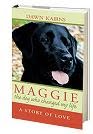
MAGGIE: the dog who changed my life

MAGGIE: the dog who changed my life
Click photo to visit dawnkairns.com

Thursday, March 5, 2009

New Law Imposes New Regulations to Increase the Size of Cages, Require Annual Veterinary Checkups and Crack Down on Inhumane Puppy Mills

As an avid supporter of banning puppy mills, I am posting the following article from the Lancaster New Era published today, March 05, 2009 and written by Ryan Robinson.

I donate 10% of royalties on my book to Mainline Animal Rescue in Pennsylvania, an organization dedicated to rescuing puppy mill dogs and banning puppy mills due to their deplorable conditions. To educate yourself about puppy mills visit:

Mainline Animal Rescue (MLAR)


With Tougher Rules, Many Kennels Close. Over 300 Licensed Kennels Across Pa. Shut Down, while others seek local zoning approvals for the First Time.


By RYAN ROBINSON, Staff Writer

Five months after Gov. Ed Rendell approved tighter regulations on dog kennels, scores in Lancaster County and across the state are going out of business.

Others, meanwhile, are seeking local zoning approvals for the first time as a result of the new law.

Chris Ryder, a state Department of Agriculture spokesman, said more than 300 licensed Pennsylvania kennels have indicated to the state that they will close this year.

That's 11 percent of the 2,674 licensed dog kennels in Pennsylvania in 2008.

One of every six licensed dog kennels in Lancaster County — 17 percent — has said it will close this year, Ryder said. That would drop the number of kennels here from 299 to 248.
Related Stories

In all of 2008, kennel closings in Pennsylvania totaled 256.

"We anticipate the number (closing) will go up throughout the year," Ryder said of 2009. "Some have indicated that they don't wish to upgrade their kennels."

Others are dropping licenses because they don't need one, he said, mentioning kennels with less than 26 dogs as an example.

Ken Brandt, executive director of the Pennsylvania Professional Dog Breeders Association, said it's too early to tell how many kennels will close because of the new rules. The rules went into effect in December for non-commercial kennels, but won't start for commercial kennels until October. Commercial kennels are those that sell more than 60 dogs a year or sell dogs to pet stores.

Brandt believes most kennels that do close will be smaller ones, with 50 or 60 dogs, which may not be able to afford to expand.

"I'm concerned about the Lancaster County farmer, that this has become a sideline to them. They take care of puppies very well and this income is probably what keeps them on the farm," Brandt said today. "If you have to double the space for your dogs, you either have to double the area or reduce the number of dogs."

Brandt doesn't expect many large kennel operators to close.

In October, Rendell signed a bill intended to improve the care and treatment of dogs kept in Pennsylvania's larger commercial kennels.

The new law imposes new regulations to increase the size of cages, require annual veterinary checkups and crack down on what critics describe as inhumane puppy mills.

But Brandt said the regulations may not ultimately help improve the care of dogs.

"This does not remove the need for puppies," he said. "They're going to be coming from somewhere, either other states or out of the country where there are not near the health concerns we had in Pennsylvania."

Rendell's bill also stipulates that kennel owners prove they have local zoning approval before a state license is renewed.

Many kennels in Lancaster County have operated with state licenses for years, but never received approval from their local municipality.

Salisbury Township has heard appeals for seven kennels so far this year, and granted approval to five of them.

East Earl Township's zoning hearing board will consider approving three existing kennels March 16.

West Cocalico Township's zoning hearing board will consider approving two existing kennels March 19.

Earl Township's zoning hearing board Monday night will consider allowing Paul M. and Susan H. Hoover to continue to operate their Butter Fly Kennel on their 30-acre farm at 246 Kurtz Road.

It has had a state license, but no local zoning approval, for six years. Earl zoners approved a similar request from another kennel owner last month.

"It seems to be the reasoning we are hearing, that they were not aware of other requirements," said Barry Wagner, a zoning officer for several area townships, including Earl.

The Hoovers want to use a 16-by-40-foot portion of an existing shop building to operate a dog-breeding facility with a maximum of 35 dogs, according to their application.

There is some pressure on local zoning hearing boards to approve the kennels, Brandt said, because if dog breeders feel they have been wronged, "they are very apt to go through the court system."

One of Lancaster County's state dog wardens, Travis Hess, said he expects more existing kennels here to seek local zoning approval in coming months.

He said Lancaster County, which far outpaces all other counties in the state in the number of kennels, has 209 dog breeding kennels, 27 boarding kennels and 12 nonprofit kennels.

Written by RYAN ROBINSON, Staff Writer

Posted by Dawn Kairns
Author of MAGGIE: the dog who changed my life
www.dawnkairns.com
www.maggiethedogwhochangedmylife.blogspot.com


Friday, February 27, 2009

More CO Pet Loss Resources Including Animal Communication

I posted local and national Pet Loss Resources quite awhile back on my blog. I'd like to add a few more that were brought to my attention as being very helpful in the Colorado Front Range.

Dr. Kathleen Cooney
Home to Heaven
3307 South College Ave.
Suite 110A #340
Fort Collins
CO
80525
E-mail: kathleen at hometoheaven dot net
Telephone: (970) 412-6212
Here is what a client of Dr. Cooney's had to say:
"Dr. Cooney came to our home to assist in our final goodbye. Family gathered around; we all said our special goodbyes and Woody actually did, too."

Some people are helped by talking with an animal communicator before and after their pet's death. I was after Maggie died, and wished I'd known about animal communication prior to her death. Here is one you can contact:
Debbie Stringfellow
Animal Communication

303-817-5000
www.debbiestringfellow.com
Debbie's client had this to say about Debbie:
"Debbie stayed in touch with both our pets during that last year and the evening that we said goodbye."

She also found Paula very helpful with animal communication:

Paula Vaughan
303-447-0250
www.paulavaughan.com

"Paula checked in later and let me know that Woody thought the timing was just right, and that our former dog, Timber, assisted in pulling these things together. Paula has a more diverse focus but very happily/willingly works with...departed animals. I've also worked with her to try to develop my communication abilities with animals."

I found great comfort when I spoke with Joan Ranquet, (www.joanranquet.com) an animal communicator, after I lost Maggie. I was amazed at how right on she was. I highly recommend a good animal communicator to help with your grief when you lose a special pet. It made me realize Maggie's spirit was still here and we were still connected. Joan was wonderful. What a comfort!

Dawn Kairns
Author of MAGGIE: the dog who changed my life
www.dawnkairns.com
www.maggiethedogwhochangedmylife.blogspot.com


Tuesday, February 24, 2009

Lack of Language Doesn't Mean Dogs Don't Communicate & Understand

Today is a continuation of dog guardians discussing the question:

Have you had experiences with your dogs, past or present, where they seem to understand you or read what you're thinking where you can't attribute it to training?


I do think we give off cues at times that we may not be aware of that our dogs read in our behavior. I want to distinguish between those cues we exhibit and when our dogs just "know" without any outward signs from us. Certainly our dogs learn certain words if we use
them regularly. One possibility I raise in my book is, "did Maggie somehow receive the vision I had in my mind of what I was about to do, or what I wanted her to do?" Do your dogs do the same?

Bonnie from DogRead shared her special story about her black lab, Ruby, who Bonnie felt recognized her deep desire for a black female puppy:

"Oh so many times this has happened to me, but I will speak of only one. We raise/train Labrador Retrievers... After 10 years, I decided to breed a wonderful girl I had purchased four years before. She is known as my girl, Ruby... I finally decided with some nudging from Ruby to take the plunge and let her become a mother. My intention, of course, was to get another Ruby - YES - silly I know as that just cant be, of course, but our minds work in funny ways sometimes. We did the breeding and waited with baited breath for the day of delivery. My husband and I assisted all through the night but, alas, in the wee hours of the morning, I finally spoke the words out loud. 'We are not meant to keep any of these puppies as there is no little black girl.' We had black boys, yellow girls, and yellow boys, but no little special girl for me to wrap my arms around and once more feel the joy of being a Mom.

No sooner than I spoke the words -- Ruby got up and looked at me -- tired from her night of labor... She turned around, actually hunched over in front of me and delivered a little black girl into my hands. To say the roof came off the house is minimal. How did she know? She seemed to be done with her birthing. No one will ever tell me she didn't understand the ache my heart was feeling. To this day all of us, including Ruby, cherish the presence of our 'new' little girl, ... Cabot."

Sometimes I think our dogs try to make a point of communicating to us in ways we can't miss, as Ruby did by plopping Cabot in Bonnie's lap, that tell us "yes, I understand what you're saying. I get the ache in your heart and what it is you want. I KNOW!" And all they want at that moment is for us to get it that they know. Sometimes our canines make it so obvious, as Ruby did, that we can't miss it. Or like my Maggie did when I sadly said, towards the end of her life, "I haven't heard her bark today..." -- and she turned around and barked, then looked at me as if to say, "I get it! I do understand you! Please get this before I have to leave you!"

I did get it with Maggie at that point, and wished I'd realized it much earlier in her life. How is it that they know? Perhaps they do receive images we have in our minds. Or perhaps they receive information from us energetically, in a way humans can't yet understand. The important thing is for us to recognize that just because our animals can't speak doesn't mean they don't understand us -- our words, thoughts, and emotions. Maybe we can enhance our dog's lives by tuning in to the ways they are communicating to us in their own language.

Dawn Kairns
Author of MAGGIE: the dog who changed my life
www.dawnkairns.com
www.maggiethedogwhochangedmylife.blogspot.com

"There are only two ways to live your life: As if nothing is a miracle, or as if everything is a miracle." -- Albert Einstein

Saturday, February 14, 2009

How Much Do Our Animals Understand Our Thoughts

In my last post, "Do Our Dogs Read Our Minds," I shared a question I asked of our DogRead book group last month when discussing my book. As I promised, this post is a continuation of those beautiful stories. Here was the question:

"Have any of you had experiences with your dogs, past or present, where they seem to understand you or read what you're thinking where you can't attribute it to training?"

I'd discovered these experiences with my black lab, Maggie, and wondered if I was alone in my experience of my dog having telepathic abilities. Many thoughts and statements I found that Maggie "knew" or understood were not earth shattering in themselves--it was her knowing that rattled my foundation of what I'd been raised to believe about dogs and animals in general.

From DogRead Nancy K. shared the following:

"I've certainly had the experience you've asked about. Check this out- I'm lying on the couch with the dogs- it can be any time of day- and I've just had the thought, "Hmmm, maybe I'll take them for a walk." Now, mind you, I have not moved a muscle, much less put on my sneakers. All of the sudden, the dogs are up and excited just as if I've asked them, 'Hey, do you guys want to go for a walk?'"

Suzanna had this to say:

"When my Belgian Tervuren Cowboy was about 4.5 months old, I had a few dogs out in the front part of the property swimming in the creek while he was behind the fence in the back yard with a few dogs. He was standing at the gate pitching a fit because he wanted to play in the creek. I walked up to the gate and said, 'Cowboy, if you want to come out and play in the creek, go around to the back door and through the house to the front door and I'll let you out.' He turned around and ran toward the house and by the time I got to the front door, he was there waiting. I thought that was pretty clever for a puppy, especially since I hardly ever let the dogs out the front door and had never let Cowboy out the front."

And then there's Nora:

"I have a Golden Retriever. He's 18 months old and he was born with an old spirit. He's always been rather quiet, reflective and laid back. He seems very tuned into my husband.

He does not like his nails being trimmed, the hair on his feet being trimmed or having his ears cleaned. He doesn't act aggressive, he just goes to hide. In recent months he seems to know when I'm about ready to mess with his feet or ears. I'm not quite sure if somehow I'm sending signals such as a certain behavior that I do. It started where I'd use the word ears and he'd run. Now he knows with no words."

So how do they know? Communicating intuitively with nature and animals is, "the first language, the foundation of spoken and written words, and the common link between all species," according to Marta Williams, author of Beyond Words: Talking With Animals and Nature, who I quote in my book."

Stay tuned for more on animal telepathy, on the sixth sense communication between we humans and our beloved animals.

Dawn Kairns
Author of MAGGIE: the dog who changed my life
www.dawnkairns.com
www.maggiethedogwhochangedmylife.blogspot.com


Wednesday, February 4, 2009

Do Our Dogs Read Our Minds?

During the month of January I had the enriching experience of being the author of the month for an online book club group called DogRead. In my recent book I discuss the apparent ability of our dogs to read our minds at times; animal telepathy, if you will. I had telepathic experiences with Maggie, which I share about in my book. These were experiences I felt compelled to write about in my book because they so surprised me and I had no idea our dogs were capable of understanding our thoughts and words so well. I asked the group the following question to begin our discussion:

Have any of you had experiences with your dogs, past or present, where they seem to understand you or read what you're thinking where you can't attribute it to training?

I received the following response from Amy:

"...It happens all the time, in ways that constantly perplex me. Even with the day care dogs who are regulars and get to know me pretty well. I'll be doing something and think "I'd better get Happy's stuff together, her mom will be coming soon" and suddenly, Happy will quit laying and wait by the door before I ever make a move. This is a dog whose owner doesn't come at a specific time, so I know it's not simply that she's got the routine pegged. There's a 4 - 5 hour margin of pick up times.

Or my dog, Whimsy, who was incredibly sick when I got her. Lots of pilling and nasty liquids (ivermectin). Despite everything I did to try to keep it positive, the 4 times a day schedule finally started affecting her behavior. One day I looked at her and explained that I hated to do this, too, but without it she would die. From that day on, pilling was a non-issue.

Or how about Zeke, who injured his leg and came to me for rehab. I told him one day when he was being recalcitrant about therapy that we might as well amputate his leg if he wasn't going to use it. The next day he was a much more willing participant.

And then there's the "knowing when you're coming home" thing. When I stayed with my parents, my mom said she would hear my dogs start getting restless and knew I'd be arriving within a 1/2 hour or so. And I had a very variable schedule.

I've gotten to the point where I don't even try to figure out how they know. If Osa gets on the chair to wait for her papa, I just go get her lead and coat, because I know he'll be there soon. I just make sure I explain things to them so that if they DO understand, they know the reason for *whatever*. Amazing, is all I have to say..."

Amy's is one of many stories I received from group members regarding their dogs' abilities to understand both their words and their thoughts beyond what training can explain. In the weeks to come I will be sharing more of these wonderful stories of telepathy and understanding on the part of our pets. I will also venture into dream experiences in future postings that seem to demonstrate a deeper communication between humans and their pets than most people are aware of or talk about.

My journey with Maggie changed my thinking in this regard, yet I still felt quite vulnerable sharing such a crazy notion with the world. During my month with the DogRead group I realized I was far from alone in recognizing our animals as capable of reading our thoughts. It was as though the lid came off when the subject was approached, and the delicious contents came pouring out.

Dawn Kairns
Author of MAGGIE: the dog who changed my life
www.dawnkairns.com
www.maggiethedogwhochangedmylife.blogspot.com

Friday, January 30, 2009

10 Steps to Deal with the Loss of Your Pet
by Dawn Kairns, author of MAGGIE: The Dog Who Changed My Life

Sometimes special animals come into our lives and touch our hearts in a way that leaves us forever changed. A chapter ends as the familiar road you traveled together comes to an abrupt and. You are in uncharted territory without a map. Lost. The world as you know it may look totally different.

Not everyone realizes that the bond between humans and their pets can be deeper than with a loved human. Some people often spend more time with their pets than they do with family members. Pets don’t judge or hurt us the way humans can. The loss of their constant, unconditional love can leave us empty.

There is no best way to get through the loss of a beloved pet. The way through the grief process is different for everyone. Here are some things I found helpful when I lost Maggie, my beautiful black lab with whom I had the most precious of relationships:

1. Hold a ritual after your pet dies and invite friends and family who knew and loved your pet. Share stories about how your beloved animal enriched your life and other lives she touched. You may also want to create a memorial altar with a candle and your pets’ photo, along with other items that belong to or remind you of your pet, such as her dish, special toys, and a lock of her hair.

2. Recognize that the grief of pet loss can be exceptionally profound and honor that by giving your grief the space to be. Allow your tears. Set-aside quiet time each day where you can decrease the demands of the outside world. Write in your journal. Allow your pain to express and release.

3. Let in the compassion and understanding of supportive family friends and strangers.

4. Don’t be surprised if some family members or friends are not as supportive as you might expect them to be. Allow yourself to take time off from friends who don’t understand the depth of your grief, who try to downplay your loss because it’s an animal rather than a human, or who have unrealistic expectations of you at this very vulnerable time.

5. Let people know if you need to talk about your lost pet. Many well-intended people may try to change the subject to make it easier on you and you may need to let them know that it’s okay to talk about it.

6. Find a pet loss support group locally or online and make use of the national pet loss support hotlines.

7. Nurture yourself. Get a massage. Take walks that nature. Meditate. Have lunch with a supportive friend. Do what feeds your soul.

8. Know yourself well enough to know if getting a new pet at this time will help or hinder our grief process. Some people do fine jumping right in with a new dog or cat. Others may resent having a new animal in the house too quickly.

9. Help animals at your local humane society or get involved with the many breed rescue groups in your area. It may help ease your pain if you allow your love from your lost animal to become part of a bigger purpose, such as assisting and caring for homeless animals.

10. Try new things to discover more of yourself; those creative endeavors you have often considered but have never tried.

We all have to face grief and loss eventually. It’s one of the great equalizers in life. Allow your pet’s death to ripple the foundation of who you are, as death often does. When we experienced loss, it may be a good time to let go of what no longer fits in your life; what isn’t you. In my case, after I lost Maggie, I changed both personally and professionally. I hope my steps on the road from loss to healing can now benefit you in your time of loss. As devastating as the loss of our beloved animals can be, this time can also be an excellent opportunity to examine our purpose in life and find new meaning.

© By Dawn Kairns

http://www.dawnkairns.com/

http://www.maggiethedogwhochangedmylife.blogspot.com/

Author of MAGGIE: the dog who changed my life: A Story of Love

*Nominated for the Merial Human-Animal Bond Award
by the Dog Writer’s Association of America*

Friday, January 23, 2009

"The greatness of a nation and its moral progress can be judged by the way its animals are treated." --Gandhi

On my bike ride yesterday I met a woman walking her 13-year-old golden retriever while pushing a large stroller containing her other 13 year old Golden retriever with arthritis. She could no longer make the walk on her own, but Nancy was determined that her golden girl would not be left behind. The buggy is almost identical to the ones you see pulled behind a bicycle with a child inside, but this one is made specifically for dogs with the entry in the back.

A little later as I walked the South Padre Island Beach, I saw an older couple pushing their 13-year-old Pomeranian in a small stroller. Same story. Their dog had arthritis and couldn't make the walk, wanted to go, and they wanted her with them.

"Ah, as it should be," I thought. This kind of love and caring for our precious canines. It must've been a day for the 13-year-old dog's.

Don't we wish all dogs had this kind of love and care? I am honored to be author of the month for an online book club called DogRead. One of the group members, Linda, reminded me of these wonderful words by Gandhi in her post:

"The greatness of a nation and its moral progress can be judged by the way its animals are treated." --Gandhi

How far we have come in this country in treating domestic animals more humanely. And how far we have to go when I think of the conditions in puppy mills, feedlots, and chicken farms to name a few. I got to thinking; if we could change one of these things, just stop puppy mills, for example, how far could we go in homing the millions of homeless dogs in shelters? And how much closer would we become to reaching the greatness Gandhi spoke of?

Dawn Kairns
Author of Maggie: the dog changed my life
www.dawnkairns.com