Most of us know that our relationships with our dogs begin the day we bring them home, whether from a responsible breeder, a shelter, or a breed rescue group. I suggest we expand the context of our relationship to "Dog" to the larger sense, and consider the beginnings of so many dogs before we ever lay our eyes on them. And the plight of so many dogs who never feel their feet on the ground or fresh air on their faces -- the ones who live their entire lives in puppy mills.
According to Jon Rutter of the Lancaster Sunday News, people are in a hurry to get a pet and few question where their pups come from. Demand for dogs is high, and families usually want a dog immediately, which helps perpetuate the market for mass dog breeding (I am referring to puppy mills, not responsible dog breeders who promote the best in a breed). He relates the story of a woman who spontaneously purchased a dog last summer through a newspaper ad. Sadly, their boxer grew deathly ill within days, and the family faced thousands of dollars in veterinary bills. Unable to afford the vet bills,they gave the dog up. The dog was traced to a kennel called CC Pets.
A judge ruled that the owners of the kennel, CC Pets, formerly called Puppy Love Kennels, failed to state its name in newspaper ads as the court had directed four years earlier. The kennel was ordered to close for six months. Calls to CC Pets were not returned. Fortunately, the puppy mill boxer survived and has a good new home.
Although I understand that Lancaster County, PA has a higher concentration of puppy mills than most states, the problem is nationwide. Luckily, consumers are becoming more aware about the dog/puppy mill industry. But some folks still simply don't connect that cuddley pup in a pet store with the deplorable conditions in puppy mills. These people aren't consciously supporting puppy mills; they just don't understand the connection. Consumers should know that dogs bred under factory conditions live only five or six years before being destroyed, according to animal-welfare advocates.
What can dog "shoppers" be aware of? According to Jenny Stephens, of North Penn Puppy Mill Watch, kennels should be clean, and the population of dogs low enough that the staff can spend time socializing the dogs. She urges you to check state kennel inspection reports online (search Bureau of Dog Law Enforcement), and know that a "warning" means that a kennel has already broken the law.
Remember that millions of unwanted dogs in this country are euthanized every year according to Jenny Stephens (NPPMW). Please consider the millions of dogs in shelters when you plan to get a family dog. And remember, you can get most of the purebred dogs you want from a breed rescue group.
For more help and information about puppy mills, log on to the North Penn Puppy Mill Watch Web site, www.nppmwatch.com, or contact United Against Puppy Mills, www.unitedagainstpuppymills.org, or call 1-866-975-3647.
Let's honor the "spirit of dog," all dogs, and make sure we do our part to see that all dogs are treated as the beautiful, loving beings that they are.
Posted by:
Dawn Kairns,
Author of MAGGIE: the dog who changed my life
www.dawnkairns.com
www.maggiethedogwhochangedmylife.blogspot.com
MAGGIE: the dog who changed my life
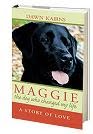
Click photo to visit dawnkairns.com
Showing posts with label North Penn Puppy Mill Watch. Show all posts
Showing posts with label North Penn Puppy Mill Watch. Show all posts
Thursday, April 30, 2009

Thursday, March 5, 2009
New Law Imposes New Regulations to Increase the Size of Cages, Require Annual Veterinary Checkups and Crack Down on Inhumane Puppy Mills
As an avid supporter of banning puppy mills, I am posting the following article from the Lancaster New Era published today, March 05, 2009 and written by Ryan Robinson.
I donate 10% of royalties on my book to Mainline Animal Rescue in Pennsylvania, an organization dedicated to rescuing puppy mill dogs and banning puppy mills due to their deplorable conditions. To educate yourself about puppy mills visit:
Mainline Animal Rescue (MLAR)
I donate 10% of royalties on my book to Mainline Animal Rescue in Pennsylvania, an organization dedicated to rescuing puppy mill dogs and banning puppy mills due to their deplorable conditions. To educate yourself about puppy mills visit:
Mainline Animal Rescue (MLAR)
With Tougher Rules, Many Kennels Close. Over 300 Licensed Kennels Across Pa. Shut Down, while others seek local zoning approvals for the First Time.
By RYAN ROBINSON, Staff Writer
Five months after Gov. Ed Rendell approved tighter regulations on dog kennels, scores in Lancaster County and across the state are going out of business.
Others, meanwhile, are seeking local zoning approvals for the first time as a result of the new law.
Chris Ryder, a state Department of Agriculture spokesman, said more than 300 licensed Pennsylvania kennels have indicated to the state that they will close this year.
That's 11 percent of the 2,674 licensed dog kennels in Pennsylvania in 2008.
One of every six licensed dog kennels in Lancaster County — 17 percent — has said it will close this year, Ryder said. That would drop the number of kennels here from 299 to 248.
In all of 2008, kennel closings in Pennsylvania totaled 256.
"We anticipate the number (closing) will go up throughout the year," Ryder said of 2009. "Some have indicated that they don't wish to upgrade their kennels."
Others are dropping licenses because they don't need one, he said, mentioning kennels with less than 26 dogs as an example.
Ken Brandt, executive director of the Pennsylvania Professional Dog Breeders Association, said it's too early to tell how many kennels will close because of the new rules. The rules went into effect in December for non-commercial kennels, but won't start for commercial kennels until October. Commercial kennels are those that sell more than 60 dogs a year or sell dogs to pet stores.
Brandt believes most kennels that do close will be smaller ones, with 50 or 60 dogs, which may not be able to afford to expand.
"I'm concerned about the Lancaster County farmer, that this has become a sideline to them. They take care of puppies very well and this income is probably what keeps them on the farm," Brandt said today. "If you have to double the space for your dogs, you either have to double the area or reduce the number of dogs."
Brandt doesn't expect many large kennel operators to close.
In October, Rendell signed a bill intended to improve the care and treatment of dogs kept in Pennsylvania's larger commercial kennels.
The new law imposes new regulations to increase the size of cages, require annual veterinary checkups and crack down on what critics describe as inhumane puppy mills.
But Brandt said the regulations may not ultimately help improve the care of dogs.
"This does not remove the need for puppies," he said. "They're going to be coming from somewhere, either other states or out of the country where there are not near the health concerns we had in Pennsylvania."
Rendell's bill also stipulates that kennel owners prove they have local zoning approval before a state license is renewed.
Many kennels in Lancaster County have operated with state licenses for years, but never received approval from their local municipality.
Salisbury Township has heard appeals for seven kennels so far this year, and granted approval to five of them.
East Earl Township's zoning hearing board will consider approving three existing kennels March 16.
West Cocalico Township's zoning hearing board will consider approving two existing kennels March 19.
Earl Township's zoning hearing board Monday night will consider allowing Paul M. and Susan H. Hoover to continue to operate their Butter Fly Kennel on their 30-acre farm at 246 Kurtz Road.
It has had a state license, but no local zoning approval, for six years. Earl zoners approved a similar request from another kennel owner last month.
"It seems to be the reasoning we are hearing, that they were not aware of other requirements," said Barry Wagner, a zoning officer for several area townships, including Earl.
The Hoovers want to use a 16-by-40-foot portion of an existing shop building to operate a dog-breeding facility with a maximum of 35 dogs, according to their application.
There is some pressure on local zoning hearing boards to approve the kennels, Brandt said, because if dog breeders feel they have been wronged, "they are very apt to go through the court system."
One of Lancaster County's state dog wardens, Travis Hess, said he expects more existing kennels here to seek local zoning approval in coming months.
He said Lancaster County, which far outpaces all other counties in the state in the number of kennels, has 209 dog breeding kennels, 27 boarding kennels and 12 nonprofit kennels.
Written by RYAN ROBINSON, Staff Writer
Posted by Dawn Kairns
Author of MAGGIE: the dog who changed my life
www.dawnkairns.com
www.maggiethedogwhochangedmylife.blogspot.com
Five months after Gov. Ed Rendell approved tighter regulations on dog kennels, scores in Lancaster County and across the state are going out of business.
Others, meanwhile, are seeking local zoning approvals for the first time as a result of the new law.
Chris Ryder, a state Department of Agriculture spokesman, said more than 300 licensed Pennsylvania kennels have indicated to the state that they will close this year.
That's 11 percent of the 2,674 licensed dog kennels in Pennsylvania in 2008.
One of every six licensed dog kennels in Lancaster County — 17 percent — has said it will close this year, Ryder said. That would drop the number of kennels here from 299 to 248.
In all of 2008, kennel closings in Pennsylvania totaled 256.
"We anticipate the number (closing) will go up throughout the year," Ryder said of 2009. "Some have indicated that they don't wish to upgrade their kennels."
Others are dropping licenses because they don't need one, he said, mentioning kennels with less than 26 dogs as an example.
Ken Brandt, executive director of the Pennsylvania Professional Dog Breeders Association, said it's too early to tell how many kennels will close because of the new rules. The rules went into effect in December for non-commercial kennels, but won't start for commercial kennels until October. Commercial kennels are those that sell more than 60 dogs a year or sell dogs to pet stores.
Brandt believes most kennels that do close will be smaller ones, with 50 or 60 dogs, which may not be able to afford to expand.
"I'm concerned about the Lancaster County farmer, that this has become a sideline to them. They take care of puppies very well and this income is probably what keeps them on the farm," Brandt said today. "If you have to double the space for your dogs, you either have to double the area or reduce the number of dogs."
Brandt doesn't expect many large kennel operators to close.
In October, Rendell signed a bill intended to improve the care and treatment of dogs kept in Pennsylvania's larger commercial kennels.
The new law imposes new regulations to increase the size of cages, require annual veterinary checkups and crack down on what critics describe as inhumane puppy mills.
But Brandt said the regulations may not ultimately help improve the care of dogs.
"This does not remove the need for puppies," he said. "They're going to be coming from somewhere, either other states or out of the country where there are not near the health concerns we had in Pennsylvania."
Rendell's bill also stipulates that kennel owners prove they have local zoning approval before a state license is renewed.
Many kennels in Lancaster County have operated with state licenses for years, but never received approval from their local municipality.
Salisbury Township has heard appeals for seven kennels so far this year, and granted approval to five of them.
East Earl Township's zoning hearing board will consider approving three existing kennels March 16.
West Cocalico Township's zoning hearing board will consider approving two existing kennels March 19.
Earl Township's zoning hearing board Monday night will consider allowing Paul M. and Susan H. Hoover to continue to operate their Butter Fly Kennel on their 30-acre farm at 246 Kurtz Road.
It has had a state license, but no local zoning approval, for six years. Earl zoners approved a similar request from another kennel owner last month.
"It seems to be the reasoning we are hearing, that they were not aware of other requirements," said Barry Wagner, a zoning officer for several area townships, including Earl.
The Hoovers want to use a 16-by-40-foot portion of an existing shop building to operate a dog-breeding facility with a maximum of 35 dogs, according to their application.
There is some pressure on local zoning hearing boards to approve the kennels, Brandt said, because if dog breeders feel they have been wronged, "they are very apt to go through the court system."
One of Lancaster County's state dog wardens, Travis Hess, said he expects more existing kennels here to seek local zoning approval in coming months.
He said Lancaster County, which far outpaces all other counties in the state in the number of kennels, has 209 dog breeding kennels, 27 boarding kennels and 12 nonprofit kennels.
Written by RYAN ROBINSON, Staff Writer
Posted by Dawn Kairns
Author of MAGGIE: the dog who changed my life
www.dawnkairns.com
www.maggiethedogwhochangedmylife.blogspot.com
Subscribe to:
Posts
(
Atom
)