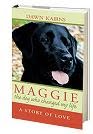
MAGGIE: the dog who changed my life

MAGGIE: the dog who changed my life
Click photo to visit dawnkairns.com
Showing posts with label animal experimentation. Show all posts

Monday, September 9, 2013

One More Medical Curriculum Stops Using Live Animals

The majority of medical schools in the United States and Canada have moved away from animal use as part of their instruction. Below is a letter from Neal Barnard, M.D., the president of Physicians Committee for Responsible Medicine (PCRM). PCRM has worked very hard to discourage the use of live animals and pushed for more ethical instruction in medical school curriculum.

caged_pig
From PCRM website

"For more than 20 years, the Physicians Committee has pushed the Uniformed Services University of the Health Sciences—the country's only military medical school—to stop using animals to train medical students. On Sept. 3, 2013, the university agreed.

'Live animals are no longer used for training in the undergraduate medical curriculum," confirmed USUHS dean John E. McManigle, M.D., F.A.C.C., F.A.C.P., in an e-mail to John Pippin, M.D., director of academic affairs for the Physicians Committee.

We could not have succeeded without your support!

In the mid-1980s, the university made headlines in announcing plans to shoot beagles in a medical training exercise. A public outcry aborted the experiments. However, the university conducted other experiments on dogs as part of its routine medical curriculum. Medical students contacted PCRM, asking for help. Given their military obligation, they could not refuse to participate nor could they transfer out of the school.

In 1991, at PCRM's request, eleven members of the House Armed Services Committee, including Pat Schroeder on the left and Bob Dornan on the political right, signed onto a letter asking the university to look into alternatives to animal laboratories and to respect students’ choices about participating. But the university refused to budge. Records obtained in 2007 through the federal Freedom of Information Act confirmed three separate live animal laboratories in the curriculum.

In 2008, the Physicians Committee filed a petition with the Department of Defense (DOD) asking for an end to this animal use based on a DOD policy that nonanimal alternatives be used when available. Dr. McManigle's recent e-mail confirms that USUHS joins the vast majority of medical schools in the United States and Canada that have moved away from animal use to ethically and educationally superior human-based instruction.

The Physicians Committee continues to work with the four medical schools that use live animals to help them transition to nonanimal methods: the University of Mississippi, Johns Hopkins University, the University of Tennessee at Chattanooga, and Oregon Health and Science University.

Thank you! Without you, PCRM would not be able to secure victories like this both for animals still used in medical education and for the future patients of today’s doctors in training."

To learn more about the great work of the Physicians Committee for Responsible Medicine or to support their mission of ending unethical animal experimentation in medical schools, please visit their site here.

Click title below if you want to order my book(s):

Tuesday, March 20, 2012

Stop Researchers from Acquiring Dogs and Cats from Shelters

I received this message today from Noah Gittell, the Government Affairs Manager for the Physicians Committee for Responsible Medicine (PCRM). Please share this with as many people as you can to help the animals. We are one step closer to banning the acquisition of cats and dogs from shelters for research, but it isn't happening soon enough. Please read on:

PCRM Action Alert
share_this_white_24h
Take action!


I’ve got news to report regarding our efforts to stop researchers from acquiring dogs and cats from shelters. We have learned that soon, the National Institutes of Health (NIH) will no longer allow researchers who receive federal funds to purchase cats or dogs from class B “random source” dealers. These class B dealers sell animals who are bought from shelters or adopted from “Free to a Good Home” scenarios. They have even been known to steal animals from private backyards.
This is a huge step forward, but we still need your help. The ban on using cats from class B dealers does not go into effect until October, and the use of dogs will not be phased out until 2015. Additionally, while we are thrilled that the federal government will be phasing out the use of most shelter dogs and cats, class B dealers will still be able to sell them to privately funded research institutions.
Please contact Congress and urge your U.S. Representative to co-sponsor The Pet Safety and Protection Act, H.R. 2256, a bill that will permanently ban the sale of animals from class B dealers to all U.S. research facilities.
Dogs and cats in animal shelters should be adopted by new companions—not purchased by class B dealers and used in painful experiments. NIH’s new policy will help end the practice of pound seizure, but it will not happen soon enough. That’s why it is so important for you to contact Congress today. When you are done, please forward this message to your friends and family—and share on Facebook and Twitter.
Sincerely,
Noah Gittell
Noah Gittell
Government Affairs Manager
 

Monday, October 5, 2009

Animals Have Feelings Says Author Temple Grandin

I recently took a solo driving trip to the Midwest to visit family. As I was driving back to Colorado a couple of weeks ago, I couldn't help notice (with my visual and olfactory senses), the several feedlots I passed with the cattle packed in. The stench of ammonia filled the air. It always bothers me to see them in such degrading conditions. My gut tightened as I realized they will soon be off to slaughter, and I was reminded of an article written about Temple Grandin in the Rocky Mountain News earlier this year, before it closed it's doors as a newspaper in Denver. Temple Grandin is known as the person who designed more humane handling facilities for livestock now used widely throughout the United States. I wondered, after being in the inhumane conditions of the feedlots, would these cattle be transported off to one of these "more humane" slaughter facilities?

Temple Grandin is the author of the best-selling books, Animals in Translation and Animals Make Us Human. She is also well-known because she is one of the most accomplished and well-known autistic adults in the world, and is an associate professor at Colorado State University. She has advocated for animals all of her life, and in her latest book she explores animal's core emotions and how we can make their lives better.

Her goal in writing Animals in Translation was to document that animals have emotions. According to the Rocky Mountain News interview, Grandin says "the emotional circuits in animals were first researched years ago, but most of the findings were buried in the research sections of libraries." She feels her autism has given her special insights into how animals think. She says she thinks in pictures and most people think in language. Animals, too, think in pictures, smells, and touch sensations--not in language.

Temple Grandin also believes that we are over-regulating our dogs, and that some behavior problems we are seeing in dogs is a result of that over-regulation and because they no longer run free. Having had 2 of my own dogs hit by a car as a child, I don't believe we should let dogs run free--it's too dangerous. But I do believe they and all animals need to be seen as the emotional, intelligent beings they are, and respected as such. They need exercise, fun, and stimulation.

I encourage you to read Temple's books, as she covers more, like how we are overloading the biological systems of animals with feed additives, growth hormones, and certain breeding practices that over select for certain traits.

In MAGGIE the dog who changed my life I came to some of the same conclusions through my experiences with Maggie that Temple came to in her research: that dogs/animals indeed have emotions, and that they think in pictures and pick up our thought images. Why has it been buried that animals have emotions? Personally, I think that it makes it easier to justify atrocious treatment of animals, such as the horrendous slaughter house practices that Temple Grandin worked so hard to change, experimenting with dogs and other animals in laboratories, and the deplorable treatment dogs receive in puppy mills. This just names a few.

How would it be different if puppy mill owners, cattle folks, and those who experiment on animals in laboratories let it in that animals emote as we do? That they think? At the very least, having love and compassion for the animals would be a start. At the very best, the practices themselves would change.

Posted By:

Dawn Kairns
Author of MAGGIE the dog who changed my life
www.dawnkairns.com
www.maggiethedogwhochangedmylife.blogspot.com
www.twitter.com/themaggiebook